


A children's wardrobe rotation service gives busy parents a way to keep kids dressed in fresh, well-fitting clothes without buying new outfits every time they hit a growth spurt. Instead of a closet stuffed with clothes your child outgrows in weeks, you receive a rotating supply that swaps out as sizes and seasons change. For many households, switching from owning to rotating changes the entire relationship they have with kids' fashion, storage, and spending.
Quick answer: A children's wardrobe rotation service is a subscription that lends curated clothing bundles and exchanges them for new sizes or styles as your child grows — typically for a flat monthly fee that covers shipping both ways. It is a service, not a piece of furniture, which is an important distinction we'll unpack below.
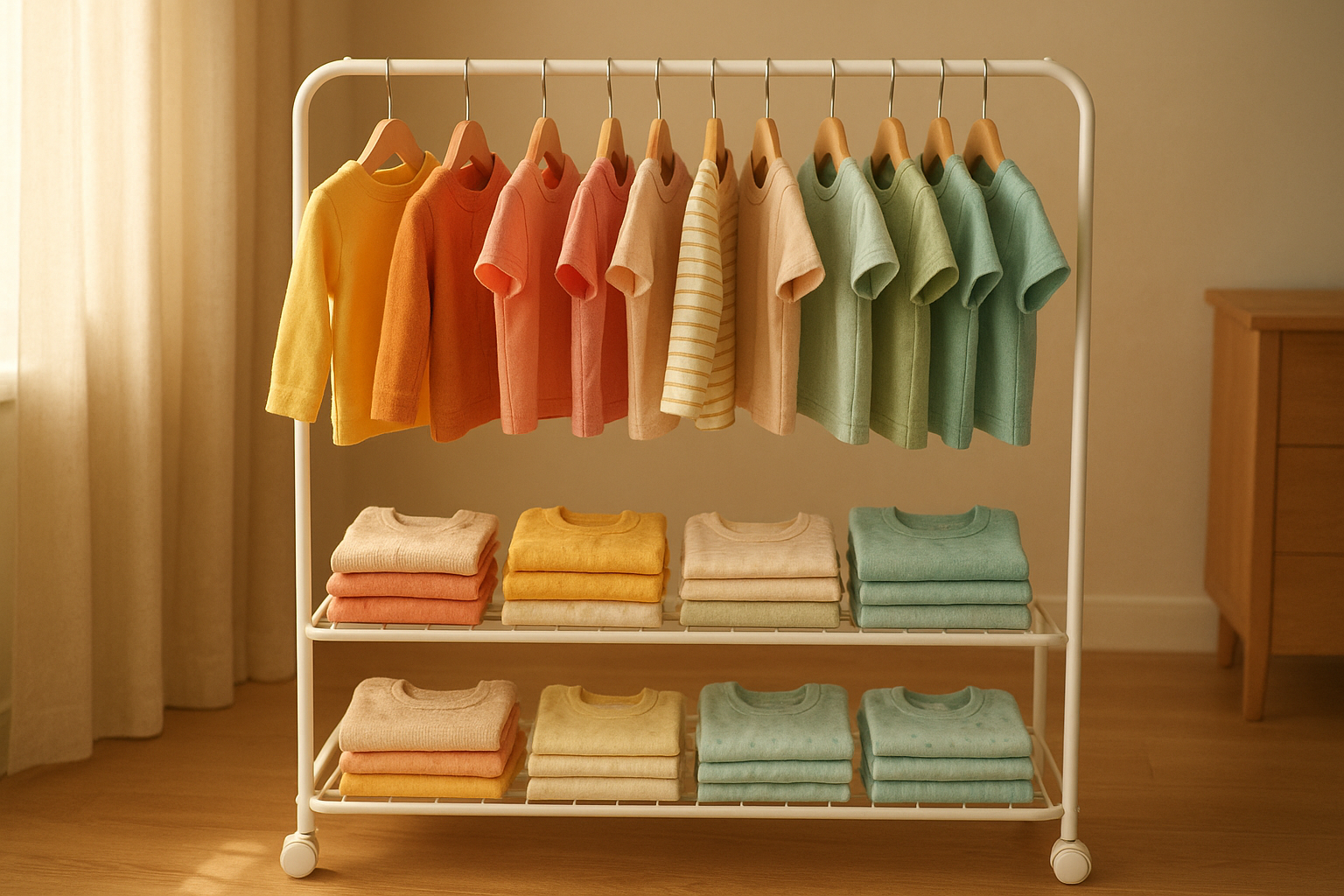
A curated rotation of children's clothing ready for the next swap.
What Is a Children's Wardrobe Rotation Service?
A children's wardrobe rotation service is a subscription model that replaces traditional shopping trips with a revolving supply of premium apparel. Parents pay a monthly fee, receive a curated bundle, and swap pieces whenever sizes or seasons change. Unlike buying clothes outright, nothing needs to be owned permanently — the garments simply move on to the next child once yours has outgrown them.
These programs usually target children from newborn through around age seven, since this age range sees the fastest growth spurts. As a result, parents avoid the frustration of buying clothes that fit for only a single season, and closets stay tidy instead of overflowing with barely-worn items.
It's worth noting that a rotation service is different from a rotation product. Some searches for this topic surface storage furniture — such as rotating dress-up racks — that simply organize clothes you already own. A true children's wardrobe rotation service goes further: it supplies new, properly sized garments on a schedule, then takes the old ones back. We compare the two approaches in detail later in this guide.
How a Rotating Wardrobe for Kids Actually Works
Getting started with a rotating wardrobe for kids follows a fairly simple process. Below is a step-by-step outline that most services, including Bundle to Bundle, follow closely.
- Choose a membership plan based on your child's age and how many outfits your family typically needs each month.
- Share sizing details and style preferences so your first bundle arrives ready to wear, without guesswork.
- Receive the curated pieces and use them until your child grows or the season changes.
- Request a swap through your account whenever new sizes or styles are needed.
- Ship the outgrown bundle back using the included prepaid two-way shipping label.
Because shipping is included both ways, there is no added cost or hassle when it's time to exchange items. For a deeper look at the mechanics of swapping, this kids outfit rotation service guide breaks down the process further. Similarly, this smart parents guide to rotating kids clothing service covers timing swaps around growth spurts, which is one of the most common questions new members ask.
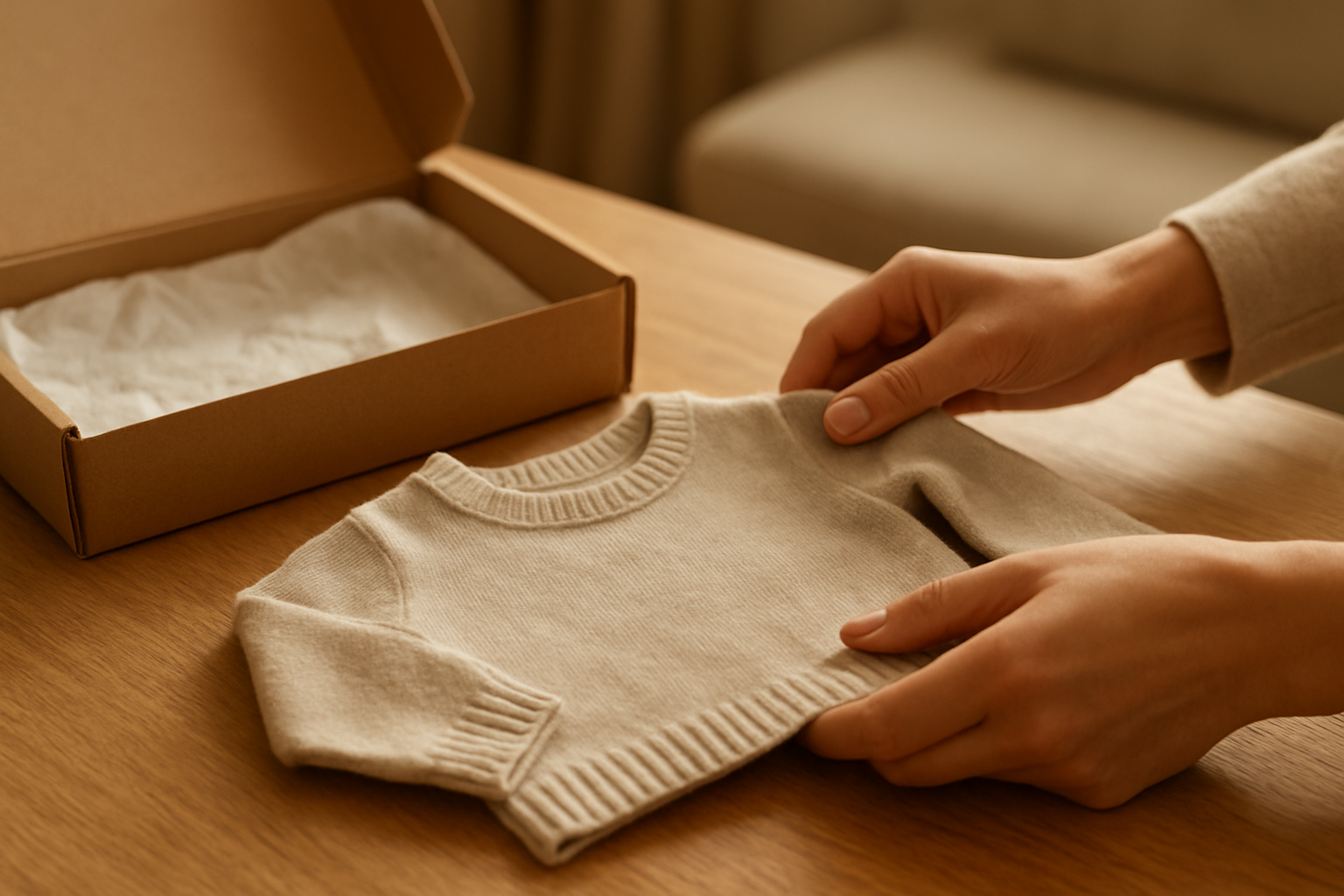
Packing outgrown pieces is a simple part of any children's wardrobe rotation service.
Children's Wardrobe Rotation Service vs. Rotating Storage Furniture: What's the Real Difference?
If you searched for this topic, you may have also come across rotating storage furniture — wooden units with spinning shelves designed to hold dress-up costumes and accessories. These are useful organizers, but they solve a completely different problem. A storage rack simply holds clothes you already own; it does nothing about the fact that your child will outgrow those clothes in a matter of months. In contrast, a true rotation service actively replaces the garments themselves.
The table below breaks down the practical differences so you can decide which one — or both — fits your family's needs.
| Feature | Wardrobe Rotation Service | Rotating Storage Furniture |
|---|---|---|
| What it provides | New, correctly sized clothing on a schedule | A physical shelf or rack to organize existing clothes |
| Solves sizing growth | Yes — items swap automatically as your child grows | No — you must still buy new sizes yourself |
| Assembly required | None — bundles arrive ready to wear | Typically yes, often with tools and multiple parts |
| Ongoing cost | Flat monthly fee, cancel anytime | One-time purchase, no recurring value |
| Environmental impact | Reduces textile waste through reuse | No direct effect on clothing waste |
There's also a safety angle worth mentioning. Freestanding storage furniture can pose tip-over risks if it isn't anchored to a wall, which is why the U.S. Consumer Product Safety Commission publishes furniture anchoring guidance for households with young children (CPSC furniture anchoring guidance). A rotation service sidesteps that concern entirely, since there's no furniture to assemble or secure in the first place.
Why Families Choose a Kids Clothing Subscription
Above all, cost savings drive most families toward a kids clothing subscription. According to pediatric growth chart data from the CDC, children can move through several clothing sizes in their first two years alone (CDC growth chart resources), which means a traditional wardrobe gets replaced constantly. Therefore, paying a flat monthly fee for a rotating supply often costs less than repeated shopping trips.
In addition, convenience plays a major role. Free two-way shipping means parents never have to visit a store or manage returns themselves. Similarly, the no-commitment structure lets families cancel anytime, which lowers the risk of trying something new. This fashion rotation service for kids breakdown explains exactly how much time this saves over a typical shopping season.
According to the U.S. Environmental Protection Agency, textiles make up a significant share of municipal solid waste each year, with millions of tons discarded annually rather than reused (EPA textile waste data). Consequently, keeping clothing in circulation through a rotation model directly addresses part of that problem.
The Sustainability Side of a Children's Wardrobe Exchange Program
A children's wardrobe exchange program supports what's known as a circular economy — a system where products are reused and repurposed instead of discarded (learn more about circular economy models). Rather than each garment being worn once by one child and thrown away, it passes through multiple families before eventually being retired. This mirrors the broader concept of a clothing swap, applied specifically to fast-growing children's sizes.
For environmentally conscious parents, this matters. Furthermore, high-quality pieces from top-tier labels tend to hold up better across multiple wears, which extends their usable life even further. This wardrobe exchange program overview explains how the waste-reduction math works in more detail.
What Does a Swappable Children's Wardrobe Cost?
Pricing for a swappable children's wardrobe typically starts around fifty dollars per month, though the exact amount depends on how many items are included and how often swaps happen. Specifically, plans with more frequent exchanges or larger bundles cost more, while smaller starter plans suit families who need fewer pieces.
It helps to compare this monthly fee against what you'd otherwise spend buying new outfits every season. For example, a single premium outfit can cost thirty to fifty dollars on its own, so a rotation plan covering a dozen or more items often works out to be more economical over time. A closer cost breakdown is available in this rotating wardrobe savings guide.
Rotation Service Pricing vs. One-Time Storage Purchases
A one-time storage furniture purchase, such as a rotating dress-up rack, is a fixed cost that never adjusts to your child's changing size. In contrast, a monthly rotation service scales with your needs and can be paused or canceled the moment it no longer makes sense. Over a full year of rapid growth, most families find the subscription model delivers far more usable clothing per dollar than a single furniture purchase ever could, because the furniture never actually clothes the child — it only stores what's already there.
Choosing the Right Rotating Wardrobe Service for Your Family
When comparing providers, it's worth checking a few specific details before signing up. First, confirm the age range covered, since some services focus only on infants while others extend through early elementary years. Second, review the shipping policy; free two-way shipping should be standard, not an added fee. This overview of services for creating a swappable children's wardrobe lists several providers side by side if you want to compare options directly.
Bundle to Bundle, for instance, serves children from newborn through age seven and includes free two-way shipping with plans starting at fifty dollars monthly. Members can swap items anytime and cancel with no long-term commitment, which suits families who want flexibility without financial risk. You can review current plans directly at bundletobundle.com.
Finally, check what brands are included in each bundle. Curated selections from top-tier labels tend to hold their shape and color better through multiple wears, which matters more in a shared rotation model than in a one-time purchase.
Fresh, well-fitted outfits are one of the biggest perks of a rotation model.
Common Mistakes Parents Make With Rotation Plans
Even with a straightforward model, a few missteps can reduce the value of a subscription. For instance, choosing too small a bundle often leads to frequent swaps that feel like extra work rather than convenience. Similarly, skipping the sizing details during signup can result in a first delivery that doesn't fit well.
Another common mistake is forgetting to plan swaps around seasonal changes. Because clothing needs shift with weather as much as with growth, syncing your exchange schedule to both factors tends to produce the best results. For more tips on avoiding pitfalls, this smart family guide to swappable wardrobes offers practical advice.
How to Organize a Rotating Kids' Wardrobe at Home
Even with a service handling the swapping, a little home organization goes a long way. In particular, setting aside a dedicated drawer or bin for "outgoing" items makes the next swap faster, since everything is already gathered when your prepaid label arrives.
- ✓ Keep a small labeled basket for pieces your child has outgrown between swaps.
- ✓ Store the current bundle separately from personally-owned clothing to avoid mixing items during returns.
- ✓ Note swap dates on a family calendar so exchanges happen before, not after, clothes stop fitting.
- ✓ If you also use rotating storage furniture for costumes or accessories, treat it as a separate system from your clothing rotation to avoid confusion.
Consequently, families who combine a light organization habit with their rotation service report the smoothest experience, since nothing gets lost between deliveries.
Where to Find a Reliable Kids Clothing Rotation Provider
If you're searching for a dependable option, it helps to start with services that clearly outline pricing, age ranges, and shipping terms upfront. Transparency on these points usually signals a well-run program. This resource on finding a swappable wardrobe for children compares what to look for before committing to a plan.
Ultimately, the right choice depends on your child's age, how quickly they're growing, and how much variety your family wants each month.
Frequently Asked Questions About Children's Wardrobe Rotation Service
What is a children's wardrobe rotation service?
It is a subscription that lends curated kids' clothing and swaps it for new sizes or styles as children grow, typically for one flat monthly fee that a children's wardrobe rotation service bundles with shipping.
Is a children's wardrobe rotation service the same as a rotating clothing storage rack?
No. A storage rack simply organizes clothes you already own, while a rotation service supplies new, correctly sized garments on a schedule and takes back outgrown pieces.
How much does a wardrobe rotation service cost?
Plans typically start around fifty dollars per month, depending on item count and swap frequency, with shipping usually included.
How does swapping clothes work each month?
You request a swap online, ship back outgrown items using a prepaid label, and receive new pieces in the next size shortly after.
Is a children's clothing subscription worth it?
For fast-growing kids, it is often worth it since parents avoid buying clothes that only fit for a few months.
What ages do these rotation services cover?
Most programs, including Bundle to Bundle, cover children from newborn through around seven years old.
Can I cancel a wardrobe rotation subscription anytime?
Yes, most memberships run month-to-month with no long-term contract, making them low-risk to try.
What happens if clothes get stained or damaged during a rotation?
Reputable services expect normal wear and typically cover minor stains, though extreme damage may incur a small fee.
How is a wardrobe rotation service different from buying secondhand?
Secondhand shopping requires manually searching and reselling, while a rotation service delivers curated pieces and takes them back automatically.
Are the clothes in a children's wardrobe rotation service clean and high quality?
Yes, items are professionally cleaned and inspected between uses to meet a consistent quality standard.
What is the biggest mistake parents make when starting a rotation plan?
Choosing too few items is common, which leads to frequent swaps and less overall value from the plan.
Does a children's wardrobe rotation service help the environment?
Yes, it reduces textile waste by keeping clothing in circulation longer instead of sending outgrown items to landfills.
How do I choose the right kids clothing rotation provider?
Compare pricing, swap frequency, and shipping policies. Bundle to Bundle offers premium labels with free two-way shipping starting at fifty dollars monthly.
Final Thoughts
In summary, a children's wardrobe rotation service offers a practical alternative to constant clothes shopping, giving families access to premium apparel without the cost and waste of buying new outfits every season. Unlike a storage rack or organizer, it actively solves the growth problem by delivering new sizes on your schedule and taking outgrown pieces back for free. From flexible swaps to two-way shipping, the model addresses budget concerns and sustainability goals at the same time. As a result, more parents are turning to rotation-based memberships instead of traditional retail or one-time furniture purchases. Whether you're managing a fast-growing toddler or simply want more variety without clutter, exploring a children's wardrobe rotation service is a reasonable next step for a smarter, lower-waste approach to kids' fashion.


