


A rotating wardrobe for kids is a system where children's clothing is regularly cycled in and out — keeping only current, well-fitting pieces in use at any given time. Instead of a closet stuffed with outgrown onesies and last season's jackets, parents maintain a lean, functional selection that actually gets worn. For families with children between newborn and age seven, this approach is not just convenient — it is genuinely transformative.
Children grow at a remarkable rate. In fact, according to the American Academy of Pediatrics, infants can grow up to 10 inches in their first year alone. That kind of growth means clothing purchased in January may not fit by March. Furthermore, the financial and environmental cost of constantly buying new items adds up fast — for many families, it becomes one of the most frustrating and wasteful parts of early parenting.
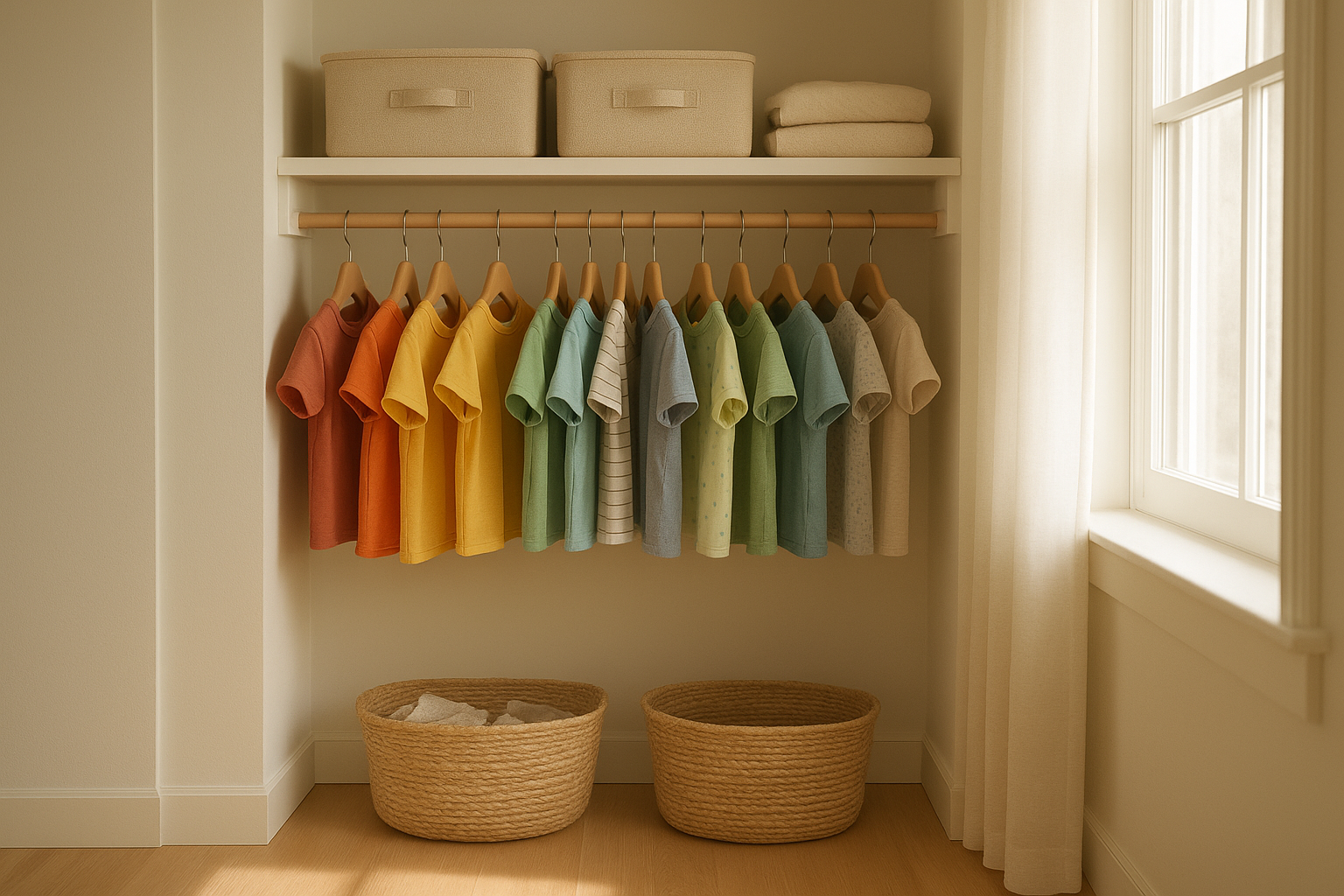
A well-organized rotating wardrobe for kids keeps only current, well-fitting pieces in circulation — reducing clutter and stress.
What Is a Rotating Wardrobe for Kids?
A rotating wardrobe for kids is, simply put, a living closet. Rather than accumulating clothing indefinitely, parents swap items in and out based on fit, season, or need. The goal is to keep a manageable number of pieces that are all genuinely useful right now — not items that "might fit soon" or "used to be a favorite."
This concept has gained significant traction in recent years, especially as sustainable fashion has moved into mainstream parenting conversations. However, the rotating model is not just about environmental responsibility — it is equally about practicality, savings, and sanity.
There are two main ways to implement this system. First, you can manage it yourself through seasonal capsule wardrobes and regular closet audits. Second — and increasingly popular — you can subscribe to a professional children's clothing rental service that handles the rotation for you.
Why Parents Are Choosing a Rotating Kids Closet
The traditional approach to children's clothing — buy, store, outgrow, donate, repeat — is exhausting and expensive. Therefore, more families are turning to a rotating system as a smarter alternative. The benefits are clear and measurable.
Consider the numbers: the average American family spends between $600 and $1,000 per year on children's clothing, according to data from the U.S. Bureau of Labor Statistics Consumer Expenditure Survey. A significant portion of that spending goes toward items worn only a handful of times before being outgrown. A rotating wardrobe directly addresses this waste.
In addition, a leaner closet reduces decision fatigue for both parents and children. When every item fits and is seasonally appropriate, getting dressed in the morning becomes faster and less stressful. That is a benefit many parents underestimate until they experience it firsthand.
If you are looking for practical strategies, the guide on the best way to keep kids' wardrobes updated offers excellent starting points for families at any stage of this process.
How to Set Up a Rotating Wardrobe for Kids
Setting up this system does not require a complete overhaul overnight. Instead, follow these five steps to build a rotating wardrobe that works for your family's lifestyle and budget.
- Audit your child's current wardrobe. Pull everything out and assess what fits right now. Remove items that are too small, worn out, or out of season. Be ruthless — if it is not being worn, it should not take up space.
- Identify gaps and upcoming size needs. Based on your child's current size and typical growth rate, anticipate what they will need over the next three to six months. Focus on versatile, mix-and-match pieces rather than novelty or occasion-specific items.
- Choose your rotation method. Decide whether you will manage the system yourself, participate in a local clothing swap, or subscribe to a professional service. Each approach has merits depending on your time, budget, and preferences.
- Sign up for a children's clothing subscription. If you choose a subscription, select a plan that matches your child's age and your monthly budget. Provide accurate sizing so curated pieces arrive ready to wear immediately.
- Schedule regular wardrobe reviews. Set a reminder every four to six weeks to check what still fits, what needs swapping, and what is coming up seasonally. Consistency keeps the system effective and prevents clutter from creeping back.
Managing the Chaos: Keeping It Organized
Even with the best intentions, a rotating system can become disorganized without structure. Consequently, many parents find it helpful to use labeled storage bins for next-size-up items and a dedicated donation bag for outgrown pieces. This way, the transition from one size to the next is seamless rather than chaotic.
For families who have already experienced the overwhelm of a disorganized kids' closet, the resource on solving kids' clothes chaos offers targeted, actionable advice to get back on track quickly.
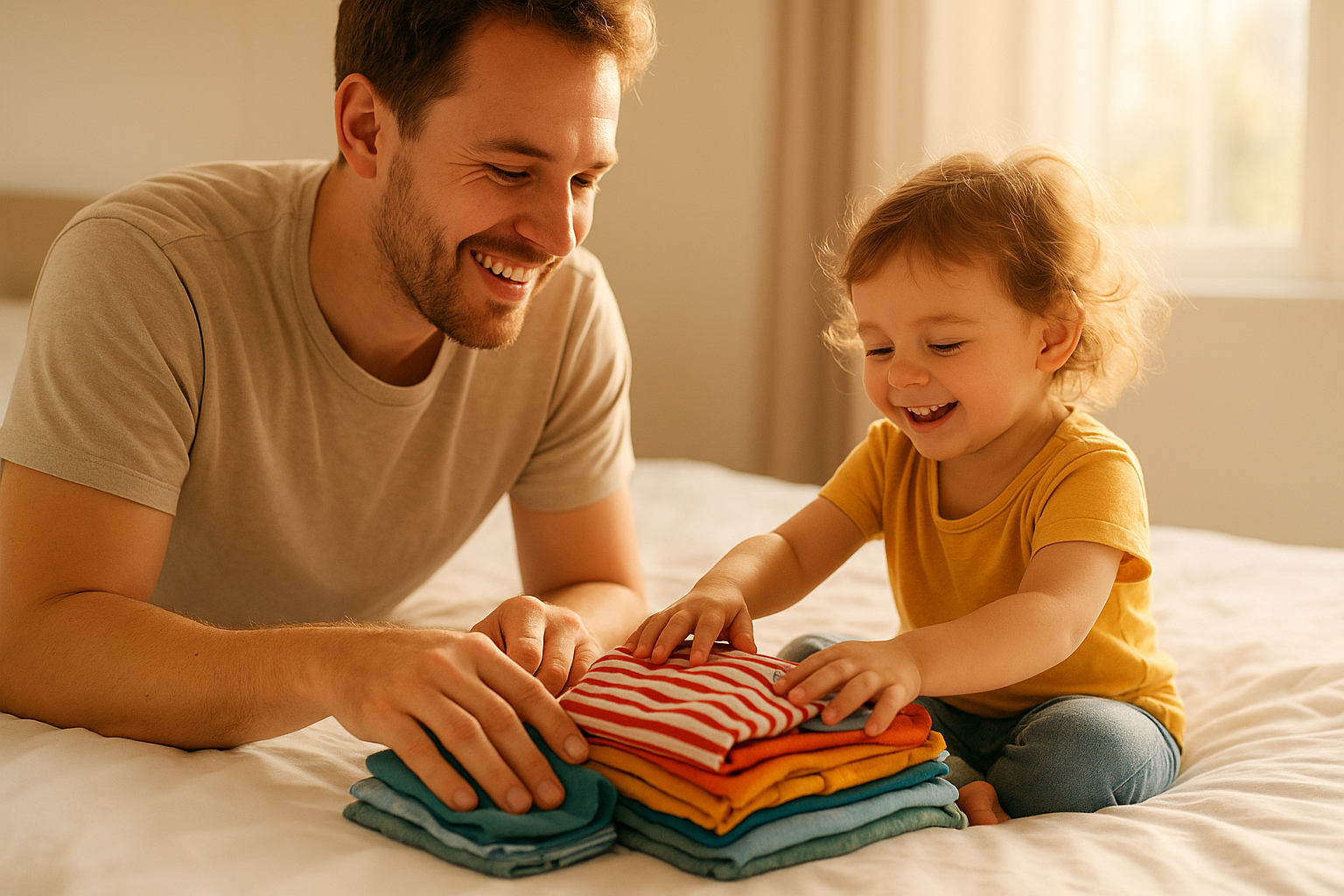
Involving children in the sorting process builds good habits and makes wardrobe transitions feel like a positive event rather than a chore.
The Sustainable Case for Swapping Kids' Clothing
Beyond convenience and cost savings, a rotating wardrobe for kids is one of the most impactful choices a family can make for the environment. The Ellen MacArthur Foundation reports that the equivalent of one garbage truck of textiles is landfilled or burned every second globally. Children's clothing, worn briefly before being outgrown, is a significant contributor to this problem.
A rental or swap model extends the useful life of each garment across multiple families. As a result, fewer items end up in landfill, and the resources used to produce each piece of clothing are shared more efficiently. For environmentally conscious parents, this is a meaningful way to align daily decisions with broader values.
Furthermore, when children see their parents making thoughtful choices about consumption, it builds awareness and habits that last well beyond childhood. The rotating wardrobe model, therefore, has both an immediate and a long-term positive impact.
How Bundle to Bundle Makes the Rotating Model Effortless
Bundle to Bundle is a children's clothing rental subscription built specifically for families with kids between newborn and seven years old. The service delivers a curated selection of high-quality, premium apparel from top-tier children's fashion labels — and when your child grows or your needs change, you simply swap the items for a fresh set.
Starting at just $50 per month with free two-way shipping included, the service eliminates the logistical and financial burden of constantly replacing outgrown clothing. There is no long-term commitment — members can cancel at any time. This makes it an accessible, low-risk entry point for families who want to try the rotating wardrobe model without a major upfront investment.
In contrast to buying new clothing every few months, a subscription like Bundle to Bundle gives families access to premium pieces they might not otherwise afford — while keeping their closets lean, organized, and seasonally current. For a deeper look at how this compares financially, the article on wardrobe rental for kids to save money and stress breaks down the numbers clearly.
Keeping Kids' Wardrobes Fresh and Stylish Year-Round
One of the most appealing aspects of a managed rotating system is that style never suffers. Because curated pieces are selected by professionals who understand children's fashion trends and seasonal needs, subscribers consistently receive clothing that is both age-appropriate and stylish. There is no more settling for whatever happens to be on sale or in stock.
Additionally, the ability to swap anytime means that if your child has a sudden growth spurt or the weather shifts unexpectedly, you are never stuck with a wardrobe that no longer works. This flexibility is, arguably, the single greatest advantage of a subscription-based rotating wardrobe over any self-managed alternative.
For more ideas on keeping children's wardrobes fresh without the constant shopping trips, explore the guide on how to keep children's wardrobes fresh and stylish — a practical resource for parents at any stage of their wardrobe journey.
Common Questions About Kids' Clothing Subscriptions
Many parents wonder whether a subscription service is truly worth it compared to buying secondhand or shopping sales. In practice, the value depends on how much time and energy you currently spend managing your child's wardrobe. For families who find themselves constantly sorting, donating, and replacing clothing, a managed rotating service pays for itself in time saved alone.
Similarly, parents often ask about hygiene. Reputable services professionally launder and inspect every garment between uses, so the process is thoroughly safe. In fact, professionally cleaned rental clothing is often in better condition than items that have been washed repeatedly at home.
If you are still weighing your options, the article on how to keep up with your child's clothing needs covers a range of strategies — from DIY wardrobe management to fully managed subscription services — to help you find the right fit for your family.
Frequently Asked Questions
What is a rotating wardrobe for kids?
A rotating wardrobe for kids is a system where children's clothing is regularly swapped out — either through a rental subscription or a seasonal capsule approach — so kids always have clothes that fit and suit the current season. It eliminates the buildup of outgrown items and reduces the need to constantly buy new clothing.
How does a children's clothing rental subscription work?
A children's clothing rental subscription sends curated outfits to your home on a regular basis. When your child outgrows the items or you want something new, you return them and receive a fresh selection. Services like Bundle to Bundle include free two-way shipping and flexible swap options.
How much does a kids clothing subscription typically cost?
Pricing varies by provider, but many services start around $50 per month. Bundle to Bundle offers a monthly membership at that price point, which includes free two-way shipping and access to premium children's apparel from top-tier labels.
Is a rotating kids wardrobe more sustainable than buying new clothes?
Yes, significantly so. By sharing and reusing clothing across multiple families, rental models extend the life of each garment and reduce textile waste. The Ellen MacArthur Foundation notes that the fashion industry generates enormous global waste, and rental models directly counter this trend.
What age range is a children's clothing rental service suitable for?
Most children's clothing rental services cater to newborns through early school-age children, typically up to age seven. This range covers the fastest growth period, when kids outgrow clothing most rapidly and buying new items every few months becomes expensive.
Can I cancel a kids clothing subscription at any time?
Most reputable services offer a no-commitment structure, meaning you can cancel at any time without penalty. Bundle to Bundle is specifically designed with this flexibility so families are never locked into a long-term contract.
What brands are typically included in a children's clothing rental?
Premium services like Bundle to Bundle curate pieces from top-tier children's fashion labels, offering high-quality apparel that would otherwise be expensive to purchase outright. The focus is always on durable, stylish, and well-made garments.
How often can I swap items in a rotating kids wardrobe subscription?
Swap frequency depends on the service plan you choose. Many subscriptions allow swaps anytime your child grows out of items or whenever you want a seasonal refresh. This flexibility is one of the biggest advantages over traditional shopping.
Is it hygienic to rent children's clothing?
Yes. Reputable children's clothing rental services professionally clean and inspect all garments between uses. Items are thoroughly laundered and quality-checked before being sent to the next family, making the process safe and hygienic.
What are the biggest mistakes parents make when managing kids' wardrobes?
Common mistakes include buying too many items in one size, purchasing off-season clothing too far in advance, and holding onto outgrown pieces too long. A rotating wardrobe approach helps avoid all of these pitfalls by keeping only current, well-fitting clothing in circulation.
How does a rotating wardrobe reduce clothing clutter?
Because items are returned when they no longer fit or are no longer needed, a rotating wardrobe naturally limits the volume of clothing in your home at any one time. This keeps closets organized and prevents the overwhelming pile-up of outgrown garments.
What is the best way to start a rotating wardrobe for kids?
The easiest way to start is by signing up for a children's clothing rental subscription like Bundle to Bundle. Alternatively, begin by sorting your child's current wardrobe, donating outgrown items, and committing to only keeping clothing that currently fits and is seasonally appropriate.
Conclusion: A Smarter Way to Dress Your Growing Child
A rotating wardrobe for kids is one of the most practical, sustainable, and cost-effective solutions available to modern parents. Whether you manage the rotation yourself or rely on a professional subscription service, the core benefit is the same: your child always has clothing that fits, suits the season, and reflects quality — without the financial strain or organizational chaos of traditional shopping.
For families ready to simplify their approach to children's clothing, Bundle to Bundle offers a fully managed rotating wardrobe experience starting at $50 per month, with free two-way shipping and the freedom to cancel anytime. It is, in short, a smarter way to dress your growing child — and a better deal for your budget, your closet, and the planet.


