


A children's wardrobe exchange program is an organized system that allows families to trade outgrown kids' clothing for items in the next size up, helping parents save money while keeping usable garments out of landfills. Because children grow so quickly, most outgrown clothes still have plenty of life left in them — making swapping a smart, sustainable choice for modern families.
In fact, the average American family spends over $1,000 per year on children's clothing. However, a well-run exchange program can dramatically cut that figure. Additionally, the environmental benefits are significant: the EPA reports that textiles represent one of the fastest-growing categories of municipal solid waste in the United States.
Why Kids Outgrow Clothes Faster Than You Expect
Children, especially in their first five years, can jump an entire clothing size every two to three months. As a result, parents often find themselves buying new outfits that are worn only a handful of times before they no longer fit. Therefore, the financial drain of keeping up with growth spurts is a very real concern for most households.
Meanwhile, the discarded clothes typically end up in donation bins or, worse, in the trash. Because most donated items are not resold locally, a large portion still ends up in landfills. A structured exchange program, however, creates a circular system where clothes move directly from one growing child to another.
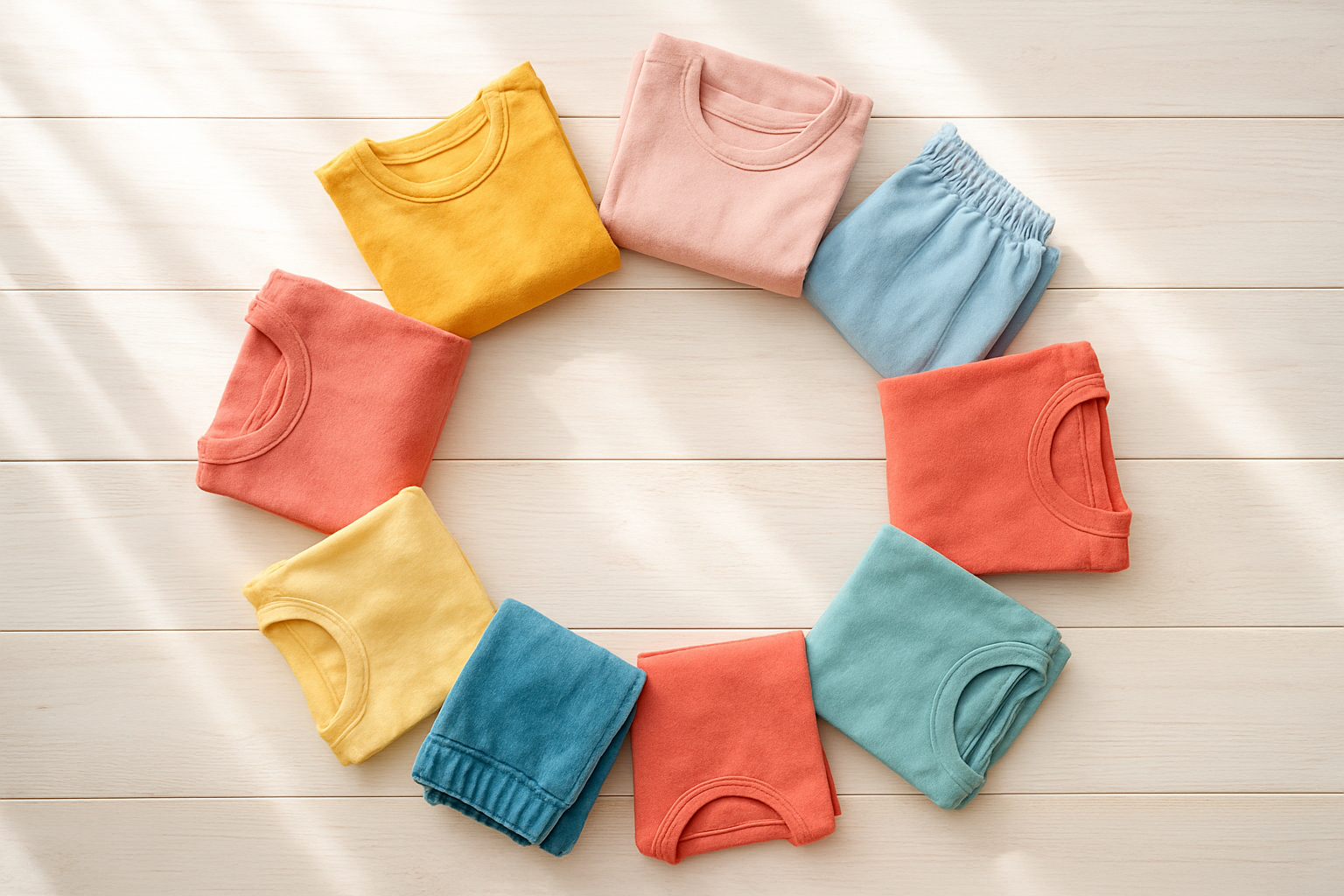
Neatly folded kids' garments ready for a children's wardrobe exchange program — every item still has life left in it.
How a Children's Wardrobe Exchange Program Actually Works
A children's wardrobe exchange program is a structured swap system — not a free-for-all donation drop. Families submit outgrown clothing that meets quality standards, and in return they receive credits or direct access to a curated selection of items in the sizes they currently need. The process is straightforward whether it happens online or in a community setting.
Platforms like Bundle to Bundle have digitized the entire process, allowing parents to mail in bundles of outgrown clothes and receive curated bundles of next-size items in return. This approach removes the friction of scheduling, travel, and in-person sorting that can make community swaps difficult for busy families.
Step-by-Step: Joining Your First Swap
First, gather all outgrown items and inspect each piece for stains, tears, and missing fasteners. Next, sort them by size and season so the receiving platform can process them efficiently. Then, submit your bundle through your chosen program's intake process — either by mailing it or dropping it off locally.
After submission, you'll receive credits or a curated selection of clothing in the sizes you need. Finally, review the received items and set a reminder to repeat the process at the next seasonal transition or size milestone.
The Real Financial Savings for Families
The savings from participating in a clothing exchange are tangible and consistent. For example, a family with two children under age six might exchange 30 to 50 items per season. At an average retail price of $15 to $25 per item, that represents $450 to $1,250 in potential savings every six months — simply by swapping instead of buying new.
In contrast, traditional thrift shopping requires time, travel, and inconsistent availability. Because exchange programs are curated, families receive items that are size-appropriate, seasonally relevant, and pre-screened for quality. This makes the value proposition far stronger than browsing a secondhand rack.
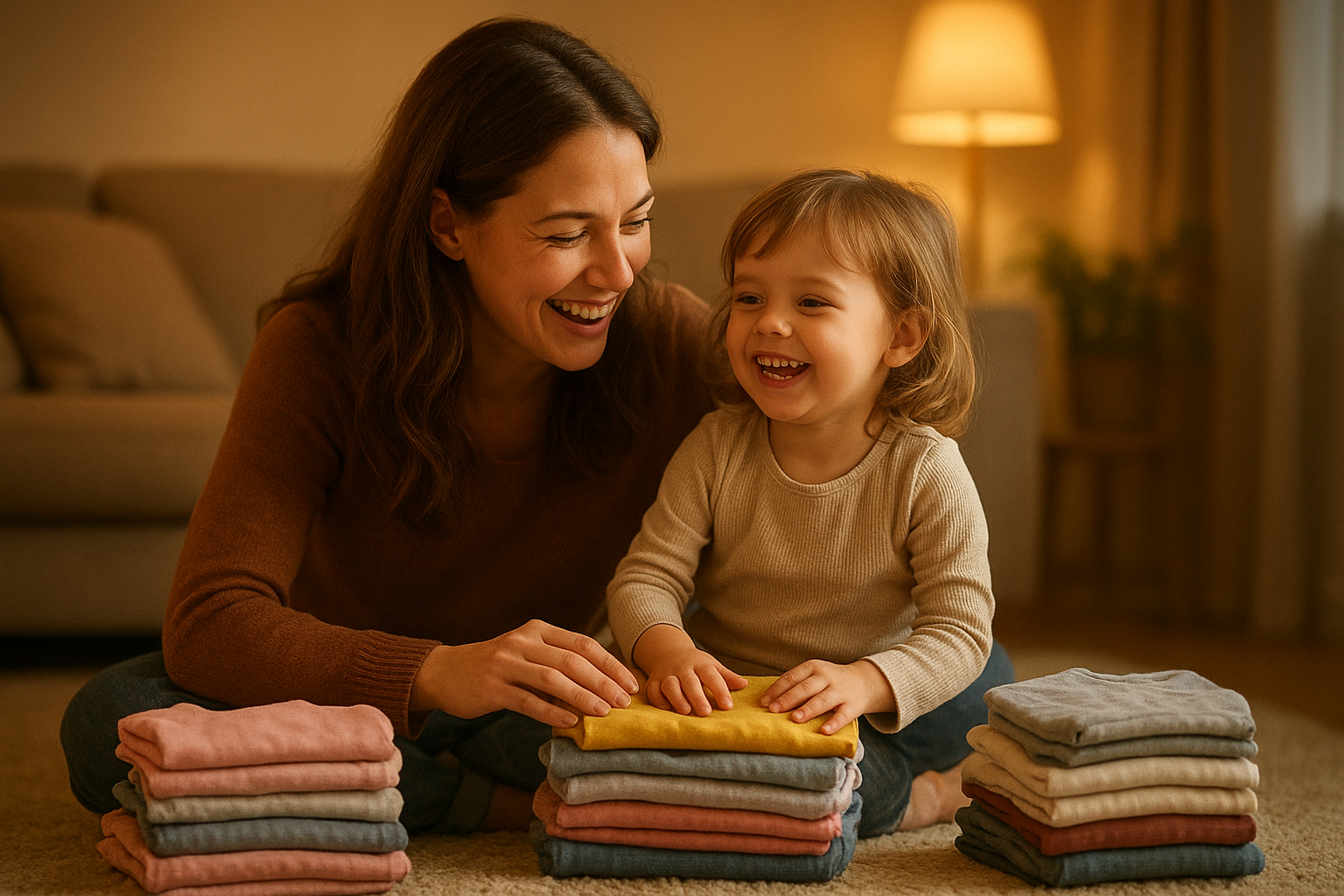
Sorting outgrown clothes as a family makes participating in a clothing exchange both easy and rewarding.
Environmental Impact: Why This Matters Beyond Your Budget
Fast fashion's environmental toll is well documented. According to the United Nations Environment Programme, the fashion industry is responsible for approximately 10% of global carbon emissions annually. Children's clothing, because it is outgrown so quickly, contributes disproportionately to this cycle.
Therefore, every item that moves through an exchange program instead of ending up in a landfill represents a measurable reduction in textile waste. Additionally, extending the useful life of a garment through multiple children reduces the demand for new production, which in turn lowers the carbon and water footprint associated with manufacturing.
Online vs. Community-Based Swaps: Which Is Better?
Online platforms offer convenience, broader selection, and year-round availability. However, they typically involve shipping, which adds a small carbon footprint. Community swaps, meanwhile, eliminate shipping entirely and allow parents to inspect items before accepting them.
In practice, the best approach depends on your location and schedule. Urban families often have access to well-organized local swaps, while suburban or rural families may find online platforms like Bundle to Bundle far more practical. Either way, both options are significantly more sustainable than buying new each season.
Common Mistakes to Avoid When Joining a Swap
One of the most frequent errors parents make is submitting items with hidden stains or damage, hoping they won't be noticed. This undermines the quality of the entire program and can result in account suspension on managed platforms. Therefore, always inspect items carefully under good lighting before packing them.
Another common mistake is waiting too long to exchange clothes a child has already outgrown. Because exchange programs depend on a steady flow of current sizes, submitting items promptly ensures other families can use them while they're still seasonally relevant. Finally, not tracking sizes accurately leads to receiving items that don't fit — so measure your child before each exchange cycle.
Who Benefits Most From Clothing Exchange Programs
Families with multiple young children gain the most immediate financial benefit, since their clothing needs are high and constant. However, even single-child households benefit significantly, especially during the toddler years when growth is fastest. Additionally, eco-conscious parents who want to reduce their household's environmental footprint find exchange programs aligned with their values.
Schools, daycare centers, and community organizations can also organize group swaps, pooling resources among members to maximize the selection available. In contrast to individual swaps, group programs often generate a much larger inventory, giving participants more variety and better size coverage.
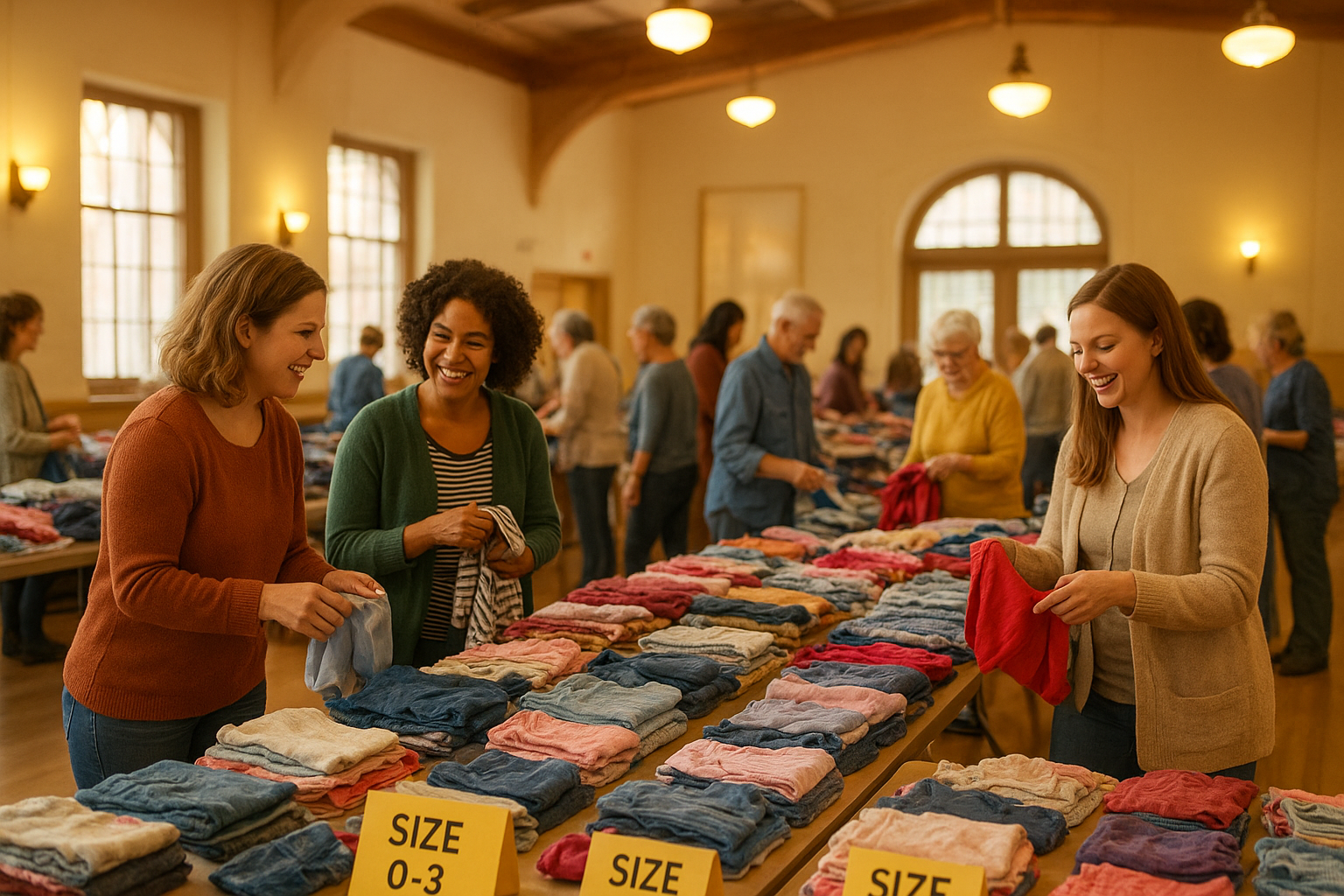
Community-based swap events bring neighbors together while making sustainable kids' fashion accessible to everyone.
How to Choose the Right Program for Your Family
Start by identifying whether you prefer the convenience of an online platform or the immediacy of a local swap. Then, review the program's quality standards, accepted item types, and credit or exchange policies. Because not all programs accept the same categories — some exclude shoes or accessories, for example — reading the guidelines carefully saves time and frustration.
Also consider the frequency of exchanges the program supports. Some platforms allow rolling submissions year-round, while others operate on a seasonal schedule. For families with fast-growing toddlers, a flexible, on-demand program is generally the better fit.
Quick Tip: Before your first submission, photograph each item you're sending. This creates a personal record and helps resolve any disputes about item condition if they arise later.
Frequently Asked Questions
What is a children's wardrobe exchange program?
A children's wardrobe exchange program is an organized system where families trade outgrown kids' clothing for items in the next size up, either online or in person. It reduces clothing waste and lowers the cost of keeping children dressed through each growth stage.
How does a kids' clothing swap work?
Families bring or submit outgrown clothes in good condition, and in return they receive credits or direct access to clothing in the sizes they need. Platforms like Bundle to Bundle manage the logistics digitally, making the process convenient for busy parents.
Is a children's wardrobe exchange program free to join?
Many programs offer free membership with optional paid tiers for premium access or faster shipping. Some community-run swaps are entirely free, while digital platforms may charge a small subscription or per-bundle fee.
What condition do clothes need to be in for a swap?
Most programs require clothes to be clean, free of stains, and free of significant damage such as broken zippers or large tears. Lightly worn items are generally accepted, but heavily worn or faded pieces are typically declined.
How much money can families save with a clothing exchange?
Families can save hundreds of dollars per year by swapping instead of buying new clothes each season. The exact savings depend on how often a child grows and how many items are exchanged annually.
Are children's clothing exchanges environmentally friendly?
Yes, clothing exchanges significantly reduce textile waste by extending the life of garments. According to the EPA, textile waste is one of the fastest-growing categories of municipal solid waste, making swaps an impactful eco-friendly choice.
What ages or sizes are typically covered in a wardrobe exchange?
Most programs cover newborn through early teen sizes, roughly newborn to size 14 or 16. Some platforms specialize in specific age ranges such as infant or toddler clothing.
Can I exchange shoes and accessories as well as clothes?
Many exchange programs focus primarily on clothing, but some also accept gently used shoes, hats, and accessories. Check the specific program's guidelines before submitting non-clothing items.
How do online clothing swap platforms differ from local swaps?
Online platforms offer wider selection, convenience, and the ability to swap year-round without scheduling conflicts. Local swaps, however, eliminate shipping costs and allow parents to inspect items in person before taking them home.
What are the biggest mistakes parents make when using a clothing exchange?
The most common mistakes include submitting items with hidden stains or damage, not checking size accuracy, and waiting too long to exchange items that children have already outgrown. Submitting items promptly and inspecting them carefully improves the experience for everyone.
How often should I participate in a wardrobe exchange?
Most families benefit from exchanging seasonally, typically twice a year when transitioning between warm and cold weather wardrobes. Faster-growing toddlers may need quarterly exchanges to keep up with rapid size changes.
Is secondhand children's clothing safe for babies and toddlers?
Yes, when sourced from reputable programs that inspect items for safety recalls and damage, secondhand clothing is safe. Parents should independently verify that any sleepwear meets current flammability standards and that items have not been recalled.
Start Swapping: The Practical Next Step
A children's wardrobe exchange program is one of the most practical, low-effort ways for families to save money and reduce their environmental footprint at the same time. Because the barrier to entry is low — you simply need outgrown clothes you already have — there's no real reason to delay. Therefore, the best time to start is at the very next growth milestone your child reaches.
Whether you choose a digital platform or a neighborhood swap, the core principle is the same: one child's outgrown wardrobe becomes another child's perfectly fitting one. In practice, that simple exchange creates financial savings, reduces waste, and builds a more connected, sustainable community for families everywhere.


