


A monthly kids wardrobe service gives parents access to a rotating collection of premium children's clothing for one flat subscription fee, so nobody has to keep buying new outfits every time a child shoots up a size. Instead of full-price shopping trips every season, families receive curated pieces, swap them whenever needed, and send them back once they're outgrown. As a result, dressing a fast-growing toddler or preschooler becomes far less stressful and far less expensive.
Because young kids can burn through several clothing sizes in a single year, traditional retail shopping often feels like a losing battle. Consequently, more families are turning toward rental-based wardrobe models that treat children's clothes the way a library treats books: borrowed, enjoyed, and returned for someone else to use next.
Direct answer: A monthly kids wardrobe service is a clothing rental subscription that provides a curated, swappable wardrobe of premium children's apparel for a flat monthly fee, typically including free shipping and unlimited size exchanges as a child grows.
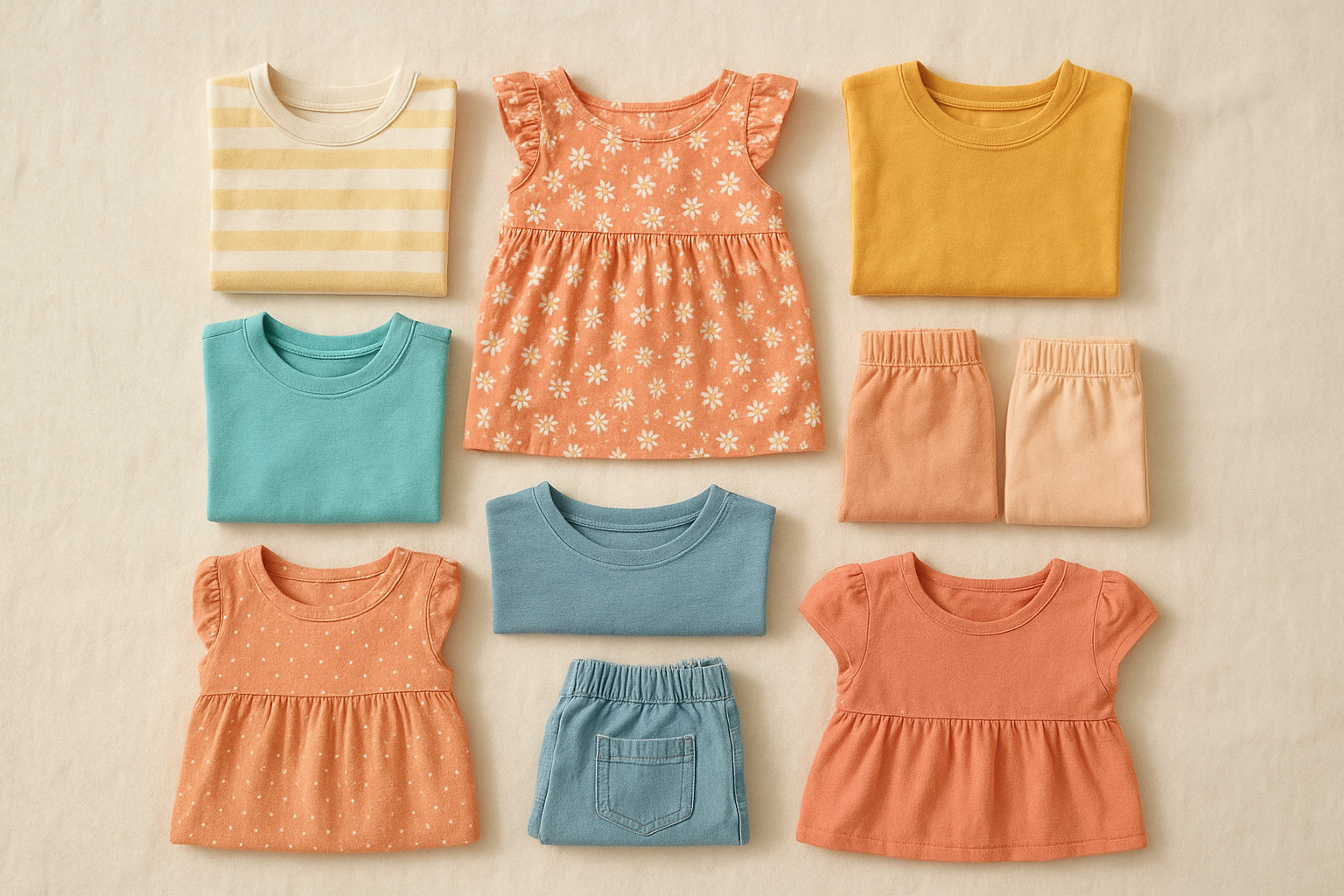
A curated bundle is at the heart of every monthly kids wardrobe service.
What Is a Monthly Kids Wardrobe Service?
In short, a monthly kids wardrobe service is a subscription that lends rotating batches of children's clothing rather than selling items outright. Parents pay a recurring fee, typically starting around fifty dollars per month, and in return receive a set number of curated garments from higher-quality children's fashion labels.
Unlike a typical online store, the goal isn't ownership. Instead, families borrow pieces for as long as they fit, then trade them in for the next size up. This approach directly solves one of parenting's most persistent frustrations: a closet full of barely worn clothes that no longer fit.
How a Kids Clothing Rental Service Works
Generally, the process starts with choosing a plan based on how many pieces you want in rotation at a time. After that, a stylist or algorithm curates a bundle matched to your child's size, gender preference, and the current season.
Once the bundle arrives, families use it just like a normal wardrobe. However, when something no longer fits or the season shifts, parents simply request a swap. The old pieces get shipped back using a prepaid label, and a fresh bundle takes its place. Because the swap cycle repeats indefinitely, kids always have appropriately sized clothing without repeated shopping trips.
Step-by-Step: Getting Started With a Wardrobe Subscription
For families new to this model, the onboarding process is straightforward. Below is the typical sequence most kids clothing subscription providers, including Bundle to Bundle, follow from signup through ongoing use.
- Measure your child's current size and think through the upcoming season so you choose a plan matched to their growth pace.
- Compare monthly pricing tiers, included piece counts, and shipping terms, then select the plan that fits your household budget.
- Browse the catalog or let stylists curate a bundle suited to your child's size, style, and the time of year.
- Receive your bundle through free two-way shipping and add it into your child's everyday rotation.
- Request a swap the moment your child outgrows an item, returning worn pieces with the included prepaid label.
- Keep swapping for as long as it's useful, or cancel anytime since most plans carry no long-term commitment.

Unboxing a fresh bundle is part of the routine for a children's clothing subscription.
Why Families Choose a Rotating Children's Wardrobe
Above all, convenience drives most decisions here. Parents no longer need to plan seasonal shopping trips or guess at sizes months in advance. Instead, they simply request an exchange whenever their child's needs shift.
In addition, cost predictability matters. A flat monthly fee is often easier to budget for than sporadic, unpredictable retail purchases that spike every time a growth spurt hits. For example, families using the Endless Bundle subscription can keep swapping sizes without ever paying full retail price again.
Similarly, quality plays a role. Because rental providers curate from premium labels, kids often end up wearing better-made clothing than families might otherwise buy on a tight budget for items they know will be outgrown within months.
Cost Comparison: Renting Versus Buying Kids Clothes
When comparing costs, it helps to think in terms of cost-per-wear rather than sticker price alone. A single outfit bought new might be worn for three or four months before it's outgrown, yet it costs the same as several months of rotating access under a subscription model.
According to the CDC's growth chart data, children between birth and age five experience some of the fastest growth rates of their entire childhood, which explains why clothing budgets spike so dramatically during these years. Consequently, a flat monthly wardrobe fee often works out cheaper than repeatedly replacing entire seasonal wardrobes at retail prices.
Sustainability and the Growing Kids Clothing Problem
Beyond cost, sustainability is a major reason families switch to a monthly kids wardrobe service. The U.S. Environmental Protection Agency reports that Americans discard more than 11 million tons of textiles annually, and a meaningful share of that waste comes from outgrown children's clothing that's barely been worn.
By contrast, a rental model keeps each garment in circulation across multiple children instead of ending up in a landfill after just a few wears. This approach mirrors principles found in the broader circular economy movement, where products are designed to be reused rather than discarded. For families who care about environmental impact, this shift matters just as much as the financial savings.
How to Choose the Right Kids Wardrobe Rotation Service
Not every provider works the same way, so it's worth comparing a few key factors before committing. Specifically, look closely at swap frequency, included brands, shipping policy, and how damage or excessive wear is handled.
Furthermore, consider the age range each service supports. Providers focused on newborn-to-seven programs tend to understand rapid early growth patterns better than general subscription boxes designed for older kids or adults. For a closer look at how rotation-based systems function day to day, this guide to children's wardrobe rotation service breaks down the mechanics in more detail.
Finally, think about how the service fits into your home organization routine. Families juggling frequent swaps often benefit from pairing a rental subscription with a simple system, such as the one outlined in this closet organization guide for parents.
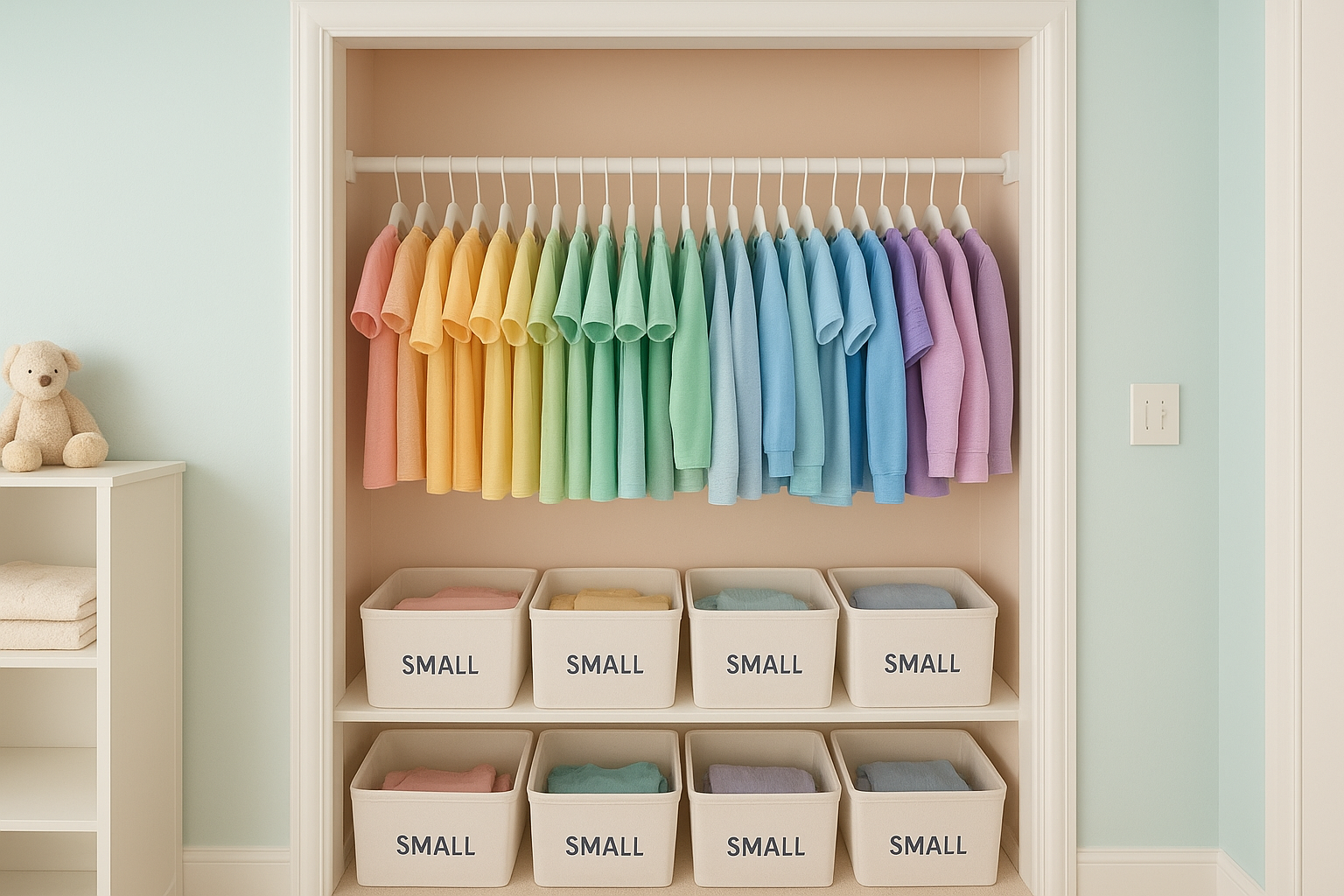
Pairing a monthly kids wardrobe service with simple closet organization keeps swaps stress-free.
Is a Monthly Kids Wardrobe Service Worth It?
For most families with young children, the answer tends to be yes, particularly when growth spurts are frequent and unpredictable. Because the model removes both the financial sting of constant repurchasing and the environmental cost of discarded clothing, it addresses two problems at once.
That said, families with slower-growing kids or very specific style preferences may find less value compared to traditional shopping. Therefore, it helps to weigh your own household's growth rate, budget, and priorities before subscribing. You can review current plans and pricing directly on the Bundle to Bundle website to see whether the model fits your family's needs.
Frequently Asked Questions
What is a monthly kids wardrobe service?
A monthly kids wardrobe service is a subscription that lends a curated rotation of children's clothing for a flat monthly fee instead of requiring parents to buy each item outright. Families can swap sizes and styles as their child grows, then return the pieces when they're outgrown.
How does a kids clothing rental service work?
Parents choose a plan, receive a shipment of curated clothing, and can request a swap whenever sizes or seasons change. Worn or outgrown pieces are returned using a prepaid shipping label, and a fresh bundle is sent in return.
How much does a monthly kids wardrobe service cost?
Plans typically start around fifty dollars per month, which usually covers a set number of items plus free two-way shipping. Costs vary depending on how many pieces are included and how often swaps are allowed.
Is renting children's clothing cheaper than buying new?
For fast-growing kids, renting is often more economical because a single flat fee replaces multiple full-price purchases across several sizes. It also removes resale hassle and reduces money spent on barely worn outfits.
What age range do kids clothing subscriptions typically cover?
Most children's wardrobe rental programs serve newborns through around age seven, since this is when kids cycle through sizes most rapidly. Some services extend further, but the newborn-to-seven range covers the steepest growth period.
Can I cancel a monthly kids wardrobe service anytime?
Yes, most reputable providers operate on a no-commitment, month-to-month basis. Families can pause or cancel whenever their needs change without long-term contracts or penalties.
Do I need to wash clothes before returning them?
Generally, no. Most rental services professionally clean and sanitize every returned garment before it goes back into rotation, so parents simply pack items up and ship them back as-is.
What happens if a rented item gets stained or damaged?
Reasonable wear from normal play is generally expected and covered within the subscription. Significant damage may incur a small replacement fee, so it's worth reviewing each provider's specific wear-and-tear policy.
Which brands are usually included in a kids wardrobe rotation service?
Providers typically curate pieces from well-known, higher-quality children's fashion labels chosen for durability and style. This gives families access to premium apparel they might not otherwise purchase at full retail price.
Is a children's clothing subscription environmentally friendly?
Yes, renting extends the life of each garment across multiple children instead of sending outgrown clothes to landfills. This circular approach directly addresses the significant textile waste problem documented by environmental agencies.
How often can I swap sizes with a monthly kids wardrobe service?
Swap frequency depends on the plan, but most services allow unlimited or frequent exchanges whenever a child grows out of a size. This flexibility is one of the biggest advantages over traditional retail shopping.
What's the difference between a wardrobe rotation service and a subscription box?
A subscription box typically ships new items each month that the customer keeps permanently, while a wardrobe rotation service lends items that get returned and replaced. The rotation model focuses on ongoing access rather than accumulation.
How do I choose the best kids clothing rental plan for my family?
Compare the monthly price, number of included pieces, swap frequency, and shipping policy across providers before committing. It also helps to check brand quality and read how the company handles damaged or lost items.
Final Thoughts
Ultimately, a monthly kids wardrobe service offers a practical answer to one of parenting's most repetitive expenses: replacing clothes that fit for only a few months at a time. By combining flexible swaps, free two-way shipping, and access to premium labels, this rental model saves money while cutting down on textile waste. Whether you're managing a fast-growing toddler or planning ahead for a newborn, exploring a subscription like the one offered through Bundle to Bundle may be the smarter, more sustainable path forward for your family's wardrobe needs.


