


A children's wardrobe organization service helps busy parents keep closets tidy, correctly sized, and stress-free — without one more trip to the store. Instead of wrestling with bins of outgrown outfits, families today choose from three main paths: doing it themselves, hiring a professional organizer, or joining a rotating clothing membership. In particular, the membership model has surged in popularity as parents search for a faster, greener, and more budget-friendly alternative to constant shopping.
Because children between newborn and age seven grow so quickly, traditional closets fill up fast with clothes that were barely worn twice. As a result, many households now compare DIY storage systems, professional closet consultants, and subscription-based wardrobes side by side before deciding. This guide covers every option in detail — what each one involves, how much it costs, and how to pick the right fit for your family — so you never have to go searching for another comparison.
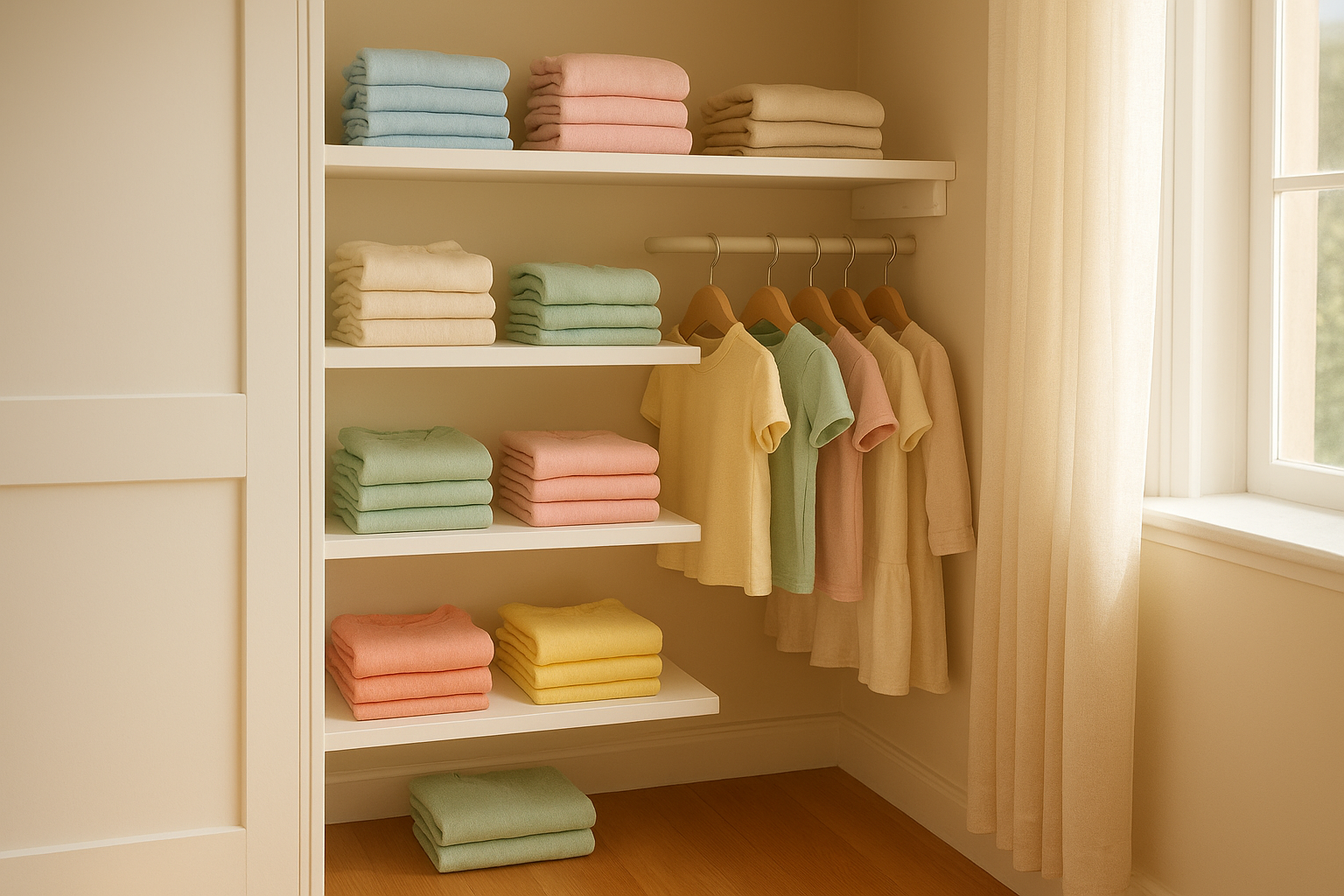
A well-organized closet is one of the biggest benefits of a children's wardrobe organization service.
What Is a Children's Wardrobe Organization Service?
A children's wardrobe organization service is any structured system — physical, professional, or subscription-based — that manages sizing, curation, and closet order for kids' clothing on an ongoing basis. Some versions simply help you sort what you already own. Others go further, rotating an entire wardrobe in and out as your child grows.
Specifically, the most complete services combine a style questionnaire, a curated bundle delivery, and a simple return process. In addition, most subscription plans bundle in free two-way shipping, which removes the extra cost and hassle of packing up outgrown clothes yourself. Below, we break down exactly how each approach works so you can decide which one fits your household.
Why Growing Families Need a Smarter Closet Solution
Children between newborn and seven years old can move through several clothing sizes within a single year, according to standard pediatric growth tracking. The CDC's growth chart data shows just how unpredictable these jumps can be, which is exactly why closets fill up with barely-worn clothes so fast.
Consequently, parents often find themselves buying, storing, and eventually discarding outfits that were worn only a handful of times. This cycle creates cluttered closets and unnecessary spending. Furthermore, constantly shopping for new sizes eats into time that many parents simply don't have.
According to the U.S. Environmental Protection Agency, textile waste in the United States exceeded 17 million tons in a recent reporting year, with children's clothing contributing a notable share due to rapid sizing turnover. Reusing garments through rental or resale models directly helps reduce that volume, which is one reason a children's wardrobe organization service appeals to environmentally minded parents.
Types of Children's Wardrobe Organization Services
Not every family needs the same solution. In fact, most parents fall into one of three categories: doing it themselves, hiring a professional, or subscribing to a rotating clothing membership. Below is an honest look at each.
DIY Wardrobe Organization for Kids' Closets
DIY organization means sorting, labeling, and storing clothes yourself using bins, dividers, and hanging systems. It costs the least upfront. However, it requires ongoing effort every time your child grows, and most parents underestimate how often that happens during the first seven years.
Hiring a Professional Closet Organizer
Professional organizers — often certified through groups like the National Association of Productivity and Organizing Professionals — visit your home, design a storage system, and sort existing clothing into keep, donate, and store piles. This works well for a one-time deep organization project. That said, a professional visit typically addresses the mess you already have; it does not solve the ongoing problem of new sizes arriving every few months.
Subscription-Based Wardrobe Rotation Services
A subscription children's wardrobe organization service, sometimes called a rotating or rental wardrobe, is the only option that solves both problems at once: it organizes the closet and continually resizes it as your child grows. Rather than owning every piece outright, families rent a curated set of garments that gets exchanged on a set schedule. This is the model the rest of this guide focuses on in depth.
How a Kids' Wardrobe Rental Membership Works
Understanding the mechanics of a rotating children's wardrobe organization service makes it easier to decide whether the model fits your household. Below is the straightforward process most memberships follow.
- Assess sizing and style needs. Measure your child and note growth trends, then list style preferences, colors, and any fabric sensitivities so curated pieces actually match daily routines.
- Choose a monthly plan. Compare pricing tiers, item counts, and swap frequency, then pick the tier that suits your budget and your child's growth pace.
- Receive the first bundle. Organize the curated wardrobe by outfit type as soon as it arrives, replacing old storage habits right away instead of mixing it into existing clutter.
- Swap as needed. Use the included two-way shipping label to return outgrown pieces and request replacements sized for the next stage or season.
- Review the plan regularly. Check every few months to confirm the membership still matches your child's growth rate, swap frequency, and household budget.
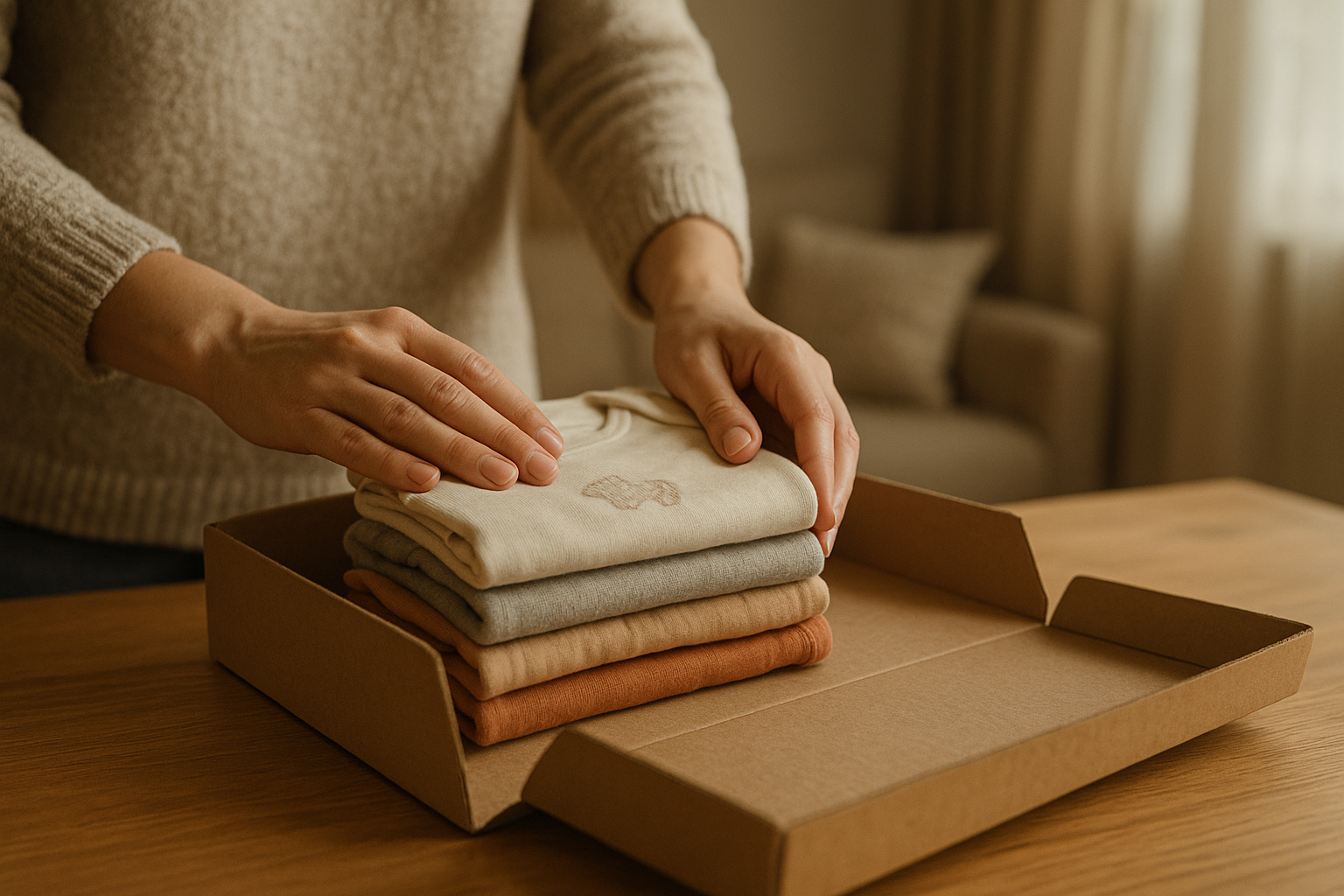
Swapping outgrown pieces is simple with a curated children's wardrobe membership.
Closet Organization Systems and Storage Tools That Make Any Method Work Better
Even families who use a subscription still benefit from smart physical storage. Specifically, a few simple tools make sorting, swapping, and daily dressing faster for both parents and kids.
- Labeled bins by size — helps you spot upcoming sizes at a glance instead of digging through drawers.
- Adjustable closet rods — lower rods let toddlers pick their own outfits, which builds independence and reduces morning battles.
- Drawer dividers — keep socks, underwear, and accessories separated so quick swaps stay tidy.
- A dedicated "swap shelf" — holds outgrown pieces awaiting return so nothing gets lost before a shipment.
- Seasonal storage bags — keep off-season clothing compact and dust-free between rotations.
If your household is still working through the toddler years specifically, this guide on managing a toddler wardrobe covers age-specific sizing tips that pair well with any of the storage tools above.
Benefits of a Rotating Children's Wardrobe
A rotating wardrobe offers more than just organization. For instance, families gain access to premium children's fashion labels they might not otherwise purchase outright, since the cost is spread across a monthly membership rather than one large expense.
In addition, the no-commitment structure means parents can cancel anytime, which lowers the risk of trying something new. Similarly, curated bundles reduce decision fatigue, since someone else handles selection based on the child's size and style profile.
If you'd like a deeper look at how curated rotating options compare, this guide to rotating wardrobes for kids breaks down the cost and stress savings in more detail.
Professional Organizer vs. Wardrobe Rental Subscription: Which Wins for Busy Families?
Above all, the right choice depends on whether your problem is a one-time mess or an ongoing sizing cycle. A professional organizer excels at the former; a subscription service excels at the latter.
- Cost pattern: A professional visit is typically a one-time fee, while a rental subscription is a recurring monthly cost, often starting around fifty dollars.
- Ongoing sizing: Organizers do not resupply clothes as your child grows; a rotating wardrobe automatically does.
- Time investment: Organizers require a scheduled home visit; subscriptions arrive and swap by mail.
- Best for: Combine both — hire an organizer once for structure, then maintain it long-term with a subscription like the ones described in this convenient children's clothing service guide for growing families.
Sustainability and Cost Savings Behind the Model
Sustainability is a major driver behind the growth of clothing rental services. Because each garment gets reused across several families instead of discarded after a few months, the overall demand for new textile production drops.
Moreover, resource use tied to manufacturing new clothing, including water and energy consumption, is documented extensively by researchers studying sustainable fashion practices. As a result, rental-based wardrobes align well with families trying to reduce their environmental footprint.
On the financial side, a membership starting around fifty dollars per month often costs less over a year than repeatedly buying new outfits at full retail price. Therefore, many parents view rental subscriptions as both a practical and responsible choice.
Choosing the Right Children's Clothing Rental Subscription
Not all rental subscriptions operate the same way, so it helps to compare a few key factors before committing. Specifically, look at pricing structure, shipping policies, size ranges covered, and how easily items can be swapped.
For example, Bundle to Bundle offers plans starting at fifty dollars per month for children from newborn through age seven, with free two-way shipping and no-commitment cancellation. This structure gives families flexibility as sizing needs shift throughout the year.
To see how a curated approach compares across providers, this curated children's wardrobe rental guide walks through what to expect from a typical membership.
Step-by-Step: Decluttering a Child's Closet Before You Start
Before joining any children's wardrobe organization service, a quick decluttering pass makes the transition much smoother. First, pull every item out of the closet so nothing hides in the back. Second, sort into three piles: keep, donate, and outgrown-but-sentimental. Third, measure remaining space so you know exactly how much room the new rotating wardrobe will occupy.
In particular, tracking your child's clothing needs before you commit to a plan helps you avoid over-ordering. This resource on keeping up with your child's clothing needs offers a practical framework for figuring out exactly how many outfits your household actually needs at once.
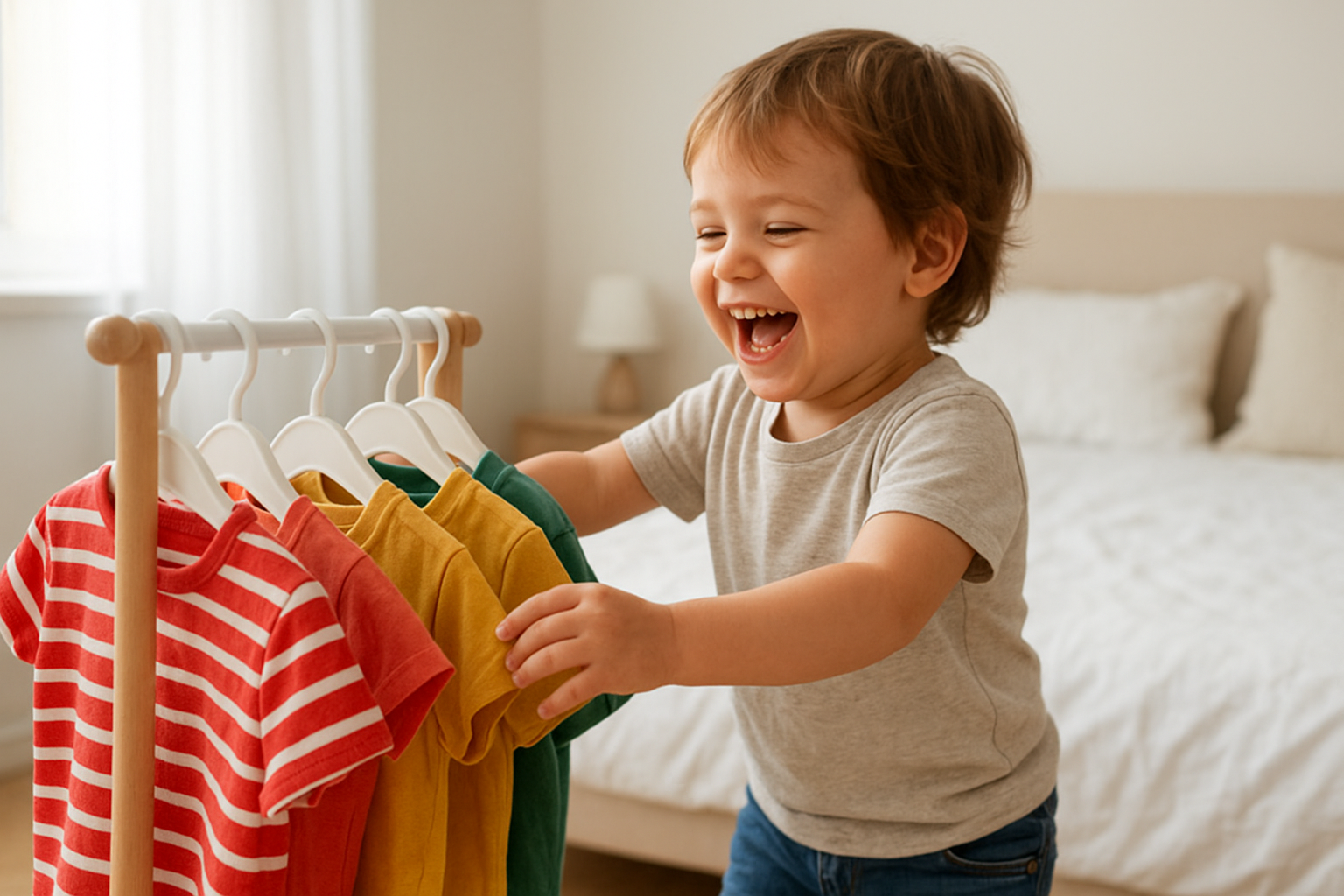
Kids often enjoy picking outfits from a rotating, curated wardrobe.
Tips for Keeping a Swappable Kids' Wardrobe Updated at Home
Even with a rental membership handling most of the heavy lifting, a bit of home organization keeps everything running smoothly. First, designate a specific shelf or bin for items awaiting return, so nothing gets misplaced before a swap.
Second, keep a simple sizing log to track upcoming growth spurts, which makes requesting the right replacement sizes much easier. Third, involve kids in choosing styles when possible, since this builds excitement around the swap process rather than treating it as a chore.
For more practical strategies, this resource on keeping kids' wardrobes updated offers additional household routines that pair well with a rental membership.
If you're still deciding whether a subscription model fits your family, this overview of swappable children's wardrobes compares the approach against traditional shopping habits. Similarly, families weighing multiple providers can review this breakdown of available swappable wardrobe services before making a final choice.
Seasonal Wardrobe Rotation Checklist
Seasonal transitions are one of the biggest triggers for closet chaos. Consequently, a short checklist at the start of each season keeps things under control.
- Check current sizing against the sizing log before requesting a seasonal swap.
- Box up off-season pieces immediately rather than letting them mix with current rotation.
- Request layering pieces for transitional weather instead of a full seasonal wardrobe at once.
- Confirm shipping windows early, especially before back-to-school or holiday travel periods.
Frequently Asked Questions About Children's Wardrobe Organization Service
What is a children's wardrobe organization service?
A children's wardrobe organization service is a program — DIY, professional, or subscription-based — that curates, delivers, and swaps kids' clothing so parents never deal with outgrown, disorganized closets. The most complete versions combine sizing logistics, rotating inventory, and two-way shipping into one simple membership.
How does a kids' clothing rental subscription work?
Parents choose a monthly plan, complete a style and size profile, and receive a curated bundle of clothing. When items no longer fit or match preferences, families ship them back and receive fresh pieces in return.
How much does a children's wardrobe organization service cost?
Subscription plans typically start around fifty dollars per month, covering a curated set of premium pieces plus free two-way shipping. Costs vary based on item count and swap frequency selected.
How much does hiring a professional organizer cost for a kids' closet?
A one-time professional organizing session typically runs from a flat consultation fee up to several hundred dollars, depending on closet size and how much sorting is needed. Unlike a subscription, this cost does not repeat monthly, but it also does not resupply new clothing as your child grows.
Is renting children's clothing cheaper than buying new?
For fast-growing children, renting is often cheaper because it avoids repeated full-price purchases every few months. Families also save on resale hassle, storage bins, and last-minute shopping trips.
What ages does children's clothing rental typically cover?
Most rotating wardrobe programs serve newborns through around age seven, the period when growth spurts happen most frequently. This range covers the highest-turnover years for kids' clothing.
Can I cancel a kids' wardrobe rental membership anytime?
Yes, most no-commitment rental memberships allow cancellation at any time without penalty. This flexibility makes it a low-risk way to try a rotating wardrobe model.
Is a children's clothing subscription sustainable?
Yes, because clothing gets reused across multiple families instead of discarded after a few months, a rental model reduces textile waste. This directly addresses the environmental impact of fast-growing children's wardrobes.
What's the difference between wardrobe organization and clothing rental?
Wardrobe organization refers to sorting and maintaining an existing closet, while clothing rental supplies a rotating inventory that replaces the need for constant sorting. A children's wardrobe organization service often blends both by managing sizing transitions automatically.
What's the best storage system for a small kids' closet?
Labeled bins by size, an adjustable low rod, and drawer dividers make the biggest difference in small spaces. Combined with a rotating wardrobe subscription, these tools keep even a tight closet functional year-round.
How often can families swap items in a rotating wardrobe?
Swap frequency depends on the plan, but many services allow exchanges whenever a child outgrows a piece or a season changes. There is generally no strict limit, since flexibility is central to the model.
What common mistakes do parents make when organizing kids' closets?
A common mistake is holding onto outgrown clothes out of guilt, which clutters storage and delays decluttering. Another is buying in bulk without accounting for how quickly young children grow.
Are rented children's clothes good quality?
Reputable rental services source from premium children's fashion labels and inspect items between uses. As a result, families typically receive gently used, well-maintained pieces rather than worn-out hand-me-downs.
How long does shipping take for a wardrobe swap?
Shipping times vary by provider, but most two-way shipping programs process exchanges within about a week. Some services offer expedited options for families needing a faster turnaround.
Does a children's wardrobe organization service help with seasonal changes?
Yes, rotating wardrobes are especially helpful during seasonal transitions since parents can swap out summer items for winter layers without buying an entirely new set. This keeps closets relevant year-round.
Final Thoughts
Ultimately, a children's wardrobe organization service offers a practical answer to one of parenting's most persistent headaches: closets full of clothes that no longer fit. Whether you choose a DIY storage overhaul, a one-time professional organizer, or a full rotating rental membership, the goal stays the same — a closet that keeps up with your child instead of falling behind.
For most fast-growing families, however, combining a light decluttering pass with an ongoing subscription delivers the best balance of organization, cost savings, and sustainability. As parents continue seeking smarter, lower-waste solutions, a well-chosen children's wardrobe organization service is likely to become an even more common part of everyday parenting.


