


Parents who want to rent clothes for children are discovering a smarter alternative to constantly buying new outfits every few months. Rent clothes for children is a subscription-based approach that lets families access a rotating wardrobe of premium apparel instead of owning every piece outright. Consequently, this guide explains how the process works, why it saves money, and what to look for when choosing a rental service.
Quick Answer: Renting children's clothing means paying a flat monthly fee, often starting around fifty dollars, to receive curated apparel that you can swap or return as your child grows. In addition, most services include free two-way shipping, so there is no extra cost when items no longer fit.
What Does It Mean to Rent Clothes for Children?
To rent clothes for children means subscribing to a service that supplies clothing on loan rather than for permanent ownership. You pay a recurring fee, and in exchange, you receive a set number of items chosen for your child's size and the current season.
Unlike a one-time purchase, however, this model is built around continuous rotation. As your child grows or the weather changes, you simply request a swap instead of shopping for replacements. Similarly, once an item is outgrown, it goes back to the provider for cleaning and redistribution to another family, which keeps the garment useful for much longer. This is essentially a subscription version of a clothing swap, scaled up and professionally managed for convenience.
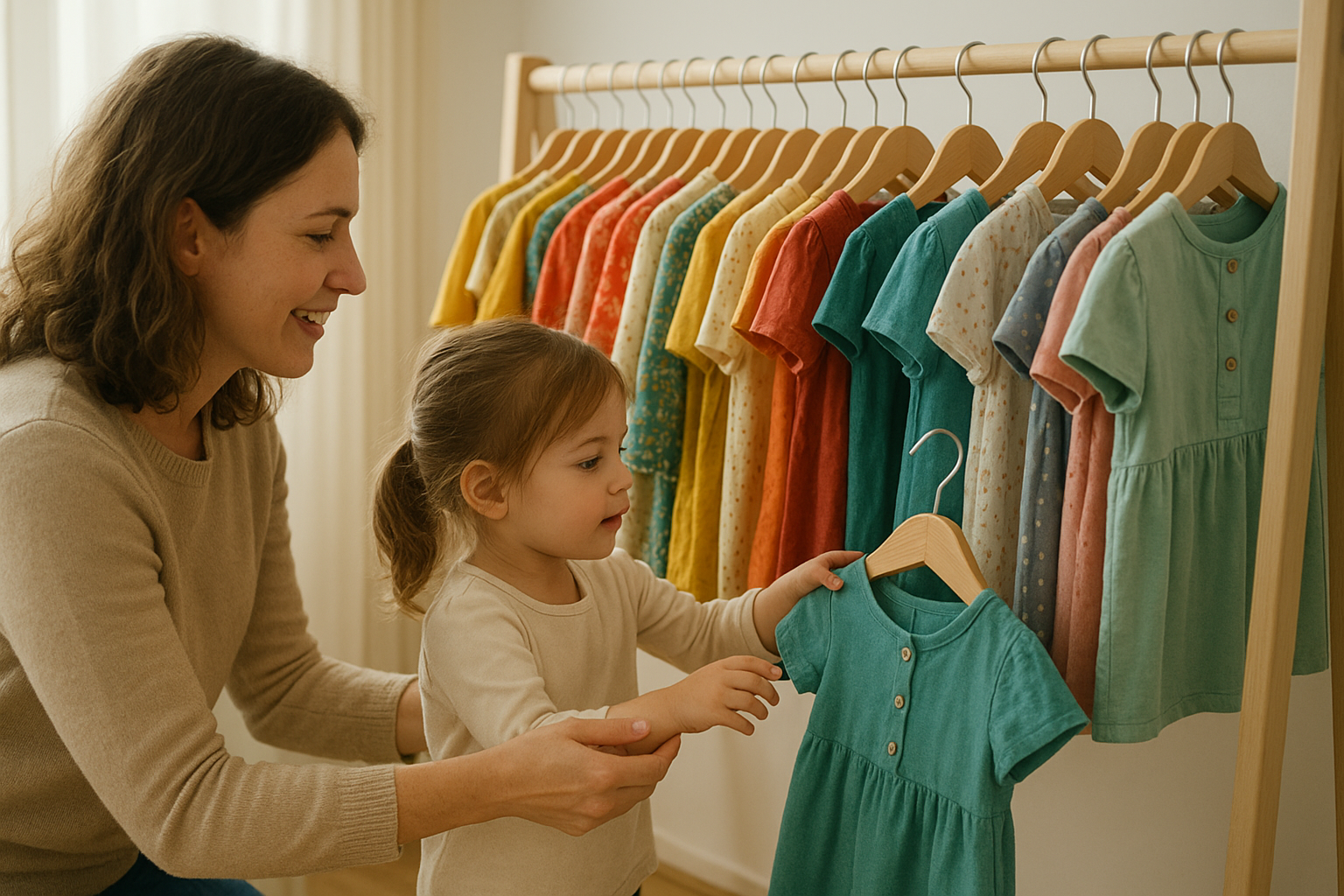
Choosing sizes and styles is the first step when families decide to rent clothes for children.
Why More Families Choose Kids' Clothing Rental Over Buying
Above all, children outgrow clothes at a pace that outpaces most household budgets. As a result, many parents now prefer a children's clothing rental model over repeated shopping trips. For example, a toddler might move through three or four sizes within a single year, according to typical pediatric growth patterns tracked by organizations such as the CDC's growth chart resources.
Furthermore, renting reduces clutter at home since there is no need to store bins of outgrown items. In particular, this appeals to families in smaller living spaces or those who simply prefer a lighter approach to their child's wardrobe. Therefore, the appeal is not only financial; it is also about convenience and reduced mental load for busy parents.
According to the U.S. Environmental Protection Agency, textiles accounted for roughly 11.3 million tons of municipal solid waste in a single reporting year, much of which comes from clothing discarded after limited use. Renting instead of buying helps address this by keeping each garment in circulation across multiple children. Source: EPA Textiles Data.
How Renting Children's Clothing Works: A Step-by-Step Guide
In practice, the process is straightforward. Below is a simple breakdown of what to expect when you sign up for a rotating wardrobe service.
- Sign up for a membership and share your child's current sizes, style preferences, and favorite clothing categories so the team can curate an appropriate box.
- Choose a monthly plan, starting at fifty dollars, and select how many pieces you want in your rotating wardrobe based on your family's needs and budget.
- Receive your curated bundle of premium children's clothing at your doorstep, already cleaned, inspected, and ready to wear right out of the box.
- Swap out items anytime your child grows, changes seasons, or simply wants a new style, without waiting for a fixed billing cycle to end.
- Pack outgrown or unwanted pieces into the prepaid return package and drop it off, since free two-way shipping is included in every membership.
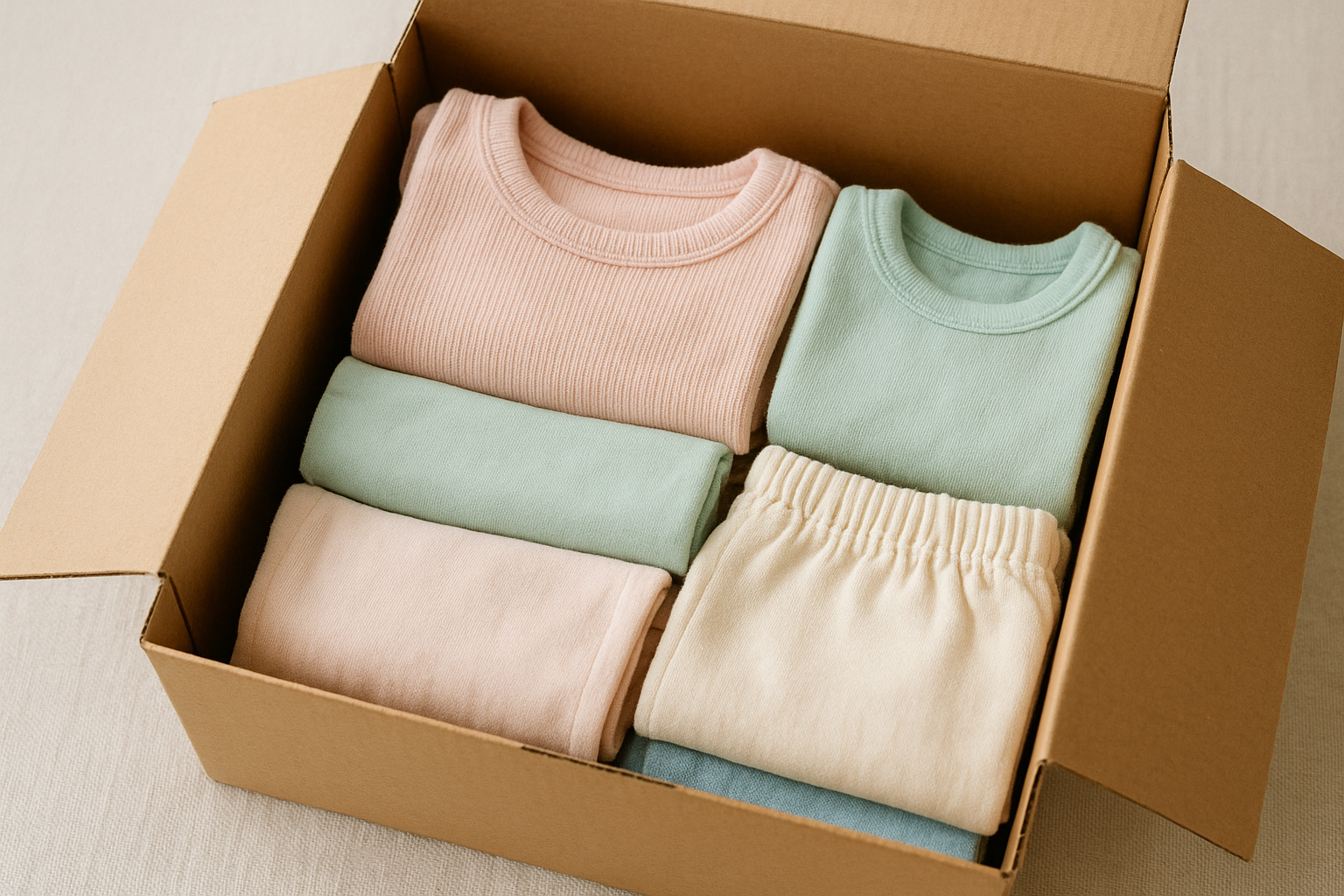
A ready-to-wear bundle arrives cleaned and organized, cutting down on shopping trips.
The Real Cost Savings and Sustainability Benefits
Cost savings depend on how quickly a child grows and how often the family would otherwise shop. Specifically, a flat monthly fee often works out cheaper than repeated retail purchases, especially for infants and toddlers who cycle through sizes every few months. In contrast, older children who grow more slowly may see smaller, though still meaningful, savings.
Meanwhile, sustainability benefits come from extended garment life. Each rented piece typically passes through several families before it is retired, which is a practical application of the circular economy concept. As a result, fewer new garments need to be manufactured, and less usable clothing ends up in landfills.
Choosing the Right Clothing Rental Service for Kids
Not every rental provider offers the same value, so it helps to compare a few factors before subscribing. Look closely at shipping policies, brand quality, size ranges, and cancellation terms. For instance, Bundle to Bundle serves families with children from newborn through age seven, with plans starting at fifty dollars per month and free two-way shipping built into every membership.
In addition, check whether the service allows unlimited swaps or limits how often you can exchange items. Above all, confirm there is no long-term contract, since flexibility to cancel anytime is one of the biggest advantages of this model. If you are still comparing your options for outfitting a growing child, this smart buying guide for growing children and this overview of where to find online clothing rental for kids are useful starting points.
Furthermore, families who want a deeper cost comparison can review how renting premium kids' clothes saves money over time, or explore this affordable children's apparel shopping guide for additional budget strategies. You can also visit Bundle to Bundle's website directly to see current plan pricing and available brands.
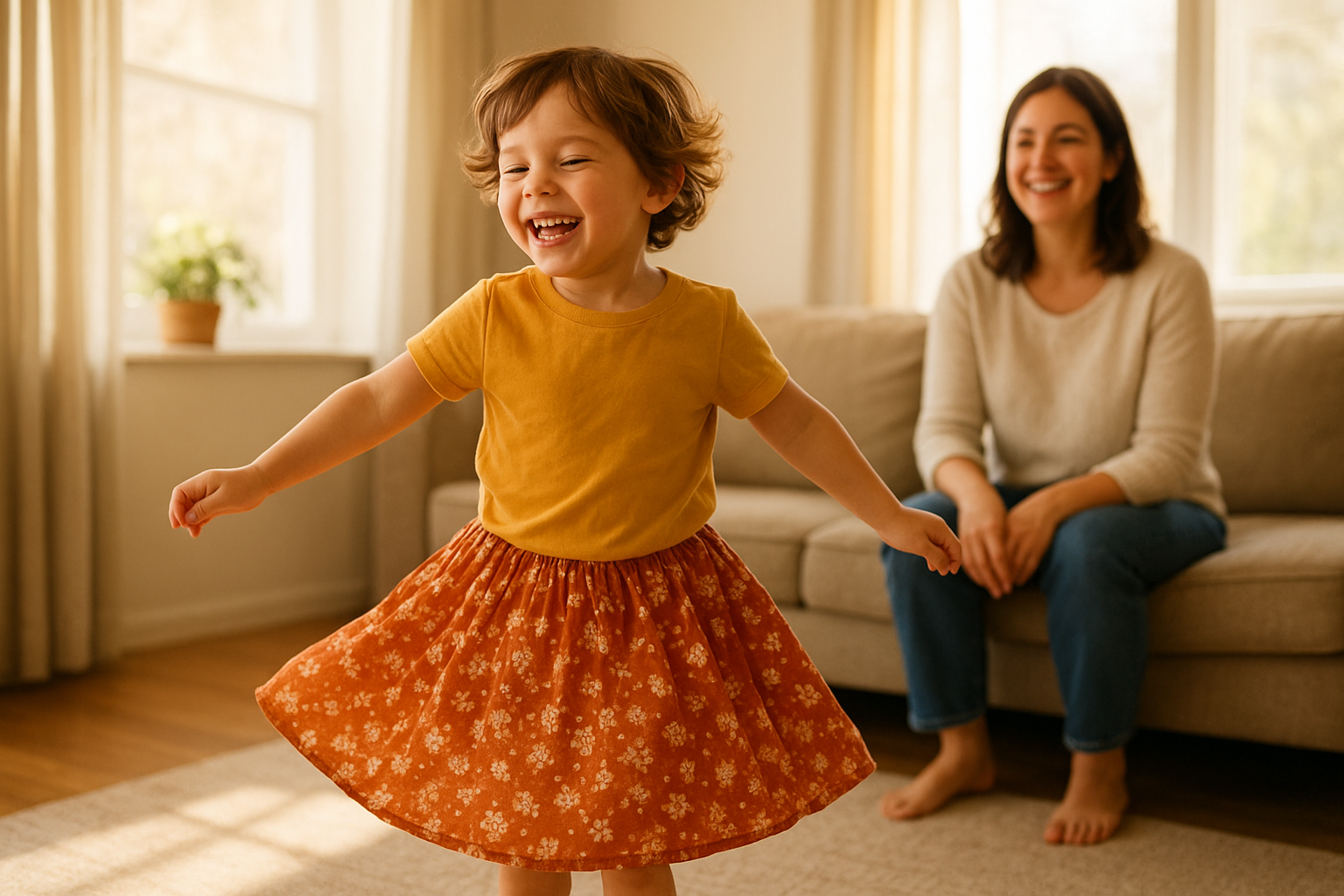
Swapping pieces as needs change is one of the biggest perks families enjoy.
Frequently Asked Questions About Renting Clothes for Children
What does it mean to rent clothes for children?
To rent clothes for children means paying a monthly fee to borrow a rotating wardrobe of kids' apparel instead of purchasing every item outright. Families return or swap pieces as their child grows, rather than keeping clothing permanently.
How does renting children's clothing actually work?
You sign up, share your child's sizes and style preferences, and receive a curated box of clean, ready-to-wear garments. When items no longer fit, you send them back using prepaid shipping and get a fresh bundle.
Is renting kids' clothes cheaper than buying new outfits?
For fast-growing children, renting is often cheaper because a flat monthly fee replaces repeated full-price purchases. Families typically save the most when their child moves through sizes every few months.
How are rented children's clothes cleaned between uses?
Reputable rental services professionally launder and inspect every garment before it ships to a new family. Items with visible wear or damage are removed from rotation rather than sent out again.
What age range works best for a children's clothing rental service?
Most services, including Bundle to Bundle, focus on newborns through around seven years old, since this age range experiences the fastest size changes. Some brands extend coverage slightly beyond that window.
Can I keep a rented item if my child loves it?
Many rental subscriptions allow you to purchase a favorite piece at a discounted rate instead of returning it. Policies vary, so it is worth checking the specific service's buy-out option.
What happens if a rented outfit gets stained or damaged?
Normal wear and minor stains are generally expected and covered within the membership. Significant damage may incur a small repair or replacement fee, depending on the provider's terms.
How long does shipping take when you rent clothes for children?
Most curated bundles arrive within about five to seven business days after signing up or requesting a swap. Return shipping is typically just as fast since it uses the same prepaid two-way system.
Can I cancel a children's clothing rental subscription anytime?
Yes, most flexible plans, including Bundle to Bundle's model, allow cancellation whenever you choose with no long-term contract. This low-commitment structure makes it easy to pause during slower seasons.
Is renting clothes for children better for the environment than buying new?
Renting extends the useful life of each garment across multiple children, which reduces overall textile waste. This circular approach keeps quality clothing in use longer instead of sitting unworn in a closet.
What brands are usually included in a kids' clothing rental box?
Quality rental services curate pieces from premium, well-constructed children's fashion labels rather than fast-fashion basics. The exact brand mix depends on your child's size and the season.
What mistakes should parents avoid when renting kids' clothing?
A common mistake is underestimating growth spurts and ordering sizes too close to current measurements. It also helps to review swap and return policies upfront so you know exactly how the two-way shipping process works. For more budgeting tips, this complete guide for budget-savvy parents covers common pitfalls in more detail.
Final Thoughts
Ultimately, deciding to rent clothes for children comes down to weighing convenience, cost, and environmental impact against the traditional habit of buying new outfits every season. As shown throughout this guide, a flexible subscription can reduce spending, cut down on clutter, and support a more sustainable approach to kids' fashion. Therefore, families who want quality apparel without constant repurchasing may find that a rotating wardrobe service like Bundle to Bundle fits naturally into their routine as their child continues to grow.


