


Clothing for growing children is one of the most repetitive and surprisingly expensive challenges parents face — because no matter how carefully you shop, kids simply keep growing. Understanding how to plan, buy, and rotate a child's wardrobe smartly can save hundreds of dollars each year while reducing textile waste.
In this guide, you will find practical sizing strategies, fabric advice, sustainability tips, and a step-by-step wardrobe-building process. Whether you are dressing a toddler or a pre-teen, these principles apply at every stage.
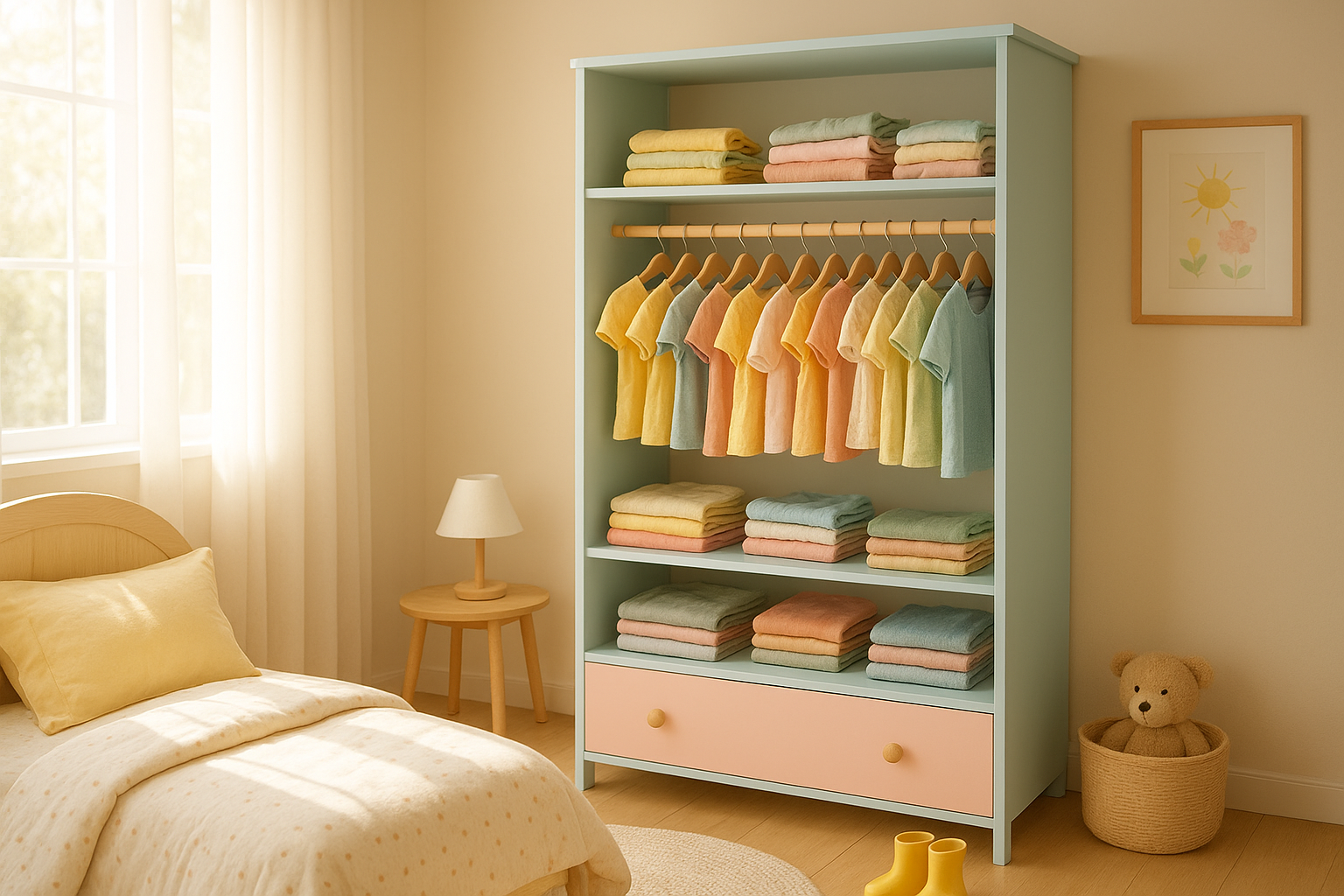
A well-organized wardrobe makes it easier to track what clothing for growing children is still needed each season.
Why Clothing for Growing Children Demands a Different Approach
Clothing for growing children is defined by one unavoidable reality: the fit that works today will likely be too small in three to six months. Unlike adult wardrobes, which can remain stable for years, a child's wardrobe requires constant rotation. As a result, buying habits that work for adults — such as investing in expensive single pieces — often lead to waste and frustration for parents.
Additionally, children are hard on their clothes. Mud, grass stains, and general wear mean that even well-made garments rarely survive more than one or two seasons of heavy use. Therefore, the goal is not simply to buy quality — it is to balance durability, cost, and sizing flexibility in every purchase decision.
Understanding Children's Clothing Sizes
Children's clothing sizes are notoriously inconsistent across brands. A size 4T from one manufacturer may fit the same child as a size 5 from another. For that reason, always measure your child's height and chest circumference before shopping, and cross-reference those measurements with the brand's own size chart.
According to general guidance from the CDC's pediatric growth charts, children's growth rates vary significantly by age, gender, and individual development. However, most children between ages 2 and 6 gain roughly 2 to 3 inches in height per year, which translates directly into clothing size changes every few months.
In practice, buying one full size up for everyday basics — such as jeans, leggings, and long-sleeved tops — is a widely recommended approach. Adjustable waistbands and roll-up cuffs can bridge the gap while the item grows into the child's frame.
Building a Practical Capsule Wardrobe for Kids
A capsule wardrobe for children focuses on fewer, more versatile pieces rather than a large collection of single-use outfits. This approach reduces decision fatigue for both parent and child, and it makes it easier to identify genuine gaps when a new season arrives.
A typical seasonal capsule for a school-age child might include:
- 5 to 7 everyday tops in neutral or mix-and-match colors
- 3 to 4 bottoms (jeans, leggings, or joggers)
- 2 layering pieces (a hoodie and a zip-up or cardigan)
- 1 to 2 smarter outfits for occasions
- Sufficient underwear and socks for a full week
Because children often wear the same favorites repeatedly, a smaller wardrobe actually gets more use per item. Meanwhile, fewer pieces also means less laundry chaos and easier organization.
Step 1: Measure Your Child Accurately
Before buying anything, take your child's current height, weight, and chest measurement. These numbers will anchor every sizing decision and prevent the common mistake of buying by age label alone.
Step 2: Audit the Existing Wardrobe
Sort every item into three piles: fits well, too small, and too large. Donate or swap anything that no longer fits, and set aside larger items for when your child catches up to them. This audit reveals exactly what you need to buy — and prevents duplicate purchases.
Step 3: Identify Seasonal Gaps
After the audit, list the specific items missing for the upcoming season. Prioritize versatile basics first, then fill in with weather-specific pieces like raincoats or thermal underlayers. This targeted approach prevents impulse buying.
Step 4: Buy One Size Up for Everyday Basics
For items worn daily, purchasing the next size up extends the useful life of each garment significantly. For example, a slightly oversized hoodie bought in autumn will still fit comfortably by spring, especially with an adjustable hem or cuff.
Step 5: Explore Bundle and Secondhand Options
Finally, fill wardrobe gaps through bundles, swaps, or secondhand sources. Services like Bundle to Bundle are designed specifically to make rotating children's wardrobes more affordable and environmentally responsible. Because children outgrow clothes so quickly, secondhand items often look nearly new.
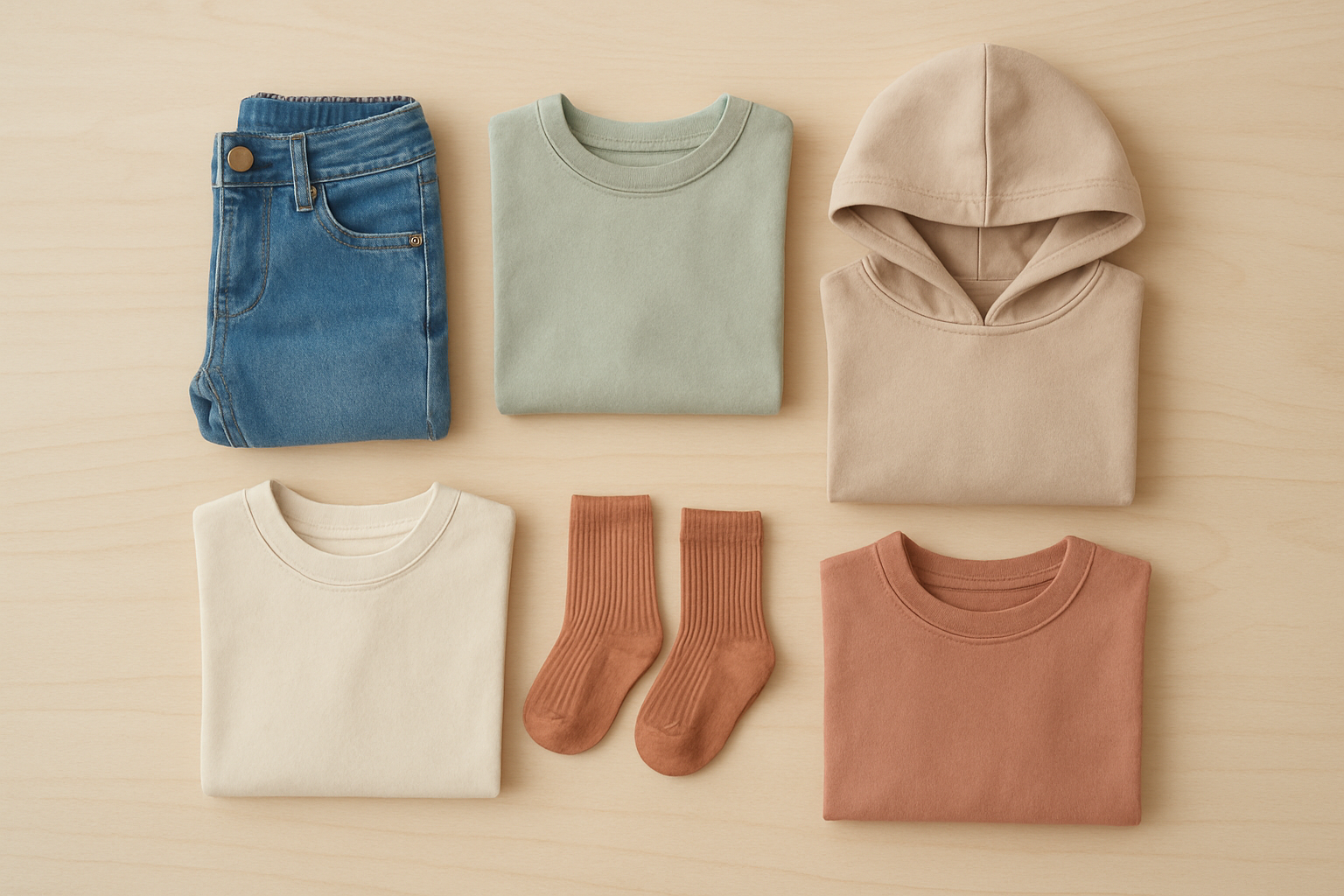
A capsule wardrobe built around versatile basics makes dressing children simpler and more cost-effective.
Choosing the Right Fabrics
Fabric choice directly affects how long children's clothing lasts and how comfortable it is to wear. Natural fibers such as organic cotton and bamboo are breathable, soft against sensitive skin, and generally more durable through repeated washing. In contrast, synthetic fabrics like polyester can trap heat and cause irritation, particularly for younger children.
For active play, look for garments with reinforced knees and double-stitched seams. These construction details extend the life of each item considerably, making them more likely to survive hand-me-down cycles to younger siblings or other families.
Sustainability and the True Cost of Fast Fashion for Kids
The children's clothing industry generates a significant amount of textile waste because items are outgrown so quickly. However, parents can reduce their environmental footprint considerably by choosing secondhand, participating in clothing swaps, or using bundle services that facilitate circular clothing cycles.
Additionally, buying fewer but higher-quality items that can pass through multiple children reduces the total number of garments that end up in landfill. A well-made pair of jeans that fits three children over five years has a far lower environmental cost than five cheap pairs that each last one season.
Platforms like Bundle to Bundle make it straightforward to both receive and pass on quality children's clothing, creating a community-driven solution to the fast-fashion cycle.
Durable, comfortable fabrics let children move freely and make clothing last through active play.
Common Mistakes to Avoid
Many parents make the same avoidable errors when building their child's wardrobe. First, buying too many items in the current size is a frequent and costly mistake. Because children grow unpredictably, overstocking a single size often means items are outgrown before they are fully used.
Second, prioritizing low price over fabric quality leads to garments that wear out quickly and cannot be passed on. A slightly more expensive item that survives two children ultimately costs less per use than a cheap alternative that falls apart after one season.
Third, ignoring adjustable features is a missed opportunity. Waistbands with internal elastic, roll-up hem tabs, and adjustable shoulder straps all extend the functional life of a garment by months. Therefore, when comparing two similar items, always favor the one with more adjustability.
Quick tip: Before each new season, spend 15 minutes sorting your child's wardrobe. This single habit prevents impulse buying, reduces clutter, and ensures you always know exactly what is needed.
Frequently Asked Questions
What is the best strategy for buying clothing for growing children?
The best strategy is to buy one size up from your child's current size, focus on adjustable features, and build a small capsule wardrobe of versatile basics. This approach reduces waste and saves money as children grow quickly through each size.
How often do children outgrow their clothes?
Toddlers and young children typically outgrow clothing every 3 to 6 months, while school-age children may stay in one size for 6 to 12 months. Growth spurts can happen suddenly, so it helps to keep a small stock of the next size ready.
Is secondhand clothing safe for children?
Yes, secondhand clothing is generally safe when washed thoroughly before first use. Always check for loose buttons, broken zippers, or worn drawstrings that could pose a safety hazard before putting items on a child.
What fabrics are best for children's clothing?
Natural fabrics like organic cotton and bamboo are ideal because they are breathable, soft on sensitive skin, and durable. In contrast, synthetic fabrics can cause irritation and trap heat, making them less suitable for everyday wear.
How can I save money on children's clothing?
Buying in bundles, shopping secondhand, and swapping clothes with other parents are the most effective ways to save money. Additionally, seasonal sales and subscription bundle services offer significant savings on quality items.
What is a capsule wardrobe for kids?
A capsule wardrobe for kids is a small, curated collection of versatile, mix-and-match clothing items that cover most daily needs. It typically includes neutral basics, a few statement pieces, and weather-appropriate layers.
Are clothing bundles worth it for growing kids?
Yes, clothing bundles offer excellent value because they provide multiple items at a lower per-piece cost. Services like Bundle to Bundle are specifically designed to make rotating children's wardrobes more affordable and sustainable.
How do I choose the right size when buying kids' clothes online?
Always refer to the brand's specific size chart and measure your child's height and chest rather than relying on age labels alone. Sizing varies significantly between brands, especially for international retailers.
What are the most common mistakes parents make when buying children's clothing?
The most common mistakes include buying too many items in the current size, choosing low price over durability, and overlooking adjustable features. Overstocking a single size means many items are outgrown before they are fully used.
How can I make children's clothing more sustainable?
Choose durable, natural fabrics, buy secondhand, and pass clothes on to younger siblings or other families. Using bundle or clothing swap services reduces the number of new items purchased each season and lowers your environmental impact significantly.
When should I buy the next clothing size for my child?
Start transitioning to the next size when current clothes feel snug around the shoulders, waist, or inseam. It is smart to have a few items in the next size ready before the current size is completely outgrown, so you are never caught unprepared.
What features should I look for in durable kids' clothing?
Look for reinforced knees, double-stitched seams, adjustable waistbands, and pre-shrunk fabrics. These construction details extend the life of each garment and make it far more likely to survive hand-me-down cycles.
Final Thoughts on Dressing Kids Who Never Stop Growing
Managing clothing for growing children is ultimately about building smarter habits rather than spending more money. By measuring accurately, buying versatile basics in the next size up, choosing durable natural fabrics, and embracing secondhand and bundle options, you can keep your child well-dressed through every growth phase without unnecessary waste or expense.
The most effective parents approach children's wardrobes the same way they approach any recurring household challenge — with a simple, repeatable system. Therefore, start with a seasonal audit, fill gaps thoughtfully, and let services designed for growing families do the heavy lifting. Your wardrobe routine will become faster, cheaper, and far more sustainable as a result.


