


Children's Outfit Subscription: The Complete Parent's Guide
Updated July 2025 · 14 min read · Kids Fashion & Parenting
A children's outfit subscription is a recurring clothing delivery service that sends curated, age-appropriate outfits directly to your home on a set schedule — eliminating the stress of keeping pace with a fast-growing child's wardrobe. For today's busy parents, it has become one of the most practical, time-saving ways to dress kids well without sacrificing an entire weekend to shopping.
Children grow at a startling pace — the average toddler moves through one to two clothing sizes per year, and growth spurts can arrive with virtually no warning. A children's outfit subscription solves that cycle by delivering fresh, properly sized outfits on a predictable schedule, often at a better per-item cost than traditional retail and without a single trip to the store.
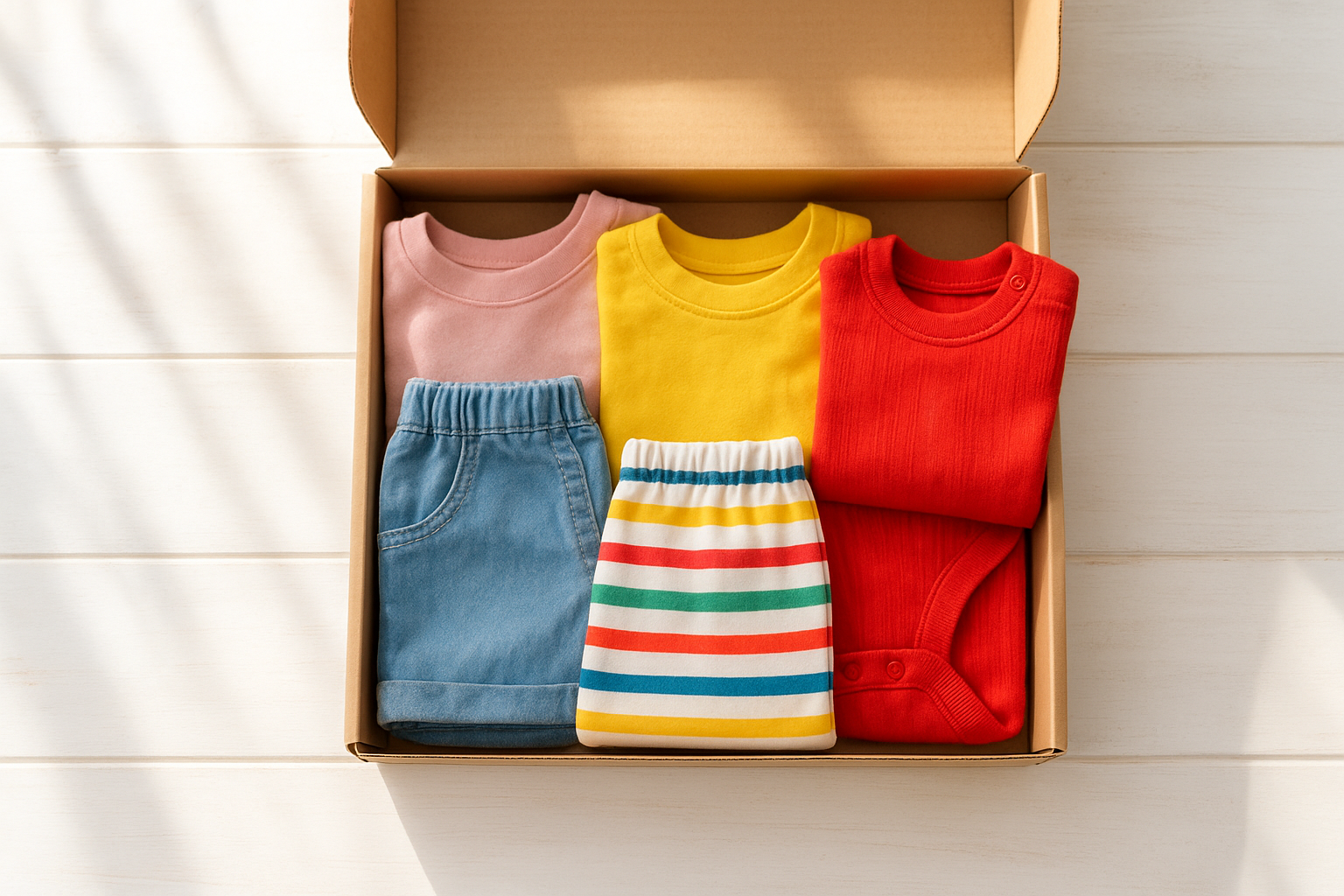
A well-curated children's outfit subscription box arrives ready to unbox — outfits chosen to match your child's exact size and style profile.
In This Guide
- How children's outfit subscriptions work — step by step
- Key benefits for busy families and growing kids
- What separates a great service from a mediocre one
- Size ranges, age coverage, and style customization
- Bundle-based models vs. traditional subscription boxes
- Gender-inclusive and specialized options
- Seasonal vs. monthly delivery — which fits your family
- Common mistakes and how to avoid them
- How to evaluate cost and per-item value
- Eco-friendly and sustainable children's clothing subscriptions
- Full FAQ — 13 questions answered in depth
How Does a Children's Outfit Subscription Work?
The process follows a simple, repeatable cycle that gets smarter over time. Here is exactly what to expect from signup through delivery and beyond.
- Create a detailed style profile. You provide your child's current age, weight, height, measurements, gender (or choose gender-neutral), preferred colors, patterns to avoid, and clothing types needed — everyday wear, activewear, school clothes, dressy outfits, or a mix.
- The service selects and assembles outfits. Depending on the provider, human stylists, an algorithm, or a combination of both picks a set of complete looks — typically two to eight outfits per box — based strictly on your profile inputs.
- Preview or approve before shipment (optional). Many modern services email a preview of selected items a few days before shipping, letting you swap pieces you know won't work before the box leaves the warehouse.
- Receive and try everything on. The box arrives at your door. Your child tries everything on. You keep what fits and works, and return the rest — usually with a prepaid label included.
- Provide feedback to improve future boxes. After each delivery, you rate what you kept and what you returned. Over two to three cycles, the service learns your child's preferences with increasing accuracy.
How Frequently Are Boxes Delivered?
Delivery frequency varies considerably between providers. The most common schedules are:
- Monthly — ideal for toddlers and preschoolers who grow fastest
- Every 6–8 weeks — a popular middle ground for school-age children
- Seasonal (4x per year) — best suited for older kids whose growth has slowed
- On-demand or flexible — you trigger a new box whenever you feel the wardrobe needs refreshing
The right frequency depends almost entirely on your child's current growth rate. A toddler between ages one and three may outgrow clothing every six to eight weeks, making monthly or every-other-month deliveries the smarter choice. A ten-year-old may hold the same size for six months or more, making seasonal boxes perfectly sufficient.
Age Ranges and Size Coverage: What to Know Before You Subscribe
One of the first questions parents ask is: does this service cover my child's age? The answer varies enormously between providers, and it is one of the most important compatibility checks you can make before signing up.
Typical Age Coverage Tiers
- Newborn to 24 months — high-growth phase; many specialists focus here
- 2T to 5T / Toddler — fast-growth years with the highest return-on-convenience ratio
- Kids sizes 4–12 (XS–L) — broad middle range covered by most major services
- Tween sizes 12–16 — covered by fewer services; confirm availability before subscribing
- Teen sizes — a handful of services extend coverage here, including some that use standard adult sizing
Pro tip: Always confirm a service covers the size your child will grow into over the next six to twelve months — not just their current size. Locking into a subscription that maxes out at 5T when your child is already a 4T will leave you scrambling sooner than expected.
Measurement-Based vs. Age-Based Sizing
Services that collect actual measurements — height, weight, chest, and waist — consistently outperform those that use age alone as a sizing proxy. Children of the same age can differ by two or more clothing sizes. A service that relies purely on age will miss the mark for a significant percentage of subscribers. When evaluating providers, prioritize those that ask for specific measurements and update your profile after every growth spurt.
Key Benefits of a Children's Outfit Subscription for Busy Families
The most obvious benefit is time. Instead of browsing dozens of websites or walking through multiple stores with a toddler in tow, parents update their profile once and let the service handle the rest. However, the advantages extend well beyond simple convenience.
Practical Benefits at a Glance
- Eliminates last-minute shopping trips — outfits arrive before your child outgrows the current size
- Guaranteed coordination — curated pieces are selected to mix and match with one another
- Flexible scheduling — monthly, seasonal, or custom delivery intervals
- Hassle-free returns — most services include prepaid return labels
- Budget predictability — fixed subscription cost makes clothing expenses easier to plan each month
- Brand discovery — curated boxes regularly introduce parents to quality brands they would not have found independently
- Style consistency — your child's wardrobe maintains a coherent look across seasons
- Reduced decision fatigue — parents and kids spend less mental energy on clothing choices every morning
Benefits for Families With Multiple Children
For parents managing wardrobes for two or more kids simultaneously, a children's outfit subscription with sibling bundling options can be genuinely transformative. Rather than juggling separate orders for each child, some services allow you to consolidate into a single household shipment — reducing shipping costs, return logistics, and overall mental load. The time savings compound significantly when you scale from one child to three.

Coordinated outfits from a children's outfit subscription mean your child is always dressed in pieces that effortlessly work together.
Style Customization: How Much Control Do You Actually Have?
One of the most common concerns parents raise before subscribing is loss of control over style choices. The good news: leading services offer far more customization than most parents expect.
What You Can Typically Customize
- Color palette — specify preferred colors and explicitly flag colors your child refuses to wear
- Pattern preferences — stripes, solids, florals, graphics, or a mix
- Clothing categories — casual, athletic, school-appropriate, dressy, or all-weather
- Fabric sensitivities — flag sensory issues, allergies, or fabric preferences (cotton-only, no wool, etc.)
- Style vibe — classic, trendy, sporty, boho, or minimalist depending on the service
- Pre-shipment approval — some services let you swap or remove items before the box ships
If your child is at an age where they have strong opinions about their own clothing — typically age four and up — look for services that offer a child-facing style quiz or preview feature. Services that involve children in the selection process report significantly higher satisfaction rates and lower return volumes.
Gender-Inclusive and Neutral Options
The children's subscription market has evolved considerably on gender presentation. Many services now offer explicit gender-neutral or gender-inclusive options alongside traditional boys' and girls' selections. If this matters for your family, filter for services that allow you to opt out of gendered curation entirely and build a wardrobe purely around color and style preferences.
What to Look for When Choosing a Children's Outfit Subscription
Not all children's clothing subscriptions are created equal. Evaluating a few critical factors before committing saves considerable frustration — and return shipping fees — down the road.
1. Fabric Quality and Safety Certifications
Fabric quality should be your first non-negotiable. Children's clothing needs to survive repeated machine washing, active play, grass stains, and everything in between. Budget fabrics that pill, fade, or shrink after two washes defeat the purpose of the subscription entirely.
Look specifically for these certifications:
- OEKO-TEX Standard 100 — confirms the fabric has been tested for over 100 harmful substances
- GOTS (Global Organic Textile Standard) — verifies organic fiber content and responsible manufacturing
- CPSC compliance — required for children's sleepwear in the US; worth confirming for pajama-focused subscriptions
- Bluesign — certifies responsible chemistry throughout the dyeing and finishing process
2. Sizing Accuracy and Flexibility
A service that uses only age-based sizing will miss the mark for children who run tall, short, slim, or broad. Prioritize services that collect actual measurements, allow mid-cycle size updates, and carry half-sizes or extended sizes where applicable. The ability to adjust sizing between boxes without a penalty is a strong signal of a customer-first approach.
3. Return and Exchange Policy
The return policy tells you a great deal about how much risk you actually carry as a subscriber. Key terms to evaluate:
- Return window — seven days minimum; fourteen is better
- Prepaid return label — should be included in the box at no extra charge
- Styling fee — some services charge a flat fee (typically $5–$25) that is credited toward kept items; confirm whether you forfeit this fee if you return everything
- Exchange vs. return — the best services offer both options, allowing you to swap for a different size rather than starting a full return
4. Subscription Flexibility
Life with kids is unpredictable. A quality children's outfit subscription should offer the ability to skip a month, pause the subscription without penalty, change delivery frequency, and cancel at any time without a long notice period. Services that lock you into rigid contracts or require 30-day cancellation notice are worth approaching with caution.
5. What Comes in the Box — Breadth of Selection
The best services cover more than just tops and bottoms. Before subscribing, confirm exactly what categories the service includes:
- Tops, bottoms, and complete outfit sets
- Outerwear (jackets, coats) — especially important for fall and winter boxes
- Sleepwear and pajamas
- Activewear and gym clothes
- Accessories (hats, belts, socks)
- Shoes — offered by some services as add-ons
Questions to Ask Before You Subscribe
- How many outfits come per box, and what is the per-item cost broken down?
- Can I skip a month or pause without a financial penalty?
- Does the service cover the sizes my child is in now and will grow into over the next year?
- Are there options for sustainable, organic, or hypoallergenic fabrics?
- Is there a styling fee, and what happens to it if I return everything?
- What happens to returned items — are they resold, donated, or discarded?
- Is there a trial box option with a full money-back guarantee?
- Can I change delivery frequency after I subscribe?
Understanding the Cost: How to Evaluate Per-Item Value
Pricing for children's outfit subscriptions spans a wide range, and the headline subscription fee can be misleading. Here is how to evaluate true cost and value accurately.
Typical Price Ranges by Service Type
- Entry-level subscription boxes — $20–$45 per box; typically 3–5 individual items, often mix-and-match pieces rather than complete outfits
- Mid-range curated services — $50–$100 per box; 5–8 items with human stylist curation and better fabric quality
- Premium or seasonal bundles — $80–$200 per delivery; full seasonal wardrobe coverage with 8–15 coordinated pieces
- Try-before-you-buy services — no upfront charge; you pay only for items you keep (typically at retail or slight discount)
How to Calculate Actual Per-Item Value
Do not compare the subscription price to the sticker price — compare it to what you actually spend per item at your usual retailer. Use this simple framework:
- Divide the total box cost by the number of items you would expect to keep (not the number sent — most parents keep 60–80% of a well-matched box).
- Add any non-refundable styling fee to your kept-item cost total.
- Factor in shipping costs — both inbound and return shipping if not included.
- Compare that final per-item cost against what you would pay at your go-to retailer for the same quality level.
For most families, mid-range and bundle-focused services deliver comparable or better per-item value versus buying at full retail — particularly when the subscription introduces parents to higher-quality brands they would have otherwise overlooked. The calculation tips further in favor of subscriptions when you factor in the dollar value of your own time saved.
Bundle-Based Subscription Models: The Most Efficient Approach
One of the most rapidly growing formats in the children's outfit subscription space is the bundle model — and for good reason. Instead of receiving a loose assortment of individual pieces, parents receive a complete, pre-coordinated set of outfits designed to work as a cohesive seasonal wardrobe from the moment the box opens.
Why Bundles Outperform Traditional Subscription Boxes
- Zero coordination required — every top, bottom, and layer in the bundle is designed to mix and match with everything else in the box
- Better per-item pricing — because bundles are planned in advance, providers can manage inventory more efficiently and pass those savings forward
- Seasonal completeness — a single bundle delivery can cover an entire season, eliminating the need for supplementary purchases
- Reduced decision fatigue — parents and kids spend dramatically less time choosing what to wear each morning when every piece works with every other piece
- More outfit combinations per delivery — five coordinated pieces in a bundle can generate ten or more distinct outfit combinations; five random pieces from a traditional box rarely achieve this
Services like Bundle to Bundle have built their entire model around this philosophy — delivering thoughtfully assembled, fully coordinated kids' clothing bundles that eliminate wardrobe guesswork entirely. This approach is especially valuable for parents of school-age children who need reliable, school-appropriate looks that also function as weekday and weekend wear.
Unlike traditional subscription boxes that send pieces the stylist thinks you will like, bundle-based models are engineered for wardrobe function — every piece serves a clear role in a complete clothing system for the season ahead.
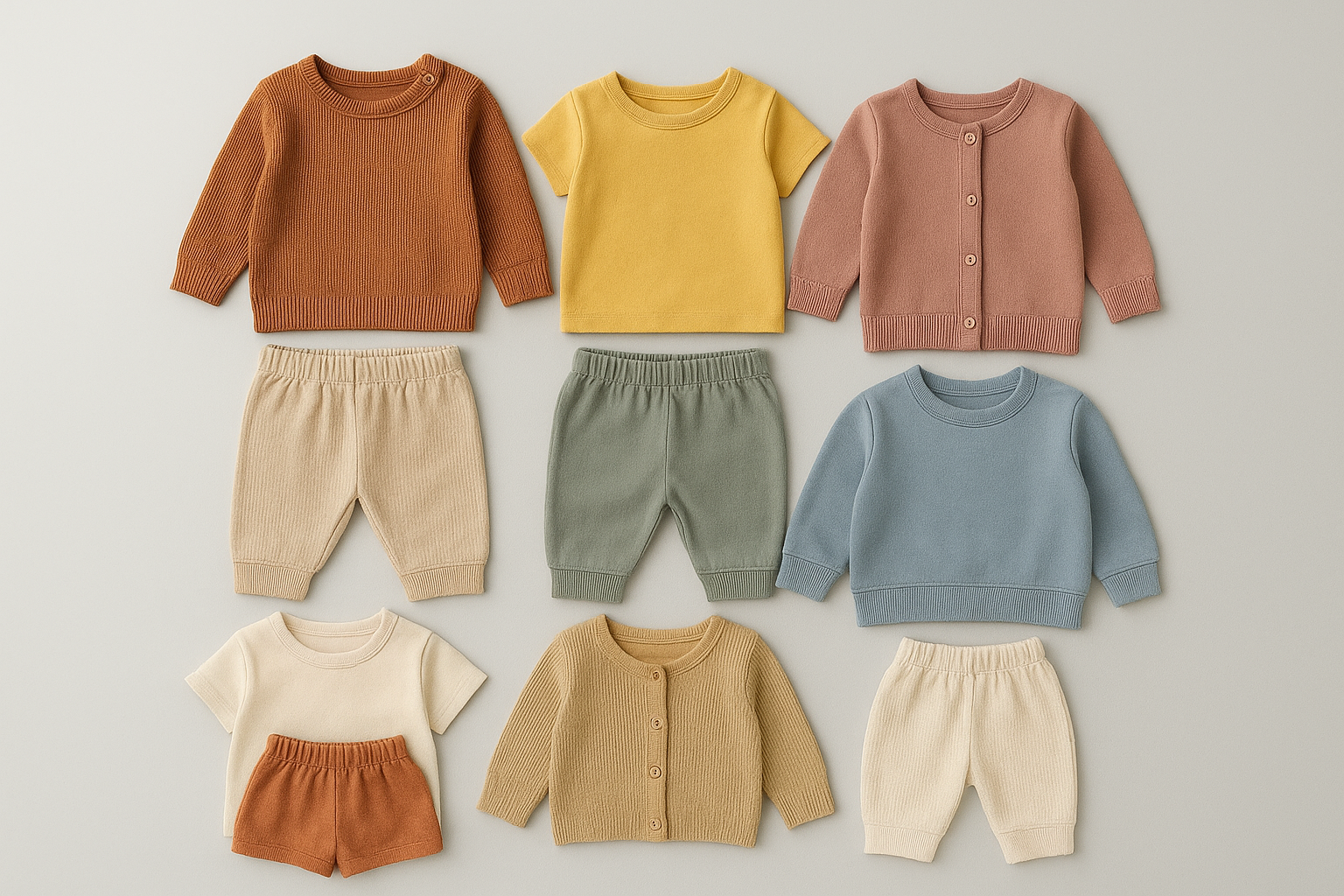
Bundle-based children's outfit subscription models deliver complete, coordinated seasonal wardrobes in a single shipment — ready to wear from day one.
Seasonal vs. Monthly Delivery: Which Schedule Works Best?
Choosing the right delivery frequency is one of the most practical decisions you will make when setting up a children's outfit subscription. The wrong cadence means either receiving boxes when your child hasn't outgrown the last batch, or scrambling because items became too small before the next delivery arrived.
Monthly Delivery — Best For:
- Newborns and infants (0–12 months)
- Toddlers aged 1–3 who grow fastest
- Children currently in a documented growth spurt
- Families who prefer smaller, more frequent refreshes
Seasonal Delivery — Best For:
- School-age children (5+) with slower growth rates
- Parents who prefer a complete seasonal wardrobe in one delivery
- Families on a fixed clothing budget who want to plan ahead
- Bundle-model subscribers who receive full outfit systems
The most flexible services let you toggle between schedules without a penalty — allowing you to shift to monthly delivery during a growth spurt and dial back to seasonal when growth stabilizes. This flexibility is worth specifically asking about before you commit.
Eco-Friendly and Sustainable Children's Outfit Subscriptions
Sustainability is an increasingly important factor for parents choosing a children's outfit subscription. The children's clothing industry generates significant waste — fast-fashion pieces worn for a few months before being discarded add up quickly across millions of households.
What Makes a Subscription Genuinely Sustainable?
- Certified organic fabrics — GOTS-certified cotton eliminates synthetic pesticides and chemical dyes from the production chain
- Durable construction — reinforced seams, quality stitching, and pre-washed fabrics that maintain shape after repeated washing reduce replacement frequency
- Responsible packaging — recycled cardboard, plastic-free wrapping, and minimal void fill
- Transparent supply chains — services that disclose manufacturing locations and labor standards
- Clothing resale or donation programs — what happens to returned items matters; look for services that resell, donate, or repurpose returned goods rather than disposing of them
- Rental-model alternatives — some services operate on a borrow-return model, where items cycle to multiple families before retirement, dramatically reducing per-wear environmental cost
A well-chosen subscription service can actually reduce your family's fashion footprint compared to frequent small retail purchases — particularly if the service emphasizes quality over volume and handles returns responsibly. The key is to ask the right questions before subscribing, not after.
Common Mistakes Parents Make — and How to Avoid Them
Even with the best intentions, parents frequently encounter avoidable frustrations with clothing subscription services. Understanding these pitfalls upfront saves time, money, and return-shipping headaches.
Mistake 1: Choosing Based on Price Alone
The lowest-priced subscription is rarely the best value. Budget services often use lower-grade fabrics that fade, shrink, or pill after three washes — defeating the purpose entirely. Always request fabric details and check for certifications before price-shopping services against each other.
Mistake 2: Underestimating Growth Between Deliveries
A quarterly box sounds sufficient until your toddler jumps a full size in six weeks and three of the items arrive already too small. For children under age three, monthly or bimonthly delivery — with mid-cycle size update capability — is almost always the safer choice.
Mistake 3: Skipping the Style Profile Details
A sparse style profile produces generic results. The more specific you are — down to naming individual colors your child dislikes, textures they find uncomfortable, and activities they dress for most often — the better every subsequent box becomes. Invest ten minutes in the profile and save significant return effort later.
Mistake 4: Not Reading the Return Policy Before the First Box
Return policies vary enormously. Some services offer a generous 14-day window with free return shipping; others have a five-day clock and charge a restocking fee. Read the policy before your first box arrives — not while you are already trying to return items.
Mistake 5: Forgetting to Update the Size Profile After a Growth Spurt
Most parents update their child's profile at signup and then forget about it for months. Set a calendar reminder every six to eight weeks to check your child's measurements and update the profile accordingly. A service that ships based on outdated measurements will consistently disappoint — through no fault of its curation quality.
Mistake 6: Not Comparing Per-Item Cost Against Retail
Before subscribing, spend ten minutes calculating what you currently spend per item at your usual retailer. Then calculate the subscription's effective per-item cost (accounting for the keep rate and any styling fees). The result often surprises parents — subscription services frequently beat retail on per-item cost when quality-equivalent brands are compared directly.
Is a Children's Outfit Subscription Right for Your Family?
A children's outfit subscription delivers the most value for specific types of families. Understanding where yours falls on the spectrum will help you decide whether to commit, trial, or skip entirely.
You Will Get the Most Value If...
- You have limited time for clothing shopping due to work, travel, or other responsibilities
- Your child is between ages 0 and 8, when growth is fastest and shopping frequency is highest
- You have multiple children and want to consolidate wardrobe management
- You value clothing coordination but dislike the effort of assembling matching outfits yourself
- You want a predictable monthly clothing budget without surprise expenses
A Subscription May Not Be Ideal If...
- Your child insists on selecting every item themselves and has very specific, non-negotiable style requirements
- You already have reliable access to high-quality secondhand clothing through consignment or swap programs
- Your child's size is at the very edge of what available services cover (e.g., large teen sizes)
- You prefer buying only specific items rather than receiving curated sets
The low-risk path is always to start with a trial box. Most reputable services offer a first-box trial, a money-back guarantee, or a reduced-cost introductory offer. Evaluate the fabric quality, the sizing accuracy, and the coordination quality honestly — then decide whether the service earns a permanent place in your routine.
Quick Summary: Is a Children's Outfit Subscription Worth It?
A children's outfit subscription delivers curated, size-appropriate clothing on a predictable schedule — saving shopping time, reducing decision fatigue, and often beating retail on per-item value. The best services collect real measurements, offer flexible delivery, include prepaid returns, and use certified fabrics. Bundle-based models like Bundle to Bundle go further by delivering complete, coordinated seasonal wardrobes in a single shipment. Start with a trial box, evaluate quality and fit honestly, and scale from there.
Frequently Asked Questions About Children's Outfit Subscriptions
What is a children's outfit subscription?
A children's outfit subscription is a recurring service that delivers pre-selected or curated kids' clothing to your home on a monthly, seasonal, or custom schedule. Parents fill out a style and size profile, and the service sends age-appropriate outfits based on those preferences — removing the time burden of clothes shopping for fast-growing children.
How much does a children's outfit subscription typically cost?
Costs vary widely depending on the service and the number of items included. Entry-level boxes start around $20–$45. Mid-range curated services with human stylists typically run $50–$100 per box. Premium seasonal bundles that cover a full wardrobe range from $80–$200 per delivery. Always calculate the effective per-item cost after accounting for your keep rate and any styling fees before comparing services.
What age ranges do children's outfit subscriptions cover?
Most services cover newborn through tween sizes, roughly ages 0 to 12. Some specialize in narrower ranges such as newborn to 5T, while others extend to teen sizes. Always confirm that the service covers the sizes your child will grow into over the coming year — not just their current size.
Can I choose the styles and colors my child receives in a children's outfit subscription?
Yes. Most children's outfit subscription services ask you to complete a detailed style profile covering color preferences, patterns to include or avoid, clothing types, and fabric sensitivities. The more specific your profile, the better each box becomes. Some services also let you preview or approve items before they ship, and some include a child-facing quiz for kids who have strong opinions about their own style.
How do I find the right size for my child?
Prioritize services that collect actual measurements — height, weight, chest, and waist — rather than relying on age alone. Children of the same age can differ by two or more clothing sizes, and age-based sizing consistently misses the mark for children who run tall, short, slim, or broad. Update your child's measurements in your profile after every growth spurt, ideally every six to eight weeks for children under age four.
Can I pause or cancel a children's outfit subscription?
Most services allow you to pause or cancel at any time through your account dashboard, though some require notice before the next billing cycle closes. Always read the cancellation and pause policy before subscribing — and be especially wary of services that require 30 days advance notice or that charge a fee for pausing. The best services let you skip individual months with a single click.
Is a children's outfit subscription worth the money?
For most families, yes — particularly when children are young and growing quickly. The time saved on shopping, the convenience of home delivery, the predictable clothing budget, and the curated coordination often justify the cost. Value improves further with bundle-based models, which deliver more outfit combinations per item than traditional boxes. Calculate your actual per-item cost accounting for keep rate and styling fees, and compare it directly against equivalent retail prices before deciding.
What is the difference between a subscription box and a clothing rental service?
A subscription box sends clothes you keep and own outright, paying for everything you decide to keep. A clothing rental service lets you borrow items and return them after use — the same items then cycle to other families. Rental models can reduce per-wear cost and environmental impact significantly for fast-growing children who will only fit a size for a few months. Both models have merit depending on your priorities around ownership, sustainability, and budget.
Are children's outfit subscriptions eco-friendly?
It depends on the service. Some prioritize GOTS-certified organic fabrics, sustainable packaging, and responsible returned-item handling. Others focus purely on convenience with no environmental emphasis. Look for OEKO-TEX, GOTS, or Bluesign certifications if sustainability is a priority. Also ask what happens to returned items — services that resell or donate returns rather than discarding them are significantly more eco-friendly than those that do not.
What should I do if an item does not fit or I do not like it?
Most services include a prepaid return label and a return window of 7 to 14 days. Use the return window to send back anything that does not fit, does not match your style profile, or that your child simply refuses to wear. After returning, leave detailed feedback explaining why each item did not work — this is the fastest way to dramatically improve future box quality. If the service offers exchanges rather than just returns, request the correct size rather than a full refund when fit is the only issue.
How often will I receive a children's clothing box?
Delivery frequency varies by service and your selection. Common options include monthly, every six to eight weeks, or seasonally four times per year. The right frequency depends on your child's current growth rate — toddlers typically benefit from monthly delivery while school-age children often do well with seasonal boxes. Look for services that let you toggle between frequencies without a penalty.
Do children's outfit subscriptions include shoes and accessories?
Some do, but the majority focus exclusively on clothing. A smaller number of services include accessories such as hats, belts, or socks as standard inclusions, while others offer shoes and accessories as optional add-ons. If accessories or shoes are important to building a complete wardrobe, confirm their availability before subscribing rather than discovering afterward that they are not included.
What common mistakes do parents make when choosing a children's outfit subscription?
The most frequent mistakes are: choosing a service based on price without checking fabric quality or safety certifications; underestimating how fast children grow between deliveries; providing a sparse style profile; not reading the return policy before the first box arrives; forgetting to update sizing after growth spurts; and failing to calculate the real per-item cost against comparable retail prices before committing. Each of these is avoidable with a small amount of upfront research.
Final Thoughts
A well-chosen children's outfit subscription can genuinely transform how your family manages clothing for growing kids. By delivering curated, size-appropriate outfits on a predictable schedule, these services save time, reduce shopping stress, eliminate wardrobe coordination work, and often deliver real value for money — particularly through bundle-focused providers like Bundle to Bundle that prioritize coordination, coverage, and quality in every delivery.
The smartest approach is methodical: start with a trial box, measure your child accurately beforehand, fill out the style profile in full detail, and evaluate the quality and fit honestly when the box arrives. Provide thorough feedback after your first delivery, and give the service two to three boxes to learn your preferences before judging whether it is the right long-term fit.
The right children's outfit subscription becomes an effortless part of your parenting routine — one less significant task in an already demanding week. Given that most services offer a low-risk trial, there is very little standing between you and finding out whether this model works for your family.


