


Subscription kids clothes solve a problem every parent recognizes instantly: a child who fits perfectly into a wardrobe on Monday and bursts out of it by the following month. Rather than repeating the same exhausting shopping trip every single season, families now join a recurring wardrobe program, receive a curated set of clothing sized correctly for their child, and simply swap pieces out as growth demands it. Bundle to Bundle built its entire service around this exact reality, offering premium children's clothing rental for kids from newborn to age seven, with plans starting at fifty dollars a month.
Because growth spurts never follow a predictable calendar, buying clothing outright often feels like guessing at a moving target. In contrast, a subscription model lets parents request new sizes the moment they're needed, instead of stockpiling outfits a child may never fully wear. This guide breaks down exactly how subscription kids clothes work, how the rental model compares to the popular buy-and-keep styling box approach, what everything costs, and how to pick the right service for your family — with more depth and more honest answers than you'll find anywhere else on this topic.
What Is Subscription Kids Clothes?
Subscription kids clothes describe any recurring membership that delivers children's apparel on a set schedule instead of requiring a one-off retail purchase. However, the term actually covers two very different business models, and understanding which one you're signing up for matters more than most parents realize.
Some services operate as styling boxes: a stylist (often guided by a quiz) selects items, ships them to your door, and you pay only for the pieces you decide to keep while returning the rest. Ownership transfers to you for anything kept. Other services, like Bundle to Bundle, operate as true rental wardrobes: you pay one flat monthly fee for access to a set of clothing, wear it as long as it fits, and then swap the entire bundle for a new one when your child grows. Ownership never transfers — the clothing simply keeps circulating between families.
Specifically, providers like Bundle to Bundle curate pieces from premium children's fashion labels, then clean and inspect every item between rentals. As a result, families gain access to higher-quality clothing than a comparable retail budget would typically allow, since the cost of each garment is spread across many wears by different children instead of a single short-lived purchase.
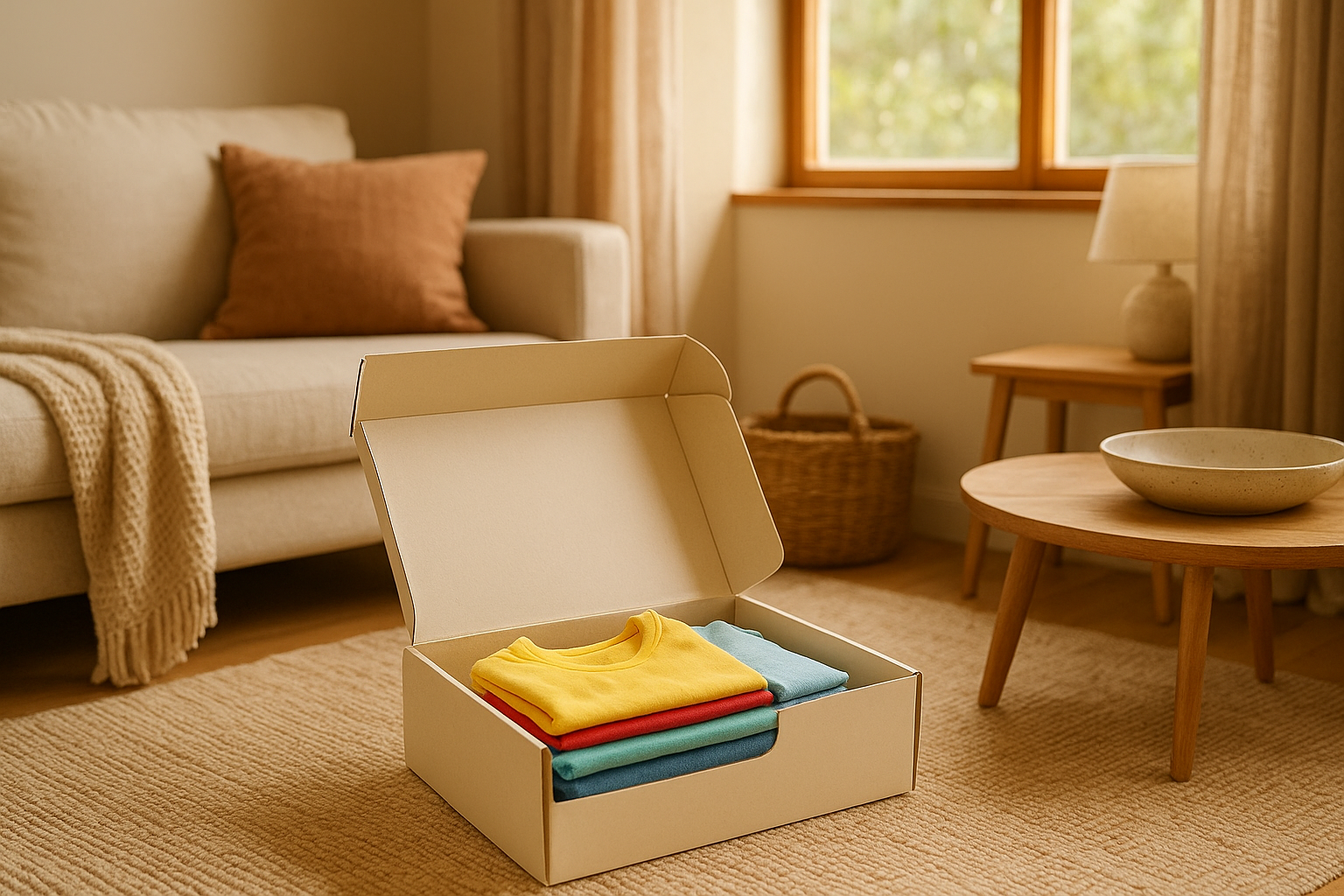
A monthly delivery is how most subscription kids clothes services get curated pieces into your home.
Rental Wardrobes vs. Buy-and-Keep Styling Boxes
Because the two models look similar on the surface — a box arrives, you try clothes on, you decide what happens next — it's worth spelling out the practical differences before you commit.
- Ownership: Styling boxes transfer ownership for kept items, which means you're buying clothes piece by piece. Rental wardrobes never transfer ownership, so nothing sits in a closet once it's outgrown.
- Pricing structure: Styling boxes typically charge a per-item price (often $16–$30 each) plus sometimes a styling fee, so your bill scales with how much you keep. Rental wardrobes charge one flat fee — around $50 a month with Bundle to Bundle — regardless of how many pieces you're wearing that cycle.
- Growth spurts: With a buy-and-keep model, outgrown items become donation piles or hand-me-downs. With a rental model, outgrown items simply get swapped for the next correct size at no extra charge.
- Waste footprint: Buying and discarding clothing every few months contributes directly to textile waste. Rental keeps each garment circulating through multiple children before it's ever retired.
Neither model is objectively "wrong." Therefore, families who want to build a permanent wardrobe piece by piece may prefer a styling box, while families managing frequent, unpredictable growth spurts usually get more value — and less clutter — from a rotating rental subscription. If your priority is minimizing both cost and waste while your child is still growing quickly, the rental model tends to win on both fronts.
How a Kids Clothing Subscription Works
Getting started with a kids clothing subscription is straightforward, though the exact steps vary slightly between providers. Below is the general process most families follow when joining a rental service like Bundle to Bundle.
- Choose a membership plan. Compare monthly plans based on the number of items included and your child's current wardrobe needs, then pick the tier that fits your budget and lifestyle.
- Share sizing and style preferences. Provide your child's current measurements, favorite colors, and any brand preferences so the service can curate a bundle suited to their needs.
- Receive your first bundle. Your curated wardrobe arrives ready to wear, typically within a few business days of confirming your plan and sizing details.
- Swap items as your child grows. Request a new bundle whenever clothes no longer fit or your child's needs change, then pack up the previous pieces for return shipping.
- Return old pieces using free shipping. Use the prepaid return label included with your membership to send back outgrown items at no additional cost to your family.
Because this cycle repeats monthly, families never have to think about donating or discarding clothes that no longer fit. Instead, the service handles logistics, and free two-way shipping removes what would otherwise be a hidden cost of returns. For families juggling a growing household, this convenient children's clothing service for growing families approach removes an entire recurring chore from the calendar.
Style Quizzes, Sizing Profiles, and Personalization
Many kids apparel subscription services lean heavily on a style quiz — a short questionnaire covering color preferences, favorite characters, and fit history — to build an algorithmic style profile before the first box even ships. This is genuinely useful for narrowing down aesthetic preferences, particularly for tweens who have opinions about what they'll actually wear.
However, a quiz alone can't solve the core problem that subscription kids clothes exist to fix: unpredictable, rapid growth. A style profile tells a service what your child likes; it doesn't tell the service when your child will jump a size. That's why the strongest subscription kids clothes experiences pair personalization with flexible, on-demand swaps rather than a fixed seasonal shipping calendar. Sharing updated measurements every time you request a new bundle — instead of relying on a quiz completed months earlier — keeps every delivery genuinely wearable from day one.
What Sizing Ranges Do These Services Cover?
Sizing range is one of the most overlooked factors when comparing subscription kids clothes providers. Some services focus almost entirely on tween and grade-school sizing, roughly 4 through 14, and skip the fastest-growing years entirely. Others, including Bundle to Bundle, are built specifically for the newborn-through-age-seven window — the exact stretch when a child might move through three or four sizes in a single year.
This matters because the younger the child, the less predictable the growth curve. Consequently, families with infants and toddlers generally see the biggest cost savings from a rental subscription, since they'd otherwise be re-buying entire wardrobes multiple times per year. Older tweens still benefit, but the financial case is strongest in those early, unpredictable years covered by a true rental model.
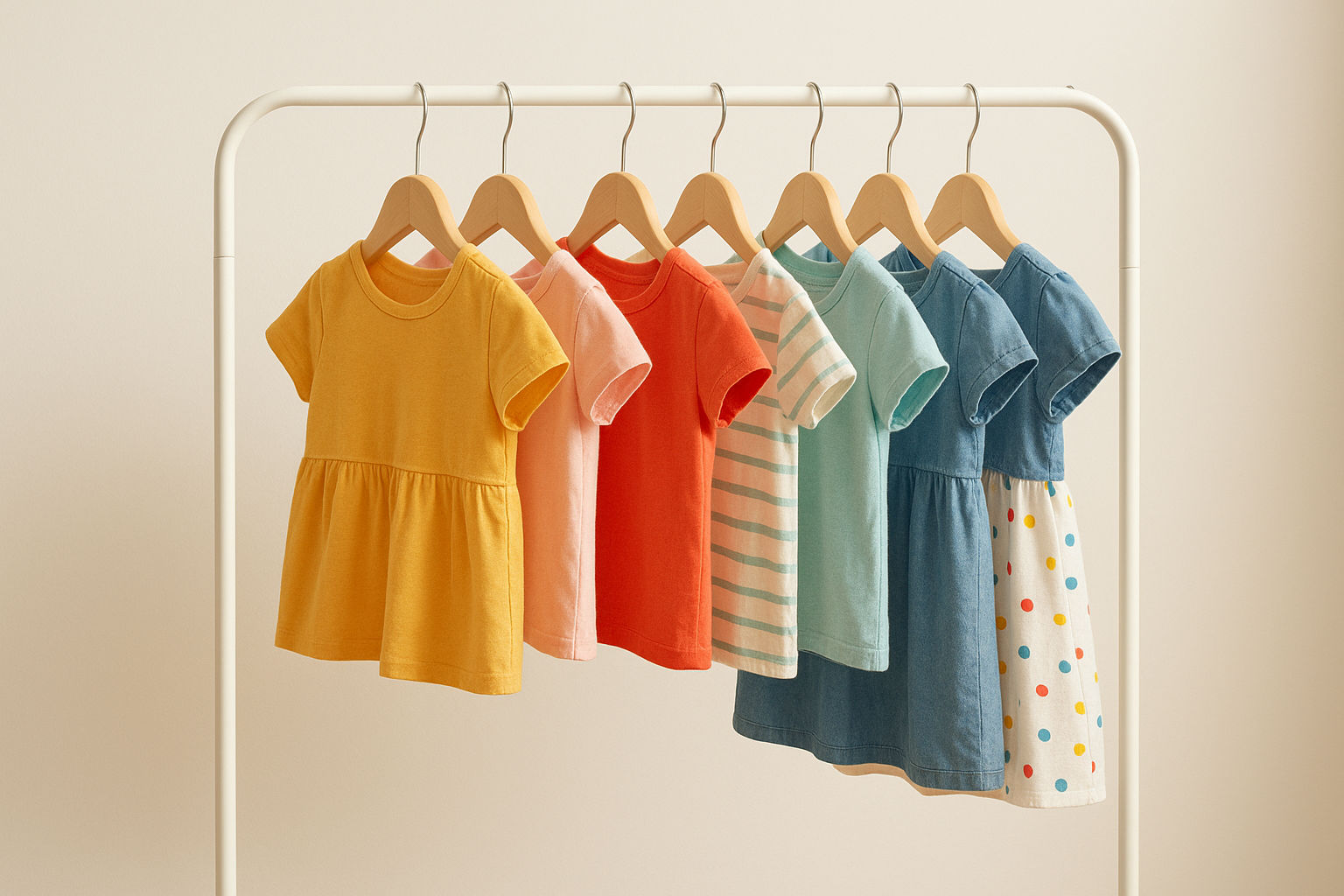
A curated, rotating wardrobe replaces the need for frequent shopping trips.
Benefits of a Rotating Wardrobe for Kids
The most obvious benefit of subscription kids clothes is convenience. Parents no longer need to plan shopping trips around growth spurts, since new sizes arrive whenever they're needed. In addition, the model reduces clutter, because outgrown items leave the home immediately instead of piling up in donation bags.
Affordability is another major advantage. A monthly plan starting around fifty dollars often costs less than buying several premium outfits outright, especially for families who dress children in higher-end labels. Furthermore, the no-commitment structure means parents can pause or cancel anytime, which lowers the financial risk compared with a retail purchase that can't be returned once worn.
Above all, quality stands out. Because rental garments are built to withstand multiple wear cycles, they tend to be sturdier than inexpensive fast-fashion items purchased for short-term use. As a result, children often end up wearing better-made clothing than they would through typical retail shopping alone — a premium children's clothing rental approach without the premium price tag attached to every single piece.
Subscription Kids Clothes vs. Buying New
When comparing subscription kids clothes to traditional retail purchases, the differences go beyond price. Buying new clothing means owning the item outright, but it also means absorbing the full cost even though a child may outgrow it within a few months. In contrast, a subscription spreads that cost across a recurring fee and hands the outgrown item back to the service instead of the landfill.
According to industry estimates, children can go through several clothing sizes in their first few years alone, which makes repeated buying expensive and wasteful. Therefore, families who prioritize both budget and sustainability often find the rental model better aligned with how quickly kids actually grow.
Quality and Safety Standards Worth Checking
Because rental garments circulate between multiple children, quality control matters even more than it does for a single retail purchase. Reputable services inspect and clean every item between rentals and source from labels that meet recognized safety benchmarks, including the flammability and labeling standards maintained by the U.S. Consumer Product Safety Commission. Before joining any subscription kids clothes service, it's worth confirming that its inspection process actually catches wear and tear rather than simply reselling items as-is.
What Does a Kids Apparel Subscription Service Cost?
Cost is often the deciding factor for parents considering a kids apparel subscription service. Plans typically start around fifty dollars per month, which usually covers a set number of curated pieces along with free two-way shipping. Specifically, this pricing structure removes the guesswork of budgeting for clothing, since families know the exact monthly cost regardless of how often their child grows.
By comparison, per-item styling boxes can add up quickly once styling fees, individual item pricing, and shipping on returned items are factored in — costs that aren't always obvious at sign-up. Buying premium children's apparel outright can also exceed a flat monthly fee, particularly when accounting for multiple growth spurts each year. For a closer look at how one service structures its pricing, the Mini Bundle subscription plan shows how a single monthly fee can replace several individual purchases.
Is Renting Children's Clothing Sustainable?
Sustainability is a core reason many parents switch to subscription kids clothes. The U.S. Environmental Protection Agency reports that textile waste remains a significant contributor to landfill volume, and children's clothing is discarded especially quickly due to rapid growth. Renting extends the life of each garment by passing it between multiple children instead of retiring it after a single short growth cycle.
This approach reflects principles of the circular economy, a system designed to keep products in use for as long as possible rather than discarding them after limited use. Notably, a per-item styling box model doesn't inherently offer this benefit, since every kept item still exits the circular loop the moment it's purchased. For families who want to learn more about eco-conscious options, this guide to green fashion rental options for children covers additional considerations.
Trying on a freshly swapped outfit is often the highlight of subscription day.
Returns, Exchanges, and Cancellation Policies Compared
Before joining any subscription kids clothes service, it's worth reading the fine print on three specific policies, since these determine how much real flexibility you actually get.
- Exchange windows: Some providers restrict swaps to fixed seasonal shipments, while true rental services allow swaps whenever a garment stops fitting.
- Return shipping costs: Free two-way shipping should be confirmed in writing, since some services only cover shipping in one direction and quietly charge for returns.
- Cancellation terms: No-commitment, pause-anytime plans are far lower risk than locked-in contracts that require advance notice or charge early-termination fees.
In short, the best subscription kids clothes providers make these three policies easy to find and easy to use, not buried in a terms-of-service page.
Choosing the Best Subscription for Kids Clothes
Not every service fits every family, so it helps to compare a few key factors before committing. First, check the age range covered, since some providers focus only on tweens while others, like Bundle to Bundle, serve children from newborn through age seven. Second, review shipping policies, because free two-way shipping significantly affects the real cost of membership.
Third, consider swap flexibility. Families experiencing frequent growth spurts benefit most from services allowing unlimited or frequent swaps rather than fixed exchange windows. For a deeper comparison of options built specifically for rapid growth periods, this resource on the best subscription for kids clothes during growth spurts walks through what to prioritize.
Finally, think about how a subscription fits into a broader family budget. Planning outfits around a monthly rotation, as outlined in this monthly outfit plan for kids, can help families get the most value from every bundle. You can also explore current plans directly on Bundle to Bundle's website to see available sizing and pricing tiers.
Common Mistakes Parents Make
One frequent mistake is ordering sizes too far ahead of actual growth, which leads to loose-fitting clothes sitting unused in a drawer. Another is picking a plan based purely on item count without checking swap flexibility, only to find the exchange window doesn't match a child's actual growth pace. It's better to size closely to current measurements, confirm swap policy upfront, and adjust the plan again as needed rather than locking into a mismatched tier.
Frequently Asked Questions
What are subscription kids clothes?
Subscription kids clothes are curated wardrobes of children's apparel that parents rent monthly instead of purchasing outright. Members receive a rotating set of clothing and can swap pieces as their child grows or their style needs change.
How does a kids clothing subscription work?
A parent selects a plan, receives a curated bundle sized for their child, and swaps items whenever needed. Most services, including Bundle to Bundle, include free two-way shipping so returns are simple.
How much does subscription kids clothes cost per month?
Plans typically start around fifty dollars per month, depending on the number of items and brand tier included. This is often less expensive than replacing a full wardrobe every few months during a growth spurt.
Is renting children's clothing cheaper than buying new?
For families whose children outgrow clothes quickly, renting is usually more cost-effective than buying premium apparel repeatedly. Subscription pricing bundles multiple pieces into one predictable monthly fee, which helps with budgeting.
What age range is best suited for a kids clothing subscription?
Most subscription kids clothes services, including Bundle to Bundle, cater to children from newborn through around seven years old. This range covers the fastest and most frequent growth spurts.
Can I cancel a kids clothing subscription anytime?
Yes, most rental wardrobe services offer no-commitment plans that can be paused or cancelled at any time. This flexibility makes the model low-risk compared with a locked-in retail purchase.
Are subscription kids clothes good quality?
Reputable services source pieces from premium children's fashion labels and inspect items between rentals. As a result, clothing tends to be sturdier and better made than fast-fashion alternatives bought for short-term use.
How is subscription kids clothes more sustainable than buying new?
Renting extends the useful life of each garment by passing it between multiple children instead of discarding it after one growth cycle. This reduces textile waste, which the EPA notes is a significant contributor to landfill volume.
What happens if clothes get stained or damaged during rental?
Most subscription services expect normal wear and tear and build a small buffer into pricing to cover it. Excessive damage may incur a fee, but everyday spills and stains are typically not a concern.
How often can I swap sizes in a clothing subscription?
Swaps can usually happen as often as needed, since children grow unevenly and unpredictably. Parents simply request a new bundle sized to their child's current measurements and return the previous set.
What's the difference between a rental subscription and a styling box subscription?
A rental subscription charges one flat fee for temporary access to clothing that gets swapped as a child grows, and ownership never transfers. A styling box charges per item for pieces you keep permanently, so it functions more like curated shopping than true rental.
Do subscription kids clothes include shipping costs?
Many providers, including Bundle to Bundle, include free two-way shipping in the membership price. This removes the hidden costs that can otherwise make rental services less convenient.
Are subscription kids clothes available for tweens and older kids?
Some services extend into tween sizing, though the strongest cost and sustainability case for a rental subscription applies to the newborn-through-age-seven range, where growth is fastest and least predictable.
Final Thoughts
Ultimately, subscription kids clothes offer a practical answer to a problem nearly every parent faces: children outgrow their wardrobes far faster than budgets can comfortably keep up. By swapping ownership for access, families gain flexibility, cost predictability, and a lower environmental footprint, all without sacrificing quality. Whether the priority is convenience, sustainability, or simply avoiding another closet full of clothes that no longer fit, a rotating wardrobe model like the one offered through Bundle to Bundle provides a low-risk way to test the approach. As growth spurts continue, that flexibility often becomes the most valuable part of the whole experience.


