


A newborn clothing subscription is a recurring delivery service that ships curated, size-appropriate baby outfits straight to your door on a schedule you control. Because newborns grow faster than almost any other stage of childhood, this model solves a problem nearly every new parent runs into: buying a drawer full of adorable outfits that fit for barely three weeks before they're useless.
In fact, according to CDC child development guidelines, infants can gain up to an inch in length every month during their first six months of life. As a result, the old approach — stocking up on newborn-size clothing before the baby even arrives — leads to wasted money, cluttered drawers, and tags still attached on clothes that never got worn. A smarter, size-adaptive system solves this, and that's exactly what this guide walks through in complete detail, from fabric safety to true cost-per-outfit math.
In this guide: how newborn growth breaks traditional shopping, purchase vs. rental subscription models, fabric safety certifications to demand, a month-by-month size chart, five steps to set up your first box, real cost breakdowns, the sustainability case, and answers to 14 of the most common questions parents ask.
Why Newborn Growth Makes Traditional Baby Clothes Shopping Impractical
Most newborns outgrow their first clothing size within four to six weeks. Therefore, buying large quantities of a single size before birth almost always backfires. In addition, babies grow unevenly — some skip an entire size while others linger in one size far longer than the charts predict. No amount of careful pre-birth shopping can account for that unpredictability.
A newborn clothing subscription solves this by delivering the right size at the right moment. Instead of guessing what your baby will need three months from now, you simply update their current measurements, and the service handles the rest. Consequently, your baby's wardrobe stays current without repeated shopping trips, returns, or impulse buys at 2 a.m. when nothing in the drawer fits anymore.
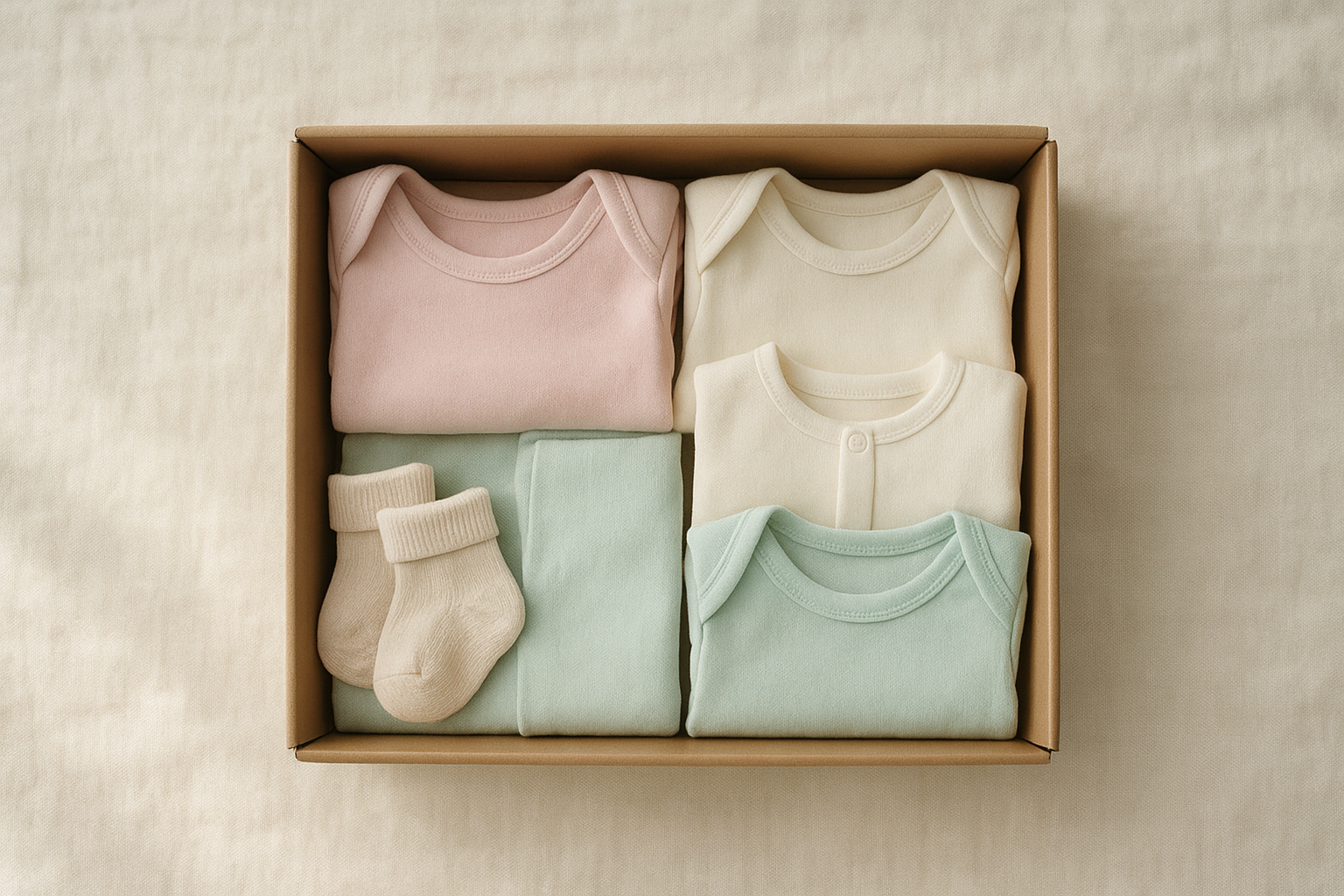
A well-curated newborn clothing subscription box delivers size-appropriate outfits without the guesswork of traditional shopping.
What Is a Newborn Clothing Subscription and How Does It Actually Work?
At its core, a newborn clothing subscription works in three stages. First, you create a profile with your baby's current weight, length, and style preferences. Second, the service curates a box based on that data and ships it on your chosen schedule — usually monthly or quarterly. Third, you either keep the items permanently or return them for the next size, depending on the plan type you selected.
Unlike a one-time purchase from a retailer or a baby registry, the subscription relationship continues automatically. Specifically, you never have to remember to reorder — the service tracks your baby's growth curve and adjusts future boxes without you lifting a finger. For a deeper breakdown of how modern services structure these plans, see this 2025 guide to baby clothes subscription services.
Purchase vs. Rental: Which Subscription Model Fits Your Family?
There are two primary models in the baby clothing subscription space. The purchase model sends clothes you keep permanently, while the rental model lets you use outfits and return them once your baby outgrows them. Each option carries distinct advantages, so the right choice depends entirely on your priorities.
Purchase subscriptions, such as a Capsule Bundle subscription, suit families who want a keepsake wardrobe or plan to pass clothing down to future siblings. In contrast, rental subscriptions are generally more cost-effective and far friendlier to the environment, since garments get cleaned, inspected, and redistributed to other families rather than discarded. If you want ongoing access to a rotating wardrobe without ever owning the pieces outright, an Endless Bundle subscription plan is built specifically for that purpose. You can also compare the mechanics side by side in this dedicated baby clothing rental guide.
Quick Answer: Which model is better for newborns?
For the first three months specifically, a rental subscription typically delivers the best value because the newborn stage passes so quickly. After six months, a purchase subscription becomes more practical since babies begin showing distinct style preferences and parents often want to keep favorite pieces as keepsakes.
Purchase vs. Rental: A Side-by-Side Comparison
| Factor | Purchase Subscription | Rental Subscription |
|---|---|---|
| Ownership | Keep every item forever | Return and swap as baby grows |
| Best for | Keepsakes, future siblings | Fast growth stages, sustainability |
| Environmental impact | Moderate | Low — garments stay in circulation |
| Typical cost over 6 months | Higher | Lower |
What to Look for in Fabric Quality and Safety
Newborn skin is significantly more sensitive than adult skin, so fabric quality is non-negotiable. When evaluating any newborn clothing subscription, look specifically for garments certified under the OEKO-TEX Standard 100 or the Global Organic Textile Standard (GOTS). These certifications confirm the fabric was tested for harmful substances and produced under environmentally responsible conditions — you can verify a brand's certification directly through the official OEKO-TEX database.
Beyond certification, prioritize natural fibers such as organic cotton, bamboo, or merino wool blends. These materials breathe well, regulate temperature, and rarely cause irritation. Synthetic blends, on the other hand, trap heat and moisture, which raises the risk of rashes in very young babies. Above all, never assume "soft to the touch" means safe — always check the label or the brand's published certification.
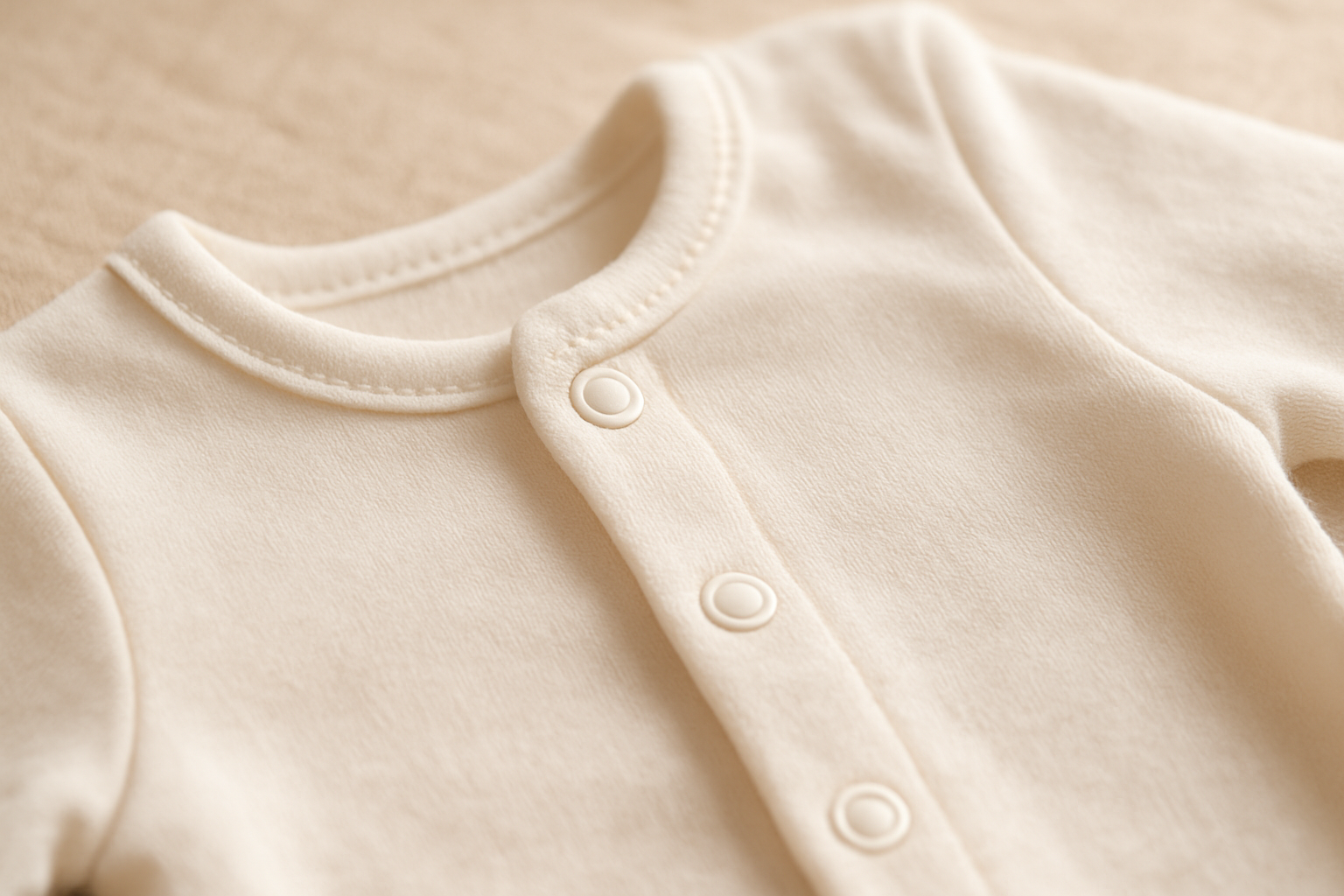
Organic cotton and OEKO-TEX certified fabrics are the gold standard for newborn clothing subscriptions focused on skin safety.
Newborn Clothing Subscription vs. Traditional Registries and One-Time Retailers
Baby registries and standard retail shopping are excellent for one-time purchases like a stroller, crib, or car seat. However, clothing behaves completely differently from durable gear because it expires functionally within weeks. Consequently, a static registry list or a single big shopping trip cannot keep pace with how quickly an infant's size changes.
A newborn clothing subscription, by comparison, is purpose-built for exactly this problem. Rather than guessing sizes months in advance, the subscription model adapts in real time as you update your baby's measurements. The table below highlights the practical differences.
| Feature | Newborn Clothing Subscription | One-Time Registry / Retail Purchase |
|---|---|---|
| Sizing accuracy over time | Automatically adjusts each delivery | Fixed at time of purchase |
| Risk of unworn items | Low — sizes match current stage | High — babies often skip sizes |
| Ongoing time investment | Minimal — set preferences once | Repeated shopping trips required |
| Ideal use case | Ongoing wardrobe management | One-time gear and nursery items |
Importantly, these two approaches are not mutually exclusive. Many parents use a registry for durable gear and a subscription for clothing, getting the best of both systems rather than forcing one tool to do a job it wasn't designed for.
Newborn Size Chart: What to Expect Month by Month
Because exact growth timelines vary by baby, a general size chart helps set realistic expectations for how often your newborn clothing subscription should resize. Use the ranges below as a planning guide, not a rigid rulebook.
| Size | Typical Weight Range | Average Duration |
|---|---|---|
| Preemie | Under 5–6 lbs | Varies by birth weight |
| Newborn (NB) | 5–8 lbs | 4–6 weeks |
| 0–3 months | 8–12 lbs | 6–8 weeks |
| 3–6 months | 12–16 lbs | ~8 weeks |
| 6–9 months | 16–20 lbs | ~10–12 weeks |
Notably, this is precisely why monthly deliveries matter most in the first six months — size windows are shortest exactly when growth is fastest.
How to Set Up Your Newborn Clothing Subscription in 5 Steps
Getting started is straightforward. Follow these five steps to make sure your first box arrives perfectly suited to your baby's needs.
- Assess your baby's current size and growth stage. Measure your baby's weight and length before signing up so the first delivery matches their actual size rather than their age on paper, since many babies fall outside standard age-size charts.
- Compare subscription models. Decide between purchase and rental based on your budget, storage space, and whether you plan to have more children, and check whether the service offers a hybrid option that lets you keep selected favorites.
- Verify fabric certifications. Before completing signup, confirm that the service explicitly lists OEKO-TEX, GOTS, or an equivalent safety certification for every garment they ship.
- Set your style and frequency preferences. Most platforms let you choose color palettes, gender-neutral or gender-specific styles, and delivery intervals; monthly works best for the first three months, while quarterly suits most babies after six months.
- Review the cancellation and return policy. Confirm that you can pause, skip, or cancel without penalties, since a trustworthy service makes this information easy to find before you ever commit.
Common Mistakes Parents Make When Choosing a Baby Clothing Subscription
Even with good intentions, parents sometimes pick a subscription that doesn't serve their needs. One frequent mistake is selecting the wrong delivery frequency. For example, choosing quarterly deliveries during the newborn stage means your baby may spend weeks in clothes that are already too small while you wait for the next box.
Another common error is overlooking the return policy — some services charge restocking fees or require returns within a narrow window. Therefore, always read the fine print before subscribing. Finally, many parents forget to update their baby's measurements between deliveries, which leads to boxes filled with the wrong size entirely.
Is a Newborn Clothing Subscription Also a Great Gift Option?
Yes, absolutely. A newborn clothing subscription makes one of the most thoughtful and practical baby shower gifts available. Unlike a single outfit that may be outgrown within weeks, a three- or six-month gift subscription provides ongoing value throughout the most demanding stretch of new parenthood. Many services, including Bundle to Bundle, offer prepaid gift subscriptions that can be purchased and sent directly to the expecting family.
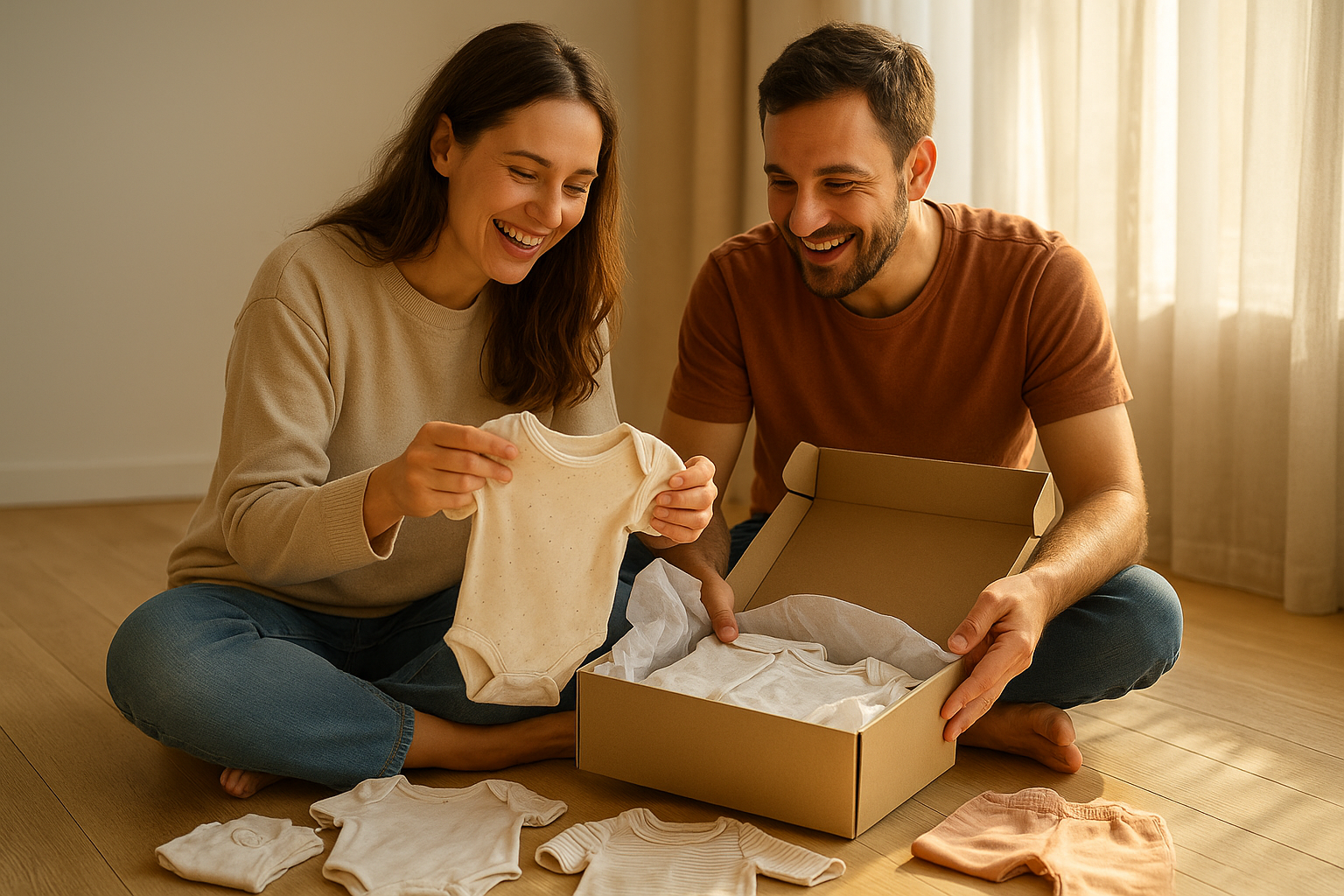
A newborn clothing subscription gift is one of the most practical and lasting presents for new parents.
Understanding the True Cost and Value of a Newborn Clothing Subscription
Subscription pricing varies widely across the market. Basic plans typically start around $25 to $40 per month, while premium curated boxes with organic fabrics and accessories can reach $80 to $120 per delivery. However, when compared to the cost of repeatedly buying individual outfits your baby quickly outgrows, subscriptions often represent genuine savings over the full newborn period.
| Plan Tier | Typical Price | What You Get |
|---|---|---|
| Starter | $25–$40/month | 4–5 essential outfits |
| Standard | $45–$65/month | 5–7 outfits, mixed styles |
| Premium / Curated | $80–$120/delivery | 7–10 outfits plus accessories |
| Rental Plan | $35–$60/month | Unlimited size swaps |
To evaluate true value, calculate the cost per outfit rather than the total box price. A $60 box containing six outfits costs $10 per piece — often less than comparable retail prices for quality organic baby clothing. Additionally, the time saved by eliminating shopping trips carries its own meaningful value for time-pressed new parents.
Services like Bundle to Bundle are specifically designed to make this calculation simple, offering transparent per-item pricing and flexible plan tiers such as the Capsule and Endless Bundle options mentioned earlier. Meanwhile, comparing a few services side by side before committing ensures you find the best fit for your family's budget and lifestyle.
The Sustainability Case for a Newborn Clothing Subscription
The fashion industry is among the most resource-intensive sectors worldwide, and textile production's environmental footprint is well documented. Baby clothing contributes disproportionately to this waste because garments are used for such a short time before being discarded. A well-designed subscription service, especially one using a rental or circular model, directly addresses this problem.
By keeping garments in circulation across multiple families, these services extend the useful life of each piece significantly. Furthermore, many subscription providers partner with certified organic farms and use low-impact dyes, reducing the environmental footprint from the very start of the supply chain. For eco-conscious parents, this blend of convenience and sustainability is a compelling reason to subscribe rather than buy outright.
Key Takeaway
A newborn clothing subscription is not simply a convenience product — it is a practical, financially sound, and increasingly sustainable approach to managing your baby's wardrobe through the most rapid growth period of their life.
Frequently Asked Questions About Newborn Clothing Subscription
What is a newborn clothing subscription?
A newborn clothing subscription is a recurring delivery service that sends curated, size-appropriate baby outfits on a regular schedule. Most services adjust sizing automatically as your baby grows, eliminating the need to manually reorder each time your baby moves to a new size.
How does a baby clothes subscription box work?
You sign up, enter your baby's current age and size, and select a delivery frequency. The service curates and ships a box of outfits to your door. Many services allow returns or exchanges for items that don't fit or suit your preferences.
Is a newborn clothing subscription worth the cost?
For most families, yes. Newborns outgrow sizes in as little as four to six weeks, making bulk purchases wasteful. A subscription keeps your baby in correctly sized clothing without over-buying, which saves money and reduces clutter over time.
How often should deliveries arrive for a newborn?
Monthly deliveries work best for the first three months because growth is fastest during this stage. After six months, quarterly deliveries are often sufficient as the rate of size changes slows down considerably.
Can I pause or cancel a baby clothing subscription?
Most reputable services allow you to pause, skip, or cancel at any time without penalty. Always check the cancellation policy before subscribing to avoid unexpected charges or difficult cancellation processes.
What sizes do these subscriptions typically cover?
Most services start at preemie or newborn (NB) sizing and scale up through 24 months or toddler sizes. The best services automatically size up based on the age and weight information you provide at signup.
Are subscription baby clothes safe for sensitive skin?
Quality subscription services use OEKO-TEX certified or GOTS-certified organic cotton that is free from harmful dyes and chemicals. Always check the fabric certification details on the service's website before subscribing to ensure the garments meet your safety standards.
What is the difference between a rental and a purchase subscription?
A purchase subscription sends clothes you keep permanently, while a rental subscription lets you use items and return them when your baby outgrows them. Rental models are generally more eco-friendly and cost-effective for fast-growing newborns in the first few months.
How many outfits come in a typical box?
Most boxes include four to eight complete outfits per delivery, depending on the plan tier. Premium plans may also include accessories such as hats, socks, and bibs alongside the main clothing items.
Can I customize the style or gender preference?
Yes, most services let you set style preferences, color palettes, and gender-neutral or gender-specific options during signup. Some services also allow you to rate items after each delivery to improve future curation accuracy.
What are the most common mistakes to avoid?
The most common mistakes are choosing the wrong delivery frequency, ignoring fabric certifications, and not reading the return policy carefully. Additionally, parents sometimes subscribe to a purchase model when a rental model would better suit their budget and storage situation.
Is a newborn clothing subscription a good baby shower gift?
Absolutely. A subscription gift provides ongoing value rather than a single item that may be outgrown within weeks. Many services offer prepaid three- or six-month gift subscriptions that can be sent directly to the expecting family, making it a highly practical and thoughtful choice.
Can I use a newborn clothing subscription alongside a baby registry?
Yes. Many parents use a registry for one-time gear like strollers and cribs while relying on a subscription to handle the ongoing need for correctly sized clothing month after month. The two approaches complement each other rather than compete.
Do newborn clothing subscriptions work for premature babies?
Many premium services offer preemie-specific sizing starting as small as 3 to 5 pounds, so a newborn clothing subscription can accommodate early arrivals. Always confirm preemie availability before subscribing if your baby was born early or at a low birth weight.
The Smart Choice for a Fast-Changing Wardrobe
A newborn clothing subscription is one of the most practical decisions a new parent can make. It eliminates the guesswork of sizing, reduces clothing waste, saves money over time, and delivers the convenience exhausted new parents genuinely need. Whether you choose a purchase or rental model, the key is selecting a service with certified safe fabrics, transparent pricing, and flexible delivery options.
Therefore, rather than filling a drawer with newborn onesies your baby may outgrow in a month, consider letting a trusted newborn clothing subscription manage the wardrobe for you — so you can focus entirely on enjoying those early weeks with your baby.


