


Monthly Kids Clothing Subscription: The Complete Parent's Guide for 2025
Updated for 2025 — covering how these services work, how to compare them, how to avoid costly mistakes, and how to squeeze maximum value from every box.
A monthly kids clothing subscription is a recurring delivery service that sends curated, age-appropriate children's outfits directly to your door — no mall trips, no sizing guesswork, no overflowing online carts. Because children grow at an almost alarming rate, keeping up with their wardrobe can feel like a part-time job. That is exactly the problem these services are built to solve.
This guide covers everything a parent needs to know before signing up: how monthly kids clothing subscriptions work, what separates a great service from a frustrating one, how pricing models actually compare, which mistakes to avoid, and how to make every delivery worth every dollar.
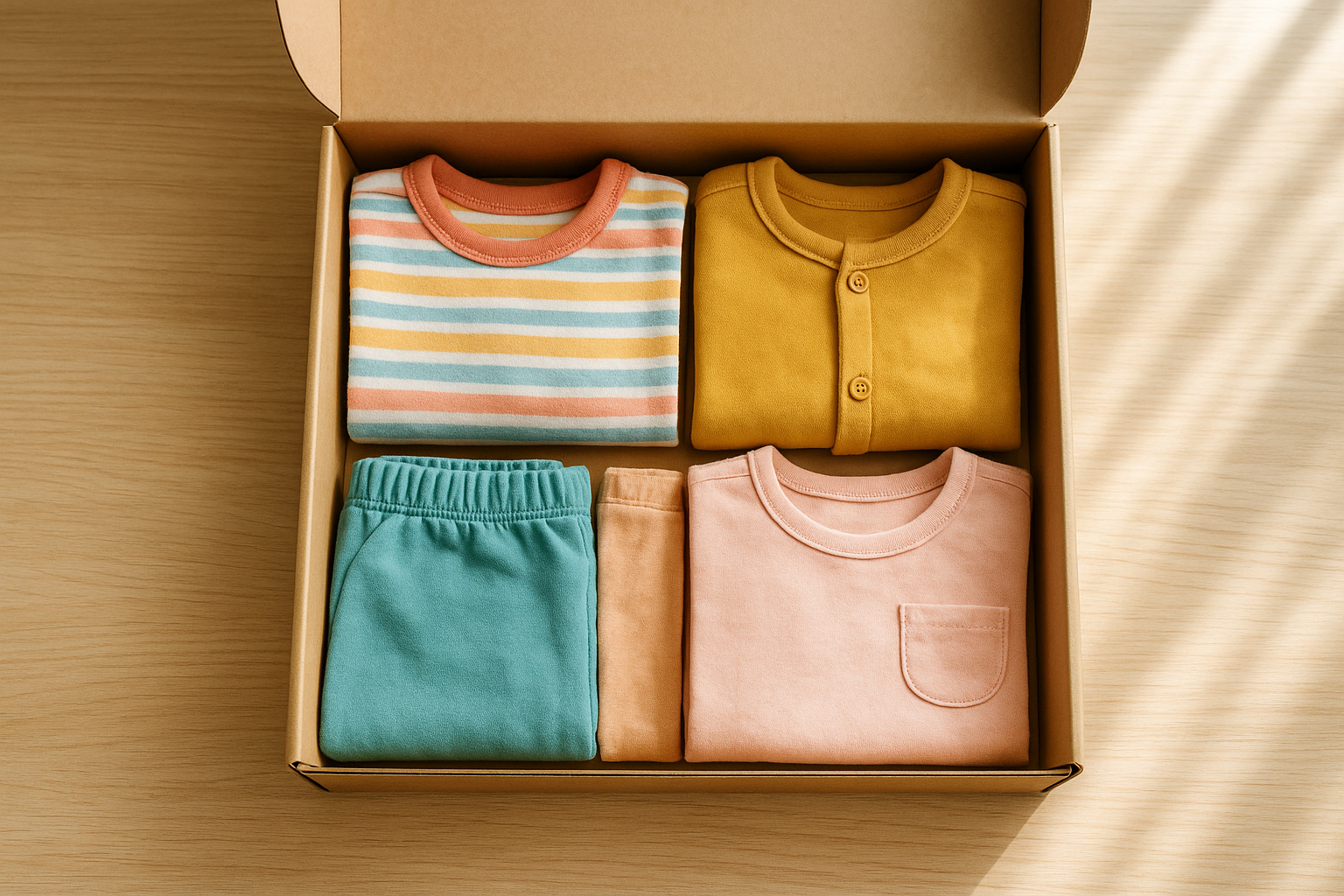
A monthly kids clothing subscription box arrives curated and ready to dress your child for the season ahead.
What Is a Monthly Kids Clothing Subscription — and How Does It Work?
A monthly kids clothing subscription connects parents with a curated selection of children's clothing delivered on a set schedule — usually monthly or seasonally. Unlike buying clothes retail, the curation process is driven by a style profile you build for your child, which means the service gets smarter with every box.
Step-by-Step: How a Typical Service Operates
- Create a style profile. You answer questions about your child's age, current clothing size, favorite colors, preferred clothing types (casual, active, dressy), and any fabric sensitivities or allergies.
- A stylist or algorithm curates your box. Based on your profile, the service selects three to eight items — tops, bottoms, outerwear, or accessories — and ships them to you. Higher-end services use human stylists for personalization; budget services rely more heavily on algorithmic matching.
- Your box arrives. Shipping is typically free in both directions. Unbox everything, try items on your child, and evaluate fit, quality, and style.
- Keep what you love, return the rest. You usually have a 5- to 7-day try-on window. Returns ship back free using a prepaid label. You are only charged for items you keep.
- Rate and refine. After each box, you rate the items. The service uses your feedback to fine-tune future selections — so the longer you stay subscribed, the better the fit and style accuracy becomes.
💡 Pro Tip
The more detail you include in your style profile upfront, the fewer return trips you make later. Spend an extra five minutes noting specific dislikes — scratchy tags, stiff denim, overly bright graphics — and your very first box will arrive closer to what your child will actually wear.
Why Parents Are Switching to Kids Clothing Subscriptions
Beyond saving a Saturday afternoon, monthly kids clothing subscriptions offer a suite of practical advantages that retail shopping simply cannot match.
Time Savings That Actually Add Up
The average parent spends 4 to 6 hours per season shopping for kids' clothes — browsing stores, comparing sizes, making returns, and repeating the cycle as children grow. A monthly clothing subscription compresses that entire process into a 10-minute profile setup and a 20-minute try-on session. Over a full year, that is a meaningful return of time.
Sizing That Evolves With Your Child
Children grow unpredictably — a size that fit perfectly in March can be too small by June. Good subscription services track sizing changes over time and proactively adjust what they send you. In contrast, retail shopping requires you to remember your child's measurements, estimate how much they'll grow, and often buy up or down a size "just in case."
Automatic Seasonal Readiness
Most services rotate inventory by season and ship weather-appropriate clothing without you needing to request it. Your child transitions from lightweight summer layers to warm autumn basics without a frantic wardrobe audit in between.
Reduced Decision Fatigue
Parenting already involves hundreds of daily decisions. A monthly kids clothing subscription removes wardrobe choices from that list entirely. A pre-matched, coordinated set of clothing arrives ready to wear — no mix-and-match guesswork required.
Style Exposure for Kids
Subscription boxes introduce children to styles they might not have chosen themselves in a store — and that exposure often broadens their comfort with different looks, colors, and silhouettes. Many parents report that their children develop stronger, more articulate style preferences after just a few months of receiving curated boxes.
How to Compare Monthly Kids Clothing Subscriptions: 8 Factors That Matter
Not all services are equal. These are the factors that separate a genuinely useful subscription from one that creates more hassle than it solves.
✅ What to Evaluate Before You Subscribe
- 1. Age and size range — Does the service cover your child's current size and the next two to three growth stages? The best services run from newborn through size 14 or beyond.
- 2. Pricing transparency — Are there styling fees, minimum purchase requirements, or auto-charge clauses buried in fine print? A trustworthy service explains all costs upfront.
- 3. Return policy and window — Is the return window 5 days or 10? Is return shipping prepaid or at your cost? A short window combined with paid returns is a red flag.
- 4. Brand and fabric quality — Are the clothes made to survive active kids and repeated washing? Look for services that name their brands or specify fabric content.
- 5. Customization depth — Can you specify fabric sensitivities, dress codes (uniforms, sports), and style dislikes? Generic profiles produce generic boxes.
- 6. Human stylist vs. algorithm — Services with human stylists tend to produce more nuanced selections, especially for children with specific style preferences or sensory needs.
- 7. Pause and cancel flexibility — Can you pause during vacation or cancel before the next billing cycle without a penalty? Inflexible cancellation policies are a common complaint.
- 8. Sustainability practices — Does the service use eco-conscious fabrics, recyclable packaging, or resale programs? Increasingly important for environmentally-minded families.
As a practical rule: a service that covers newborns through size 14, charges no minimum purchase, includes a prepaid return label, and lets you cancel without penalty is the baseline standard for a trustworthy provider. Anything that deviates significantly from that baseline warrants close scrutiny before you enter a payment method.

Children often enjoy the unboxing experience, making delivery day a fun family moment.
Understanding Kids Clothing Subscription Pricing: 3 Models Explained
How you are charged varies significantly across services. Understanding these three models before you sign up prevents billing surprises later.
Model 1: Pay-Per-Item (Try Before You Buy)
Under this model, you only pay for items you decide to keep. A styling fee — typically $20 — is charged upfront but credited in full against your final purchase total. If you keep the entire box, the styling fee is usually waived or fully credited.
Best for: Families who want flexibility and only need a few new pieces per month. The try-before-you-buy structure eliminates return friction because you never pay for something that does not work.
Model 2: Flat Monthly Fee
A fixed monthly charge covers a predetermined set of items, regardless of individual retail prices. Ranges typically run from $40 to $120 per month depending on the number of pieces and brand tier.
Best for: Families who want predictable budgeting and consistently need a full wardrobe refresh — particularly useful when managing clothing for multiple children simultaneously.
Model 3: Bundle Pricing
Some services offer bundled lots of children's clothing at a fixed per-bundle price — making it easy to stock up on essentials without per-item decision anxiety. Services like Bundle to Bundle specialize in this approach, providing curated bundles that cover multiple outfits at a single transparent price point. According to Wikipedia's overview of subscription boxes, the bundle model has grown significantly among family-oriented services precisely because it simplifies household budgeting.
Best for: Families who want to stock up on versatile, mix-and-match basics in a single transaction without committing to a long-term subscription structure.
💰 Hidden Cost Watch
Always check for: (a) non-refundable styling fees if you return everything, (b) auto-charge dates that don't align with your billing cycle, (c) return shipping charges not covered by a prepaid label, and (d) minimum-keep requirements that force you to purchase at least one item per box to avoid penalty fees.
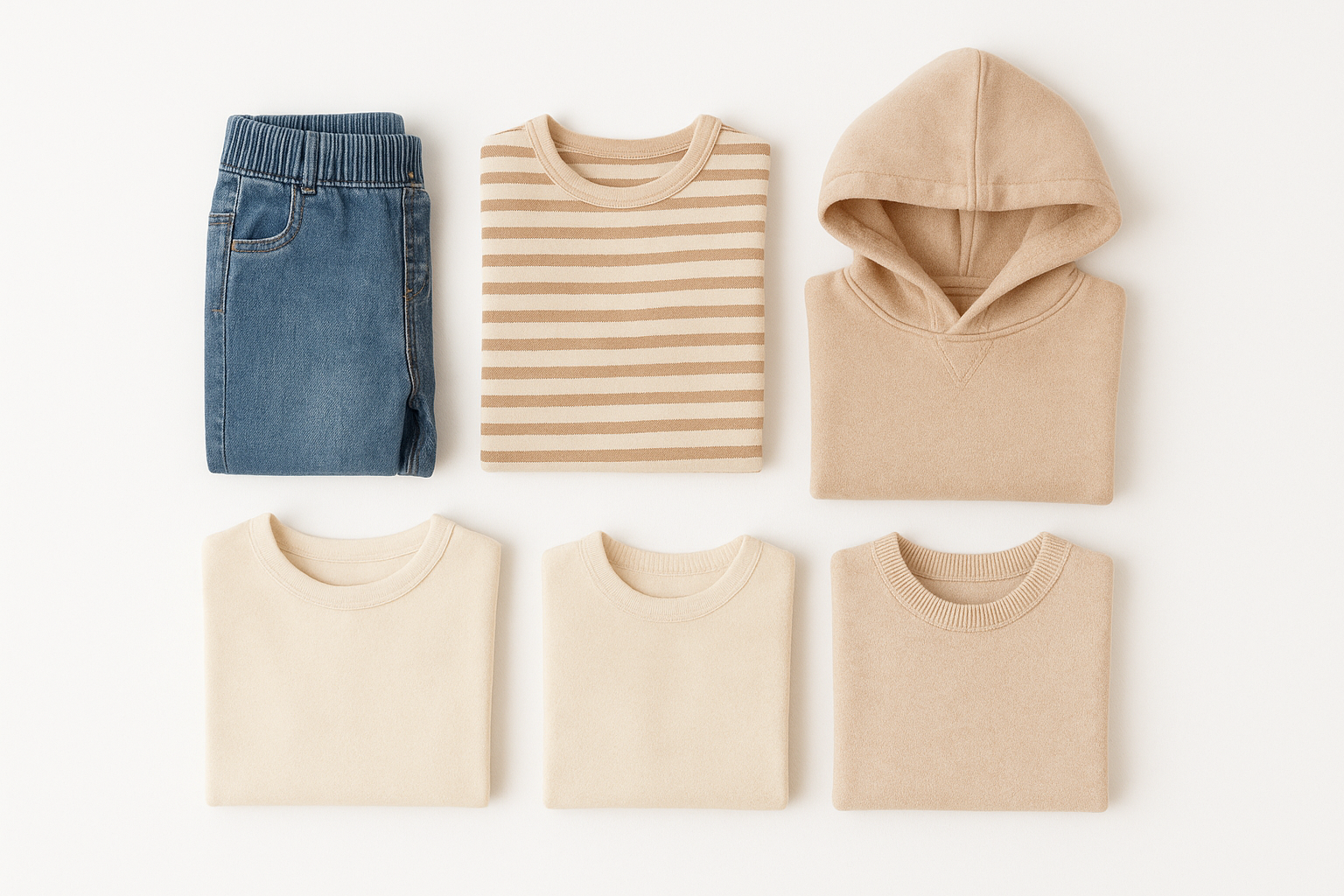
A typical monthly selection includes mix-and-match basics that create multiple complete outfits from a small number of pieces.
Kids Clothing Subscription by Age Group: What to Expect at Each Stage
Children's clothing needs change dramatically from infancy through the preteen years. A monthly kids clothing subscription that works brilliantly for a 2-year-old may be completely wrong for a 10-year-old with strong personal opinions about what they wear. Here is what to expect at each stage.
Newborn to 18 Months
Growth is fastest at this stage — some babies outgrow a size in as little as six weeks. Monthly deliveries are particularly valuable here because they keep pace with sizing changes that retail shopping cannot anticipate. Prioritize services that allow frequent size updates and that send practical basics: onesies, sleepers, soft pants, and easy-snap tops rather than high-fashion pieces a baby will outgrow in days.
Toddler (18 Months to 4 Years)
Durability becomes the top priority. Toddlers explore aggressively — mud, grass stains, and food contact are daily realities. Look for services that specifically list fabric quality and washability, and that offer play-friendly options like elastic waistbands and reinforced knees. The try-on window matters more at this stage since fit can vary dramatically between brands for this size range.
School Age (5 to 10 Years)
School dress codes, sports activities, and an emerging sense of personal style all influence what children this age will actually wear. Services that allow detailed customization — specifying school colors, sports uniforms needed, or disliked clothing types — deliver dramatically better results at this stage. Budget also becomes more predictable since growth rates slow compared to infancy and toddlerhood.
Tweens (10 to 14 Years)
Children in this age group have strong, often non-negotiable style preferences. Subscriptions work best here when children are actively involved in the profile setup and unboxing process. Services that offer a broad style range — including trend-forward options alongside basics — retain more tween subscribers than those that default to generic selections. Also confirm the service's upper size limit: many stop at size 12 or 14.
7 Mistakes Parents Make With Kids Clothing Subscriptions (And How to Avoid Them)
Even a top-tier service can produce disappointing boxes if approached with the wrong habits. These are the most common mistakes — and precisely how to avoid each one.
1. Rushing Through the Style Profile
The style profile is the single most important input you control. Parents who spend less than two minutes on setup tend to receive generic boxes that miss the mark. Take 10 to 15 minutes to note specific preferences, fabric sensitivities, upcoming events requiring special clothing, and items your child already has plenty of (so the service does not send more of the same).
2. Forgetting to Update Sizing Between Boxes
A size that fit in spring may already be too small by fall. Most services allow real-time profile updates between shipments — use them. Set a calendar reminder one week before your next scheduled delivery to log in and verify the sizing is still current.
3. Missing the Return Window
Return windows are typically 5 to 7 days — and they pass quickly during busy school weeks. The moment your box arrives, set a phone alarm labeled "clothing return deadline." Missing the window means paying full price for items you never intended to keep.
4. Not Involving Your Child in the Process
Children who feel included in the selection process are far more likely to actually wear the clothes. Involve them in the try-on session and ask them to point out what they love versus what they hate — this feedback directly improves every future box.
5. Skipping Post-Box Ratings
Most services have a rating or feedback step after each delivery. Parents who skip this step are leaving valuable personalization data on the table. Rating each item — even the ones you returned — teaches the service what to send more or less of in the next box.
6. Subscribing Without Reading the Cancellation Policy
Some services require 30 days' notice before the next billing date to cancel without charge. Others charge a cancellation fee within the first three months. Read the terms before you enter a payment method — not after your first box disappoints you.
7. Treating the Box as a Complete Wardrobe
Monthly subscriptions work best as a supplement to your child's existing wardrobe — not a complete replacement for it. Use each box to fill gaps, introduce new styles, and retire worn-out pieces, rather than expecting it to cover every single clothing need your child has.
How to Get Maximum Value From Every Delivery
A monthly kids clothing subscription delivers increasing value the smarter you use it. These habits separate parents who consistently love their boxes from those who cancel after two deliveries.
- Use each box as a style test. Track which pieces your child reaches for first. These are clues about their authentic preferences — update your profile to request more of what works.
- Build for mix-and-match. When evaluating what to keep, prioritize pieces that work with three or more items already in your child's wardrobe rather than standalone statement pieces.
- Stay subscribed past the second box. Most services improve significantly between the first and third box as they accumulate preference data. Canceling after one disappointing delivery means leaving the best results on the table.
- Leverage loyalty rewards. Many services offer discounts, priority access to new collections, or free styling upgrades for subscribers who stay for three months or longer. Consistency is financially rewarded.
- Notify the service of upcoming events. School picture day, a holiday event, or a birthday party coming up? Contact your service before the box ships and request one occasion-appropriate item in the mix.
- Explore bundle alternatives for basics. Services like Bundle to Bundle offer bundled pricing for wardrobe basics — a smart complement to a monthly subscription for topping up everyday essentials between curated deliveries.
Monthly Kids Clothing Subscription vs. Traditional Retail Shopping: A Real Comparison
Parents often wonder whether a subscription actually saves money compared to just shopping sales at their favorite store. The answer depends heavily on how you shop — but the comparison is revealing.
The clearest financial advantage of subscriptions emerges for parents who currently buy at full retail price without hunting sales. The try-before-you-buy model also eliminates the silent cost of retail impulse purchases — items bought in-store that a child refuses to wear once home.
Eco-Friendly Kids Clothing Subscriptions: What to Look For
Sustainability has become a genuine differentiator in the monthly kids clothing subscription market. These are the specific markers that indicate a service takes environmental responsibility seriously — rather than simply using it as marketing language.
- Certified sustainable fabrics — Look for GOTS (Global Organic Textile Standard) or OEKO-TEX certified materials. These certifications are independently verified and not self-declared.
- Minimal or recyclable packaging — Subscription boxes inherently involve packaging. Services that use recycled cardboard, biodegradable poly mailers, or returnable box programs reduce landfill contribution meaningfully.
- Resale or donation programs — Some services partner with resale platforms to give used children's clothing a second life rather than ending up in landfills when children outgrow them.
- Carbon-neutral shipping — A growing number of services offset shipping emissions through verified carbon offset programs. This is worth confirming directly with a provider before subscribing.
- Ethical manufacturing disclosure — Transparent brands disclose their manufacturing locations and labor conditions. Opacity on this topic is often a signal that standards may not meet what eco-conscious parents expect.
Is a Monthly Kids Clothing Subscription Right for Your Family?
A monthly kids clothing subscription is a clear win for parents who value their time, dislike shopping, or simply cannot keep pace with how quickly children outgrow their clothes. It is also particularly valuable for families managing clothing for multiple children, where the logistical overhead of retail shopping compounds quickly.
It may be less ideal for families with very rigid brand loyalties, extremely specific sensory requirements that are difficult to communicate through a profile, or those on a tight fixed budget who cannot absorb any month-to-month variation in spending.
✅ The Smartest First Move
Start with a single trial box. Most reputable services offer a low-risk first shipment at a reduced commitment level. This gives you a firsthand sense of quality, fit accuracy, and curation style before you commit to a recurring plan. Services like Bundle to Bundle make it easy to explore bundled children's clothing options without a long-term obligation.
Frequently Asked Questions About Monthly Kids Clothing Subscriptions
What is a monthly kids clothing subscription?
A monthly kids clothing subscription is a recurring delivery service that sends curated, age-appropriate children's clothing directly to your home each month. Parents complete a style profile covering their child's size, preferences, and clothing needs, and the service selects matching items automatically. It eliminates the need for frequent shopping trips while keeping children's wardrobes seasonally current and properly sized.
How much does a kids clothing subscription typically cost?
Costs vary depending on the pricing model and number of items included. Pay-per-item services typically charge $15 to $40 per piece kept, with a styling fee of around $20 credited toward purchases. Flat-fee services range from $40 to $120 per month. Bundle services often offer the lowest effective per-item cost for families who need multiple new pieces at once.
Can I control which clothing styles my child receives?
Yes. Most monthly kids clothing subscriptions include a detailed style profile that covers your child's size, preferred colors, clothing types, and specific dislikes. After each box, you rate the items received, and the service uses that feedback to refine future selections. The customization improves significantly with each delivery as your preference data accumulates.
What age ranges do kids clothing subscriptions typically cover?
Most services cover newborn through size 14, corresponding roughly to ages 0 through 14 years. Some services stop at size 12 or toddler sizes, while others extend into early teen sizing. Always confirm the upper and lower size limits before subscribing — especially if you have multiple children at different stages.
How does the return process work for kids clothing subscriptions?
Most reputable services include a prepaid return label or envelope with every delivery. You try items on your child during the return window — typically 5 to 7 days — then place unwanted pieces back in the original packaging and drop the parcel at a carrier location. You are only charged for items you choose to keep after the window closes.
Are monthly kids clothing subscriptions worth the money?
For most busy parents, yes. The time saved on shopping, the elimination of return hassle, and the accurate sizing that improves over time add up to genuine value. Per-item costs through subscriptions are often comparable to mid-range retail pricing — and the try-before-you-buy model eliminates the hidden cost of retail purchases a child refuses to wear once home.
Can I pause or cancel my kids clothing subscription at any time?
Most reputable monthly kids clothing subscriptions allow pausing or canceling without penalty before the next billing cycle. However, notice period requirements vary — some require 30 days' advance notice to avoid the next charge. Always read the cancellation terms before subscribing, and confirm whether there are early-termination fees within the first few months.
Do kids clothing subscription services automatically adjust for seasonal changes?
Yes, most services rotate their inventory seasonally and send weather-appropriate clothing based on your location and the current time of year. You can also manually update your style profile to request specific seasonal preferences — such as heavier layers for winter or lightweight fabrics for summer — before your next box ships.
What is the difference between a kids clothing subscription and a clothing rental service?
A monthly kids clothing subscription delivers items you purchase and keep permanently. A clothing rental service lets you borrow items and return them after use without owning them. Subscriptions are better for building a lasting wardrobe and everyday dressing. Rentals are better suited to special occasions or the fastest-growing infancy stage when children outgrow clothing before it wears out.
How do I choose the best monthly kids clothing subscription for my family?
Evaluate eight factors: age and size range covered, pricing transparency, return policy and window length, fabric and brand quality, customization depth, human vs. algorithmic curation, pause and cancel flexibility, and sustainability practices. Start with a trial box before committing to a long-term plan, and check recent parent reviews for each service you consider.
Are kids clothing subscriptions eco-friendly?
It depends on the provider. Look for services that use GOTS or OEKO-TEX certified fabrics, recyclable or minimal packaging, carbon-neutral shipping options, and resale or donation programs for outgrown clothing. Services that make vague sustainability claims without third-party certifications should be evaluated critically.
What happens if the clothes from my kids clothing subscription do not fit?
Return them using the prepaid label within the return window and pay nothing for those items. After a fit-related return, update your size profile immediately so the service adjusts future selections. Most services also log the return reason, which informs their sizing algorithm for your next delivery.
Can a kids clothing subscription work for children with sensory sensitivities?
Yes, with the right service and a detailed profile. Children with sensory sensitivities — such as discomfort with tags, rough seams, stiff fabrics, or tight waistbands — benefit enormously from subscription services that allow detailed fabric and comfort notes in the style profile. Look specifically for services that let you enter free-text notes rather than just checkbox selections, as this level of specificity produces dramatically better results for sensory-sensitive children.


