

A fashion swap for kids clothes is an organized exchange where families trade outgrown or unused children's garments for items that fit their children right now — at no cost and with no waste. Because children grow so rapidly, this simple concept solves one of the most frustrating and expensive challenges of modern parenting.
The average family spends hundreds of dollars on children's clothing each year, yet many of those items are worn only a handful of times before a growth spurt makes them obsolete. As a result, closets fill with perfectly good clothes that no longer fit, and most of those garments eventually end up in landfills. A clothing swap directly addresses both problems at once.
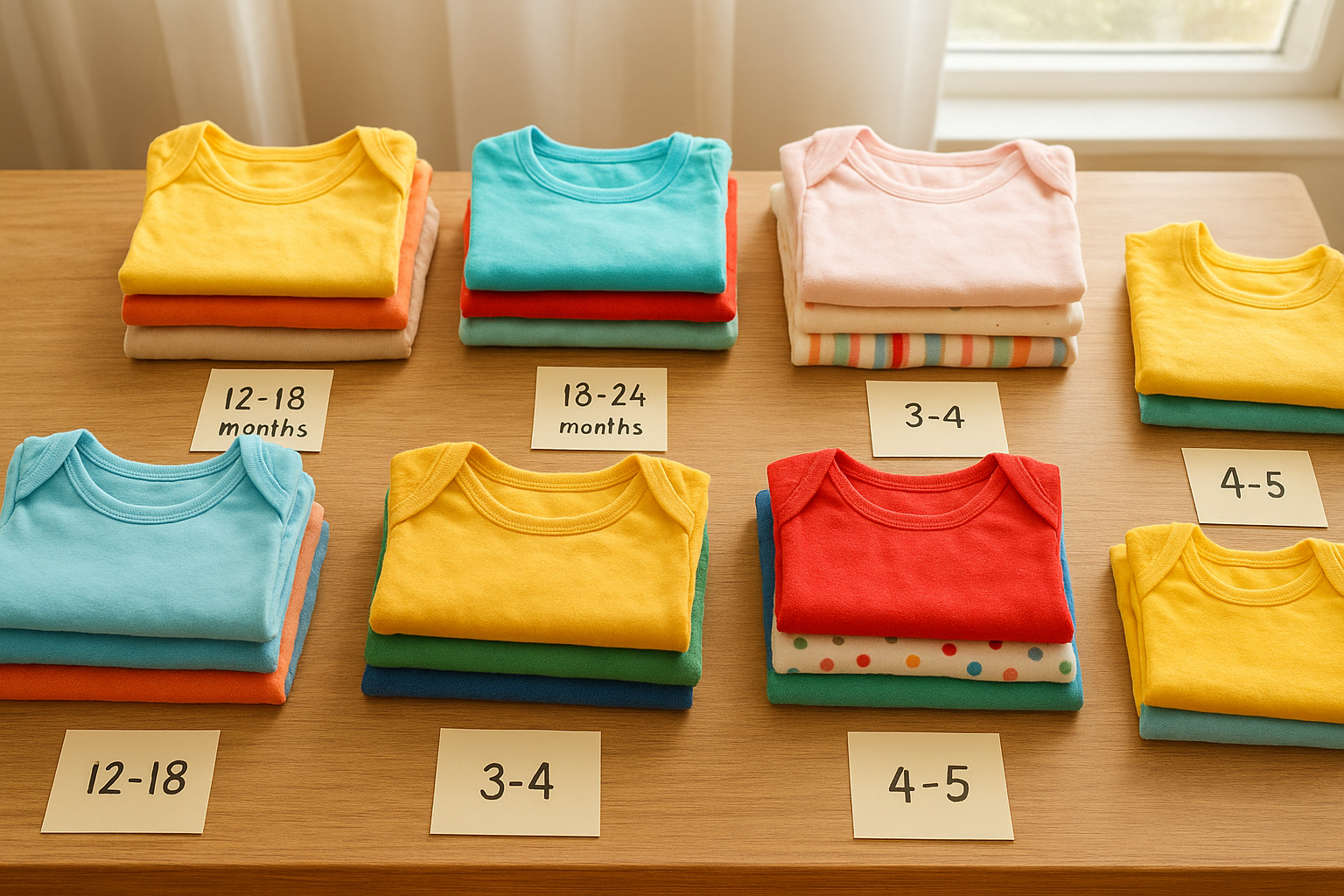
A well-organized fashion swap for kids clothes makes it easy for families to find the right sizes quickly.
Why Children's Clothing Is the Perfect Swap Candidate
Children's clothing has one unique characteristic that makes it ideal for swapping: it is outgrown far faster than it wears out. A toddler can jump an entire clothing size in just two to three months. Therefore, parents are constantly cycling through garments that still look nearly new.
According to the U.S. Environmental Protection Agency, Americans generate millions of tons of textile waste annually, and children's clothing contributes significantly to that figure. However, swapping extends the useful life of each garment through multiple children and multiple families, which dramatically reduces that waste footprint.
Additionally, the financial savings are substantial. Instead of paying full retail price for a new winter coat that will be outgrown by spring, a family can simply swap for one that another child has already outgrown. Over a year, those savings can add up to several hundred dollars per child.
How to Run a Successful Kids Clothing Swap
Running a great swap is simpler than most parents expect. Follow these five steps to make your event smooth and rewarding for everyone involved.
Step 1 — Collect and sort outgrown items. First, go through your child's wardrobe and pull out everything that no longer fits. Wash each piece and inspect it carefully. Items should be clean, free of stains, and have no broken zippers or significant tears.
Step 2 — Choose a venue and invite families. Next, pick a community space, school hall, or online platform. Invite families with children of different ages so the event has a wide range of sizes. More variety means everyone goes home happy.
Step 3 — Set clear swap rules. A bring-one-take-one policy is the simplest approach. Alternatively, you can use a token system where each item contributed earns one token that can be redeemed for any item on the table. Either way, communicate the rules clearly before the event begins.
Step 4 — Organize items by size and category. On the day of the event, sort all clothing by age range and type — tops, bottoms, outerwear, shoes. This organization makes browsing efficient and reduces the chaos that can occur when everything is piled together.
Step 5 — Swap and donate leftovers. Finally, allow families to select their items and take them home. Donate any unclaimed clothing to a local shelter, charity, or textile recycling program so that every garment finds a second life.
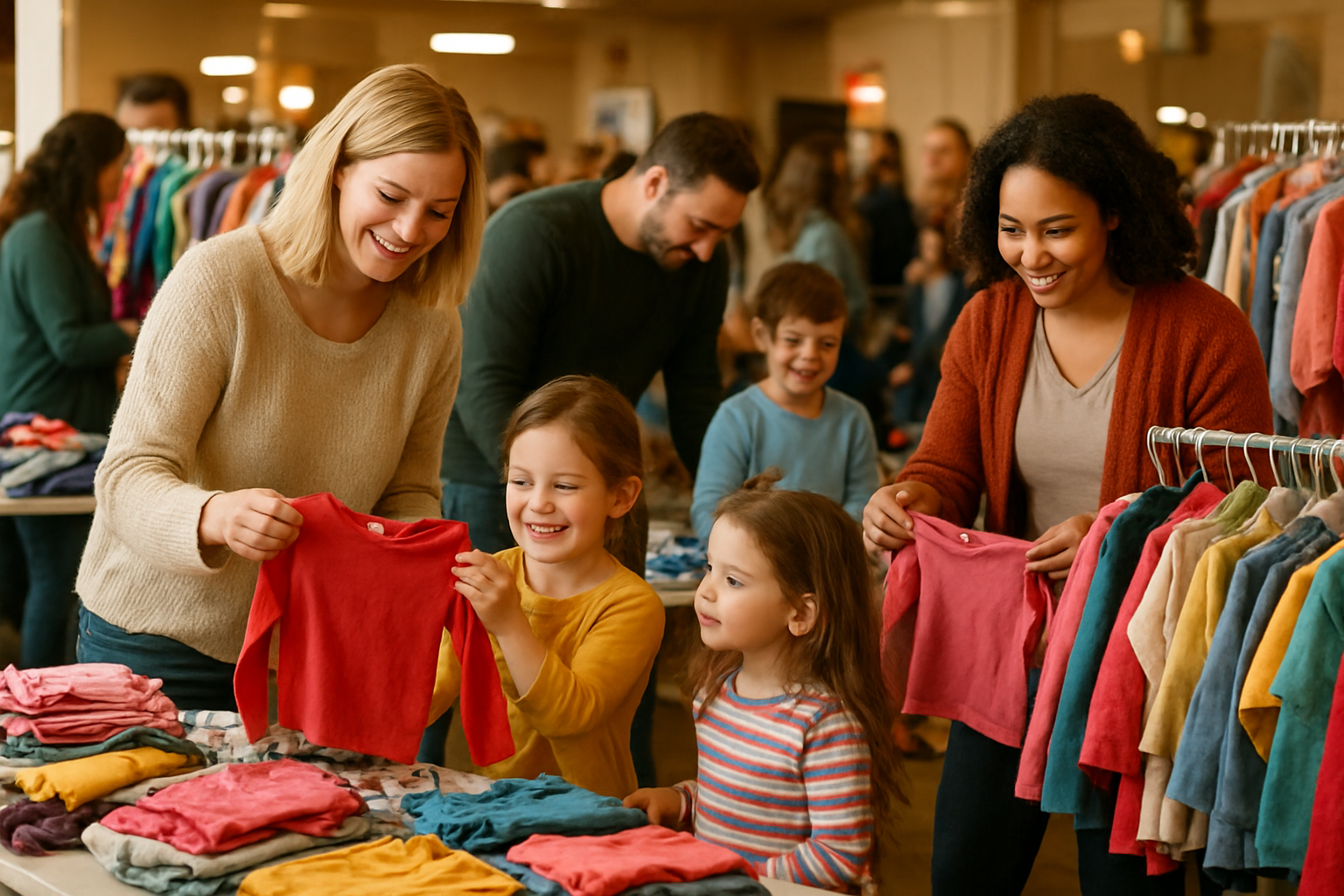
Community clothing swaps bring families together while making sustainable fashion accessible to everyone.
What to Look for in the Clothes You Accept
Not every garment is worth taking home, even when it is free. Before picking up an item at a swap, hold it up to the light and check the fabric closely. Look for pilling, fading, or thinning at the knees and elbows — these are signs that the garment has limited life left.
In contrast, items with firm seams, vibrant colors, and intact fastenings are excellent picks. Branded basics and school-uniform pieces are particularly valuable because they tend to be made from durable fabrics that withstand repeated washing.
Meanwhile, seasonal items deserve special attention. A barely worn winter coat or a pair of snow boots that were used for just one season can be a genuine windfall at a swap. Because children often outgrow these items before they wear them out, they are frequently among the best-quality pieces available.
Online Swapping: A Flexible Alternative
In-person events are not the only option. Online platforms have made it possible to organize a fashion swap for kids clothes across wider communities without the logistics of a physical venue. Families can list items, browse what is available, and arrange exchanges at their convenience.
Platforms like Bundle to Bundle are designed specifically for this purpose, making it easy to connect with other families and swap children's clothing in a trusted, community-focused environment. This kind of digital infrastructure removes the barrier of needing to know enough local families to fill a room.
Additionally, online swaps allow parents to search for specific sizes and styles rather than relying on whatever happens to be on the table that day. As a result, the process becomes more targeted and efficient for busy families.
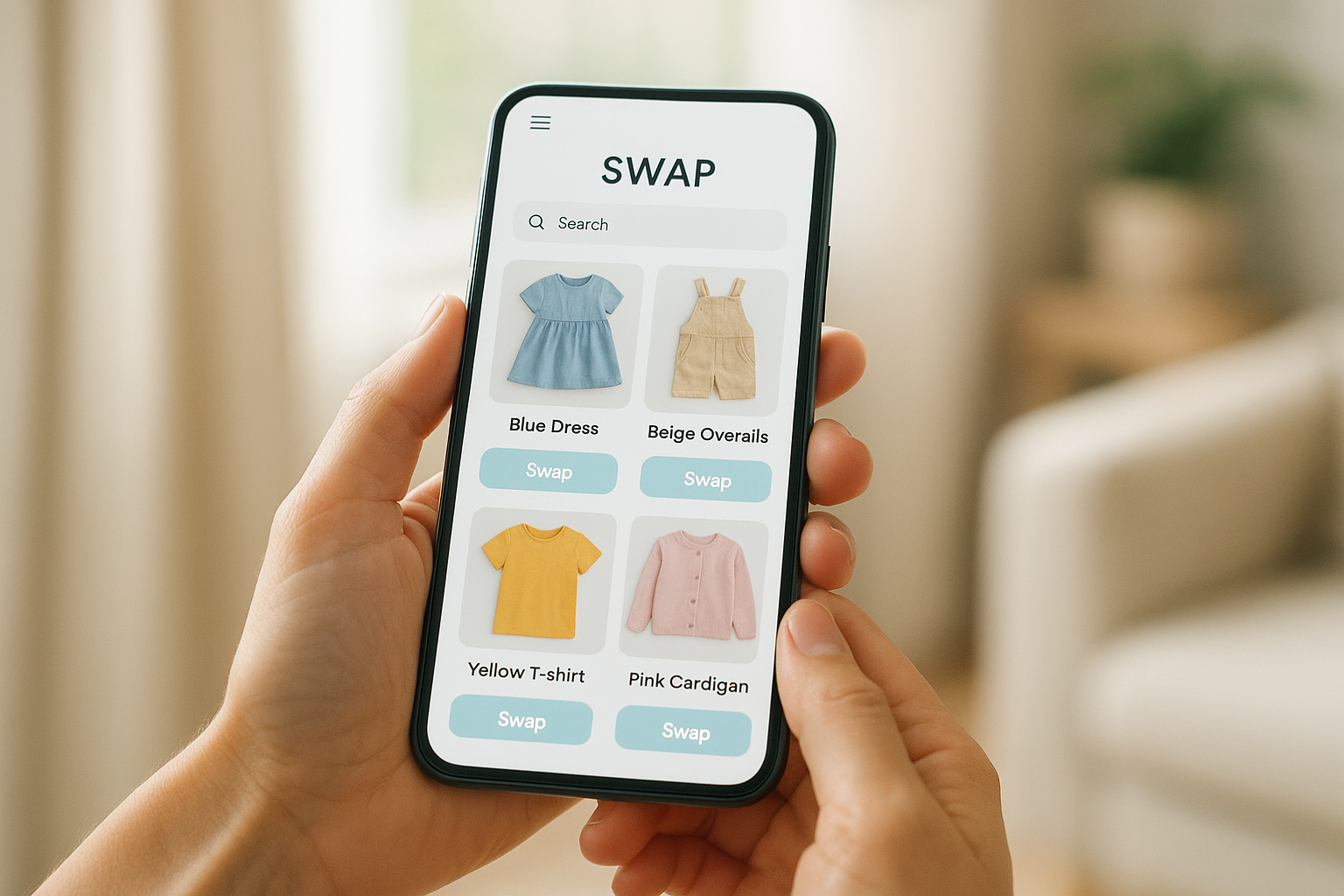
Digital platforms make it simple to participate in a fashion swap for kids clothes from home.
Common Mistakes to Avoid at a Clothing Swap
Even well-intentioned swaps can go sideways without a little planning. One of the most common mistakes is bringing items that are not genuinely swap-worthy — stained, damaged, or heavily pilled garments that no one will want. This wastes everyone's time and undermines the spirit of the event.
Another frequent issue is failing to sort items in advance. When everything arrives in a jumbled pile, the event quickly becomes chaotic. Therefore, designate a small setup team to organize items by size before the browsing begins.
Finally, many organizers forget to plan for leftover items. However, having a designated charity drop-off or textile recycling contact lined up in advance ensures that unclaimed clothing does not simply end up in the bin after all.
The Bigger Picture: Sustainable Kids Fashion
A single clothing swap event may seem small, but its impact compounds over time. Each garment that passes through two or three families instead of one represents a meaningful reduction in the demand for new textile production. The fashion industry is one of the world's largest contributors to water pollution and carbon emissions, so every swap is a small but genuine act of environmental responsibility.
Furthermore, swapping teaches children valuable lessons about sharing, resourcefulness, and the environmental cost of consumption. When kids participate in the process — helping to sort their outgrown clothes and choosing new-to-them pieces — they develop a mindset that will serve them well throughout their lives.
Resources like Bundle to Bundle make it straightforward to build this habit into family life on a regular basis, whether through in-person community events or convenient online exchanges.
Putting It All Together
A fashion swap for kids clothes is one of the most practical, cost-effective, and environmentally responsible habits a family can adopt. It requires minimal effort, costs nothing, and delivers real savings alongside a meaningful reduction in textile waste. Whether you organize a neighborhood event or join an online exchange platform, the process is straightforward and the benefits are immediate.
Start small: gather five to ten outgrown items from your child's wardrobe this week, reach out to a few families in your network, and propose a simple bring-one-take-one exchange. You may be surprised how quickly the idea catches on — and how much your family saves as a result.
Frequently Asked Questions
What is a fashion swap for kids clothes?
A fashion swap for kids clothes is an organized exchange where families bring outgrown or unused children's clothing and trade them for items in the sizes they currently need. It eliminates the need to buy new clothes at full retail price and keeps usable garments out of landfills.
How do I organize a kids clothing swap event?
Start by choosing a venue, setting a date, and inviting families with children of varying ages. Ask each participant to bring a set number of clean, gently used items, then sort them by size and category on the day of the event so everyone can browse easily.
How many items should each family bring to a swap?
A common rule is to bring between five and ten items per family. This ensures there is enough variety for everyone while keeping the event manageable and fair.
What condition should clothes be in for a kids swap?
Items should be clean, free of stains, and have no significant damage such as broken zippers or large tears. Gently used clothes that still have plenty of wear left are ideal contributions.
Is a fashion swap for kids clothes free to attend?
Most community or school-based swaps are free to attend, relying on the bring-one-take-one model. Some organized events may charge a small entry or donation fee to cover venue costs.
What types of kids clothing work best for swaps?
Everyday basics like jeans, tops, school uniforms, and outerwear are the most popular swap items. Seasonal items like winter coats and swimwear are also excellent choices since children outgrow them quickly.
How does a kids clothing swap reduce environmental impact?
Each garment that is swapped instead of discarded stays out of a landfill and reduces demand for new textile production. The fashion industry is one of the world's largest polluters, so extending the life of children's clothing makes a measurable difference.
Can I do a kids fashion swap online?
Yes, online platforms allow families to list and exchange kids clothing digitally. Platforms like Bundle to Bundle are designed specifically to facilitate this kind of community exchange from home.
How is a clothing swap different from donating clothes?
Donating sends clothes to a charity or thrift store without a direct return, while swapping is a mutual exchange where both parties receive something of value. Swapping is therefore more immediately beneficial for participating families.
How often should families participate in a kids clothing swap?
Many families find that swapping seasonally — roughly every three to six months — aligns well with children's growth spurts and wardrobe changeovers. Schools and community groups often host biannual swap events for this reason.
What should I do with leftover items after a swap event?
Unclaimed items can be donated to a local charity, shelter, or textile recycling program. This ensures that every garment finds a second life rather than going to waste.
Are kids clothing swaps suitable for baby and newborn sizes?
Absolutely. Baby and newborn sizes are among the most practical swap categories because infants outgrow clothing within weeks. Parents often have large quantities of barely worn baby items to contribute, making these sizes some of the most abundant at any swap.


