

A children's clothing exchange service is a platform or program that allows families to swap outgrown kids' clothes for size-appropriate replacements, saving money and reducing textile waste with every growth spurt. Because children grow so rapidly — sometimes outgrowing an entire size within weeks — the traditional model of buying new clothing every season is both expensive and environmentally costly. Therefore, clothing exchange services have emerged as a practical, sustainable alternative for modern families.
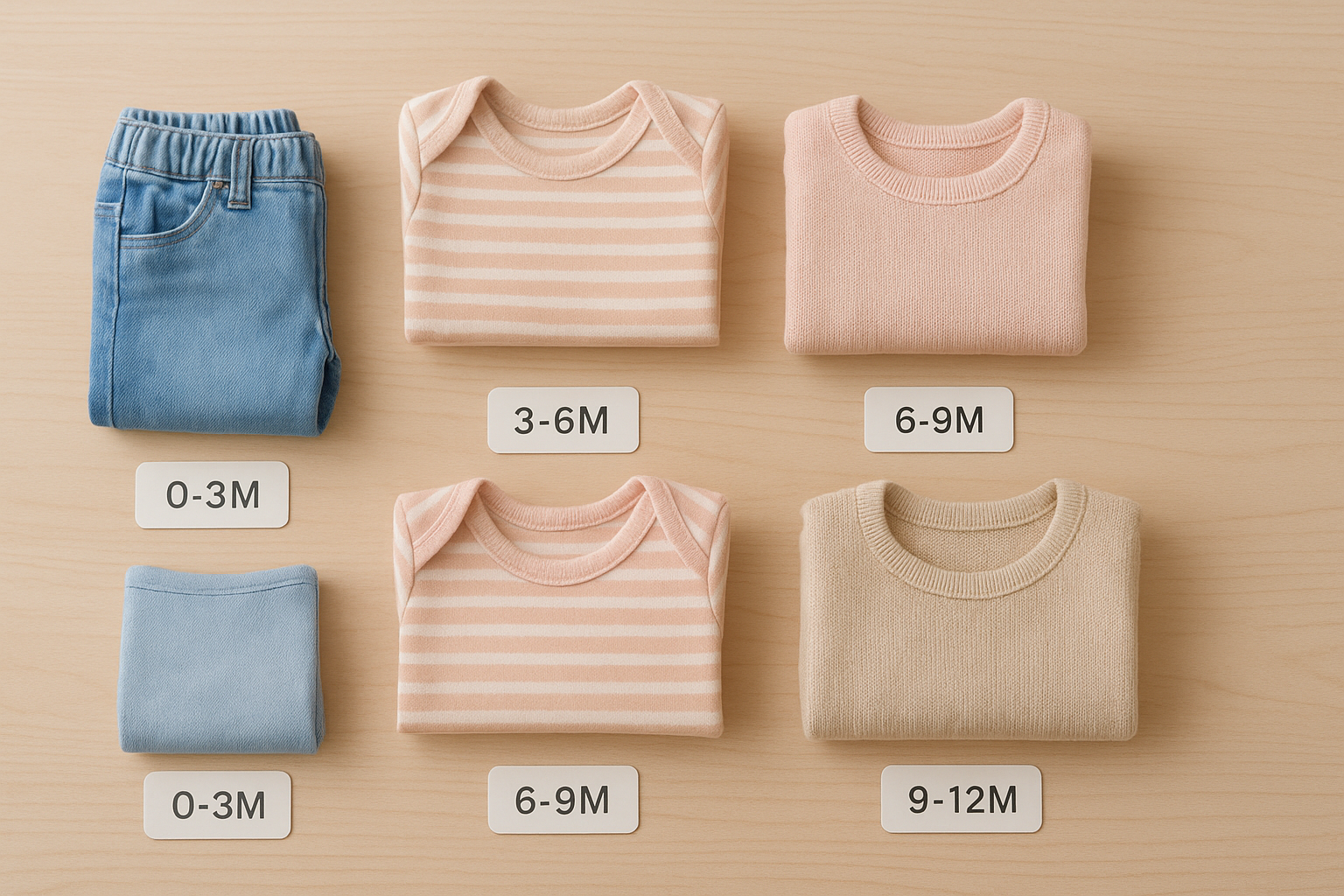
Sorting outgrown clothes by size is the first step in joining a children's clothing exchange service.
Why Kids' Wardrobes Create a Unique Challenge
Children grow at a remarkable rate, especially in the first five years of life. In fact, infants can move through two or three clothing sizes in a single year. As a result, parents often find themselves with bags of barely worn garments that simply no longer fit.
This constant cycle of buying and discarding creates significant financial strain. According to research published by the U.S. Environmental Protection Agency, textiles represent one of the fastest-growing categories of municipal solid waste. Children's clothing, because it is outgrown rather than worn out, contributes disproportionately to this problem.
Additionally, fast-fashion pricing models encourage parents to buy cheaply and frequently, which compounds the environmental damage. A clothing exchange model directly disrupts this cycle by extending the useful life of each garment across multiple children.
What Does a Children's Clothing Exchange Service Actually Do?
A children's clothing exchange service connects families who have outgrown clothing with families who need the next size up. The mechanics vary by platform, but the core model is consistent: you send in what your child no longer wears, and you receive a curated bundle of clothes in the size your child currently needs.
Some services operate on a subscription basis with a monthly fee, while others charge per bundle or use a credit system. Platforms like Bundle to Bundle have built their entire model around making this swap process seamless and family-friendly. The goal is to remove the friction of reselling individually while still giving outgrown clothes a meaningful second life.
Furthermore, most reputable services inspect incoming items for quality, ensuring that what you receive meets a reasonable standard of wear. This quality control step is what distinguishes a professional exchange service from a simple neighborhood swap.
Key Features to Look For
Not all exchange services are equal. Before committing, consider the following factors:
- Size range covered — Does the service handle newborn through teen sizes, or only a narrow band?
- Condition standards — How strictly are incoming items inspected, and what happens to rejected pieces?
- Customization options — Can you specify gender-neutral styles, preferred colors, or seasonal needs?
- Turnaround time — How quickly will you receive your replacement bundle after sending yours in?
- Pricing model — Is it a flat subscription, a per-bundle fee, or a points-based credit system?
How to Use a Clothing Exchange: Step by Step
Getting started with a kids' clothing swap is straightforward. However, a little preparation ensures you get the most value from each exchange.
Step 1 — Choose a service. Research available platforms and compare their pricing, size coverage, and condition requirements. Reading parent reviews can help you identify which services deliver consistent quality.
Step 2 — Sort outgrown clothes. Go through your child's wardrobe and set aside clean, gently used items that no longer fit. Focus on pieces that still have structural integrity — no broken zippers, missing buttons, or permanent stains.
Step 3 — Send your bundle. Pack the sorted clothes according to the service's packaging guidelines and ship or drop them off as instructed. Some services provide prepaid shipping labels, which simplifies the process considerably.
Step 4 — Receive your new bundle. Wait for your curated bundle of size-appropriate clothing to arrive. Once it does, wash the items before your child wears them, and enjoy a refreshed wardrobe without the retail price tag.
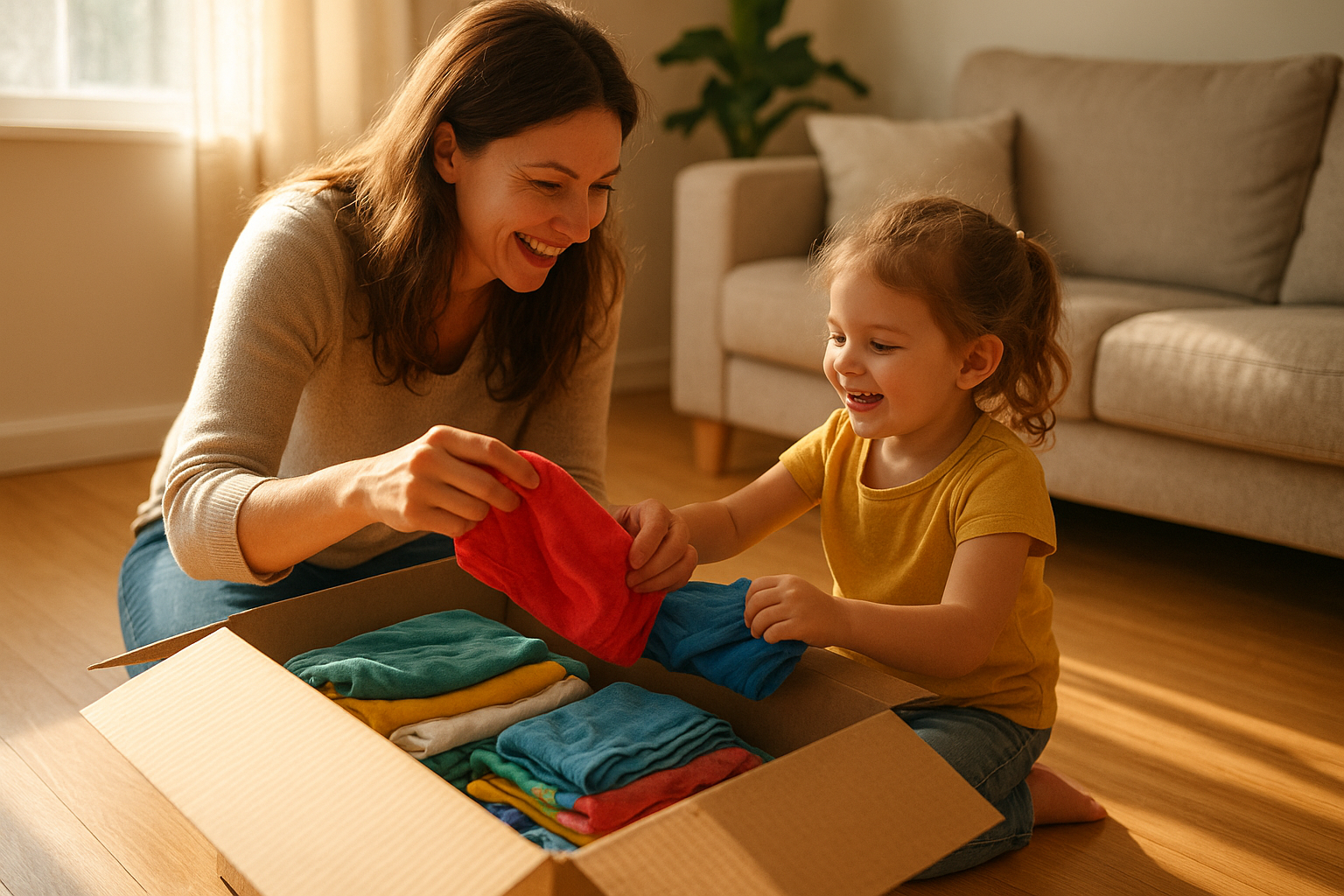
Receiving a fresh bundle of kids' clothes through a swap service feels like a practical gift for the whole family.
The Real Financial Savings for Families
The financial case for clothing exchange services is compelling. On average, parents in the United States spend between $100 and $300 per child per season on new clothing. For a family with two or three young children, that adds up to more than $1,000 annually — much of it spent on items worn only briefly before being outgrown.
In contrast, a subscription-based exchange service typically costs between $20 and $60 per bundle, depending on the number of items and the platform. Because each bundle replaces what would otherwise be a shopping trip, the savings accumulate quickly. Additionally, the time saved by not hunting for deals across multiple stores has its own real value.
For families on tighter budgets, the exchange model is especially impactful. Rather than choosing between quality and affordability, parents can access well-made secondhand garments at a fraction of their original retail price.
Environmental Impact: Every Swap Counts
Beyond the household budget, clothing exchanges deliver meaningful environmental benefits. The global fashion industry produces an estimated 92 million tonnes of textile waste per year, according to data compiled by the environmental impact of fashion research community. Children's clothing, because it is outgrown so quickly, is a particularly wasteful segment of that industry.
When a garment passes through three or four children instead of one, its carbon footprint per use drops dramatically. Furthermore, reducing demand for new production lowers the water and chemical inputs required for cotton farming and dyeing processes.
Platforms like Bundle to Bundle are built around this principle, treating each bundle sent in as a resource to be circulated rather than discarded. In practice, participating families become active contributors to a circular economy — even if that is not their primary motivation for joining.
Common Mistakes to Avoid
First, avoid sending items that are stained, pilling, or have damaged closures. These will typically be rejected, and repeated rejections can affect your account standing with the service. Therefore, inspect each piece carefully before packing.
Second, do not wait until your child has completely outgrown every item before initiating a swap. Sending clothes while they still have plenty of wear left in them earns you better exchange value and ensures the next family gets maximum use from the garments.
Finally, underestimating how quickly children grow is a common oversight. Building a regular swap cadence — for example, every two to three months for toddlers — prevents the wardrobe from falling behind your child's actual size.
Extending the life of each garment through a clothing exchange reduces the environmental footprint of dressing growing children.
Who Benefits Most From This Model?
While any family with young children can benefit, certain households gain the most from clothing exchange services. Families with multiple children in close age ranges, for example, can create an almost continuous loop of sending and receiving bundles as each child grows into the next size.
Parents of infants and toddlers also see outsized value, because these sizes are outgrown the fastest. Meanwhile, eco-conscious families who want to reduce their consumption footprint find the model aligns naturally with their values without requiring significant lifestyle changes.
In addition, caregivers managing tight household budgets — including grandparents, foster families, and single-parent households — benefit from the predictable, low-cost access to quality children's clothing that exchange services provide.
Quick Answer: A children's clothing exchange service works by having families send in outgrown kids' clothes and receive a curated bundle of size-appropriate replacements. It saves money, reduces textile waste, and is especially valuable for families with fast-growing infants and toddlers.
Frequently Asked Questions
What is a children's clothing exchange service?
A children's clothing exchange service is a platform or program that allows families to swap outgrown kids' clothes for items in the next size up. Instead of discarding clothes that no longer fit, parents send them in and receive new-to-them garments in return. This reduces waste and saves money on fast-growing children's wardrobes.
How does a kids' clothing swap work?
Most services ask you to send in a bundle of outgrown clothes, which are inspected for quality. You then receive a bundle of size-appropriate clothing in return, often for a small membership fee or per-bundle cost. Some platforms use a credit or points system instead.
Is a children's clothing exchange service worth the cost?
Yes, for most families it represents significant savings compared to buying new clothing every few months. Children can outgrow an entire size in as little as six to eight weeks, making the exchange model far more economical than retail shopping.
What condition do clothes need to be in to swap?
Most exchange services require clothes to be clean, free of stains, tears, or excessive wear, and in good resalable condition. Items with broken zippers, missing buttons, or permanent marks are typically not accepted. Always check the specific condition guidelines of the service you use.
What age ranges do children's clothing exchanges cover?
Most services cover newborn through size 14 or teen sizes, though availability of specific sizes varies by platform. Newborn and toddler sizes tend to be the most popular and widely available.
Are the clothes in a swap service hygienic and safe?
Reputable services inspect and often wash or sanitize items before sending them to new families. It is also recommended that you wash any received items before your child wears them as an extra precaution.
How much money can I save using a clothing exchange?
Families can save hundreds of dollars per year depending on how many children they have and how frequently they need new sizes. On average, parents spend between $100 and $300 per child per season on new clothing, much of which an exchange service can replace at a fraction of the cost.
What is the environmental benefit of swapping kids' clothes?
The fashion industry is one of the largest contributors to global textile waste. By participating in a clothing exchange, families extend the life cycle of garments and reduce the demand for new production, which lowers carbon emissions and water usage associated with manufacturing.
Can I choose the styles or brands I receive in a swap?
This depends on the service. Some platforms let you set style preferences, gender-neutral options, or brand preferences, while others curate bundles based on size alone. Check the service's customization options before signing up.
How is an exchange service different from a secondhand store?
A secondhand store sells individual items for a set price, while an exchange service operates on a swap or subscription model where your outgrown clothes have direct value. Exchanges are often more convenient because they handle logistics, curation, and delivery for you.
How often should I swap my child's clothing?
Most experts recommend reassessing your child's wardrobe every two to three months for infants and toddlers, and every season for older children. Growth spurts can happen quickly, so regular check-ins help you stay ahead of sizing needs.
What common mistakes should I avoid when using a clothing exchange?
Avoid sending items that are stained, pilling, or have damaged closures, as these will be rejected. Also, do not wait until your child has outgrown every item before swapping — sending clothes while they still have life in them gets you better exchange value.
Conclusion: A Smarter Way to Dress Growing Kids
A children's clothing exchange service offers a genuinely better model for families navigating the relentless pace of childhood growth. Rather than spending hundreds of dollars on clothing that will be outgrown in weeks, parents can participate in a circular system that keeps quality garments in use and money in their pockets.
The environmental benefits are equally real. Every bundle exchanged is a bundle of textiles diverted from landfill, and every family that participates contributes to a lower collective demand for new production. As a result, the choice to swap is both a financial decision and a values-driven one.
Whether you are a first-time parent overwhelmed by how fast your infant is growing, or a seasoned caregiver looking to reduce household spending, exploring a clothing exchange is a practical next step. Start by sorting what your child has outgrown, and discover how much further those garments — and your clothing budget — can go.


