


Baby and toddler clothing rental is a subscription-based model that lets families borrow quality children's clothes for a set period, then return them when their child grows out of the size. Instead of buying new outfits every few months — only to watch them become too small in weeks — parents pay a manageable monthly fee and receive curated bundles of age-appropriate clothing delivered to their door.
For most families, this approach solves two problems at once: the financial strain of constantly replacing outgrown clothes and the environmental guilt of adding to the growing mountain of textile waste. Because babies and toddlers grow so rapidly, their clothes often see very little actual wear before they no longer fit.
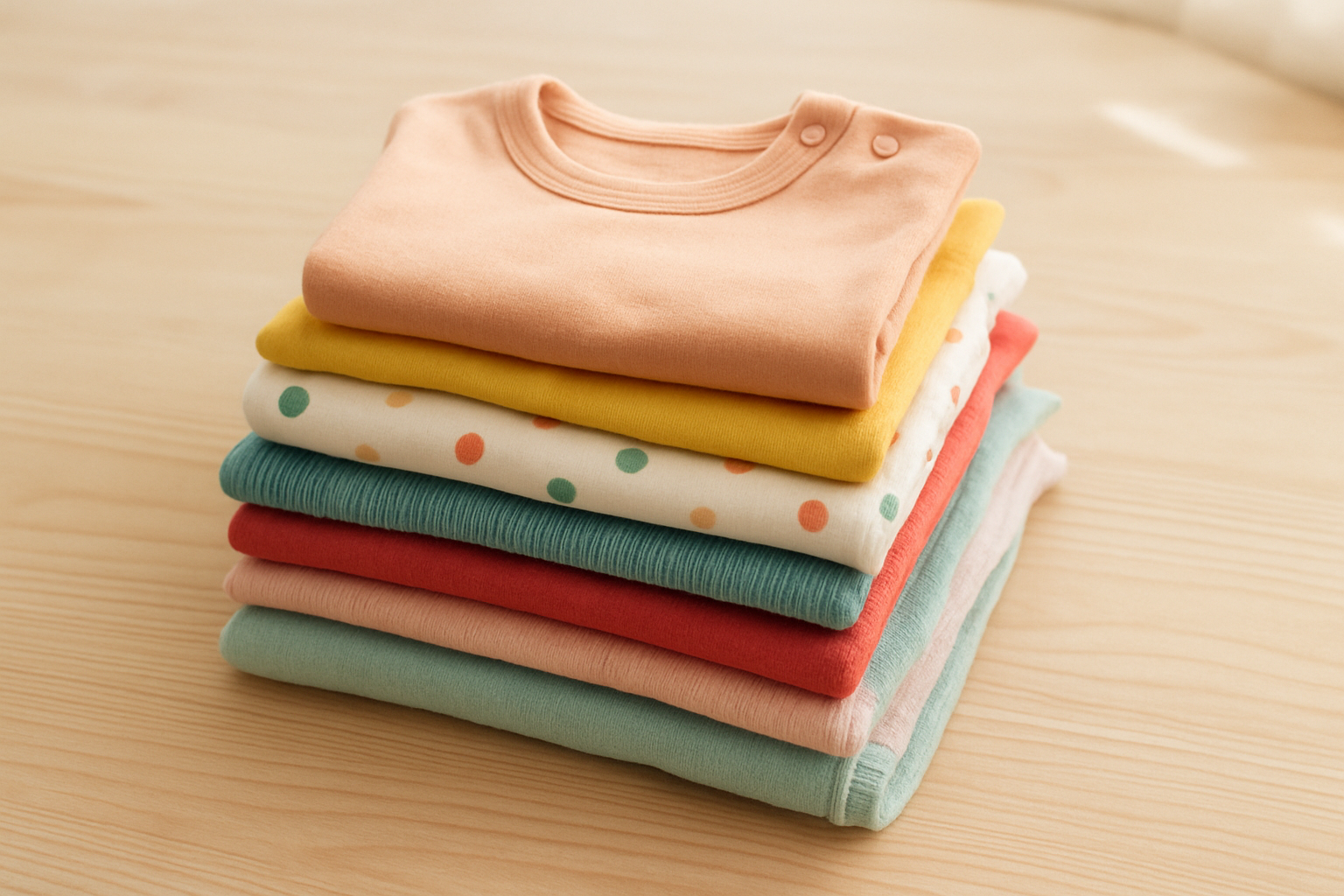
A typical baby and toddler clothing rental bundle arrives pre-sorted by size and season, ready to wear immediately.
Why Babies Outgrow Clothes So Fast
In the first year of life, babies typically move through five or six clothing sizes. Therefore, a newborn outfit purchased in September may be unwearable by November. Research on textile waste shows that children's clothing is among the fastest-discarded category of garments globally, largely because of this rapid size progression.
Additionally, toddlers aged one to three years go through growth spurts that make predicting the right size nearly impossible. As a result, many parents end up with drawers full of barely-worn clothes that no longer fit and no clear plan for what to do with them.
Rental services sidestep this problem entirely. When your child moves up a size, you simply return the current bundle and receive the next one. There is no guesswork, no wasted spending, and no accumulation of unused garments.
The Real Cost of Buying New Every Season
Many parents underestimate how much they spend on children's clothing in the first three years. However, when you add up seasonal wardrobes, special occasion outfits, and the inevitable mid-season size jump, the total can easily reach hundreds of dollars per year.
In contrast, a rental subscription typically costs between $20 and $60 per month depending on bundle size and provider. For example, a family spending $400 annually on new toddler clothes could potentially cut that figure in half while still dressing their child in well-made, clean garments.
Furthermore, rental services often stock higher-quality brands than families would typically buy outright, because the cost is spread across many users over the item's lifespan. In practice, this means your child may wear better-constructed clothes through rental than through budget retail purchases.
Quick Answer: Is baby and toddler clothing rental worth it?
Yes — for most families with children under age four, rental saves money compared to buying new each season, reduces clutter, and significantly lowers the household's contribution to textile waste. Services like Bundle to Bundle make the swap process straightforward and family-friendly.
How a Clothing Rental Subscription Works
The process is designed to be simple for busy parents. First, you sign up with a provider and enter your child's current age, size, and any style preferences. Next, the service curates a bundle of items — typically six to twelve pieces — and ships them directly to you.
When your child outgrows the bundle or when the rental period ends, you return everything using a prepaid shipping label. The provider then professionally launders and inspects each item before sending it to the next family. Meanwhile, you receive your next bundle in the appropriate new size.
Most services also offer a buy option. Therefore, if your child particularly loves a certain item or you want to keep something for sentimental reasons, you can purchase it at a reduced price rather than returning it.
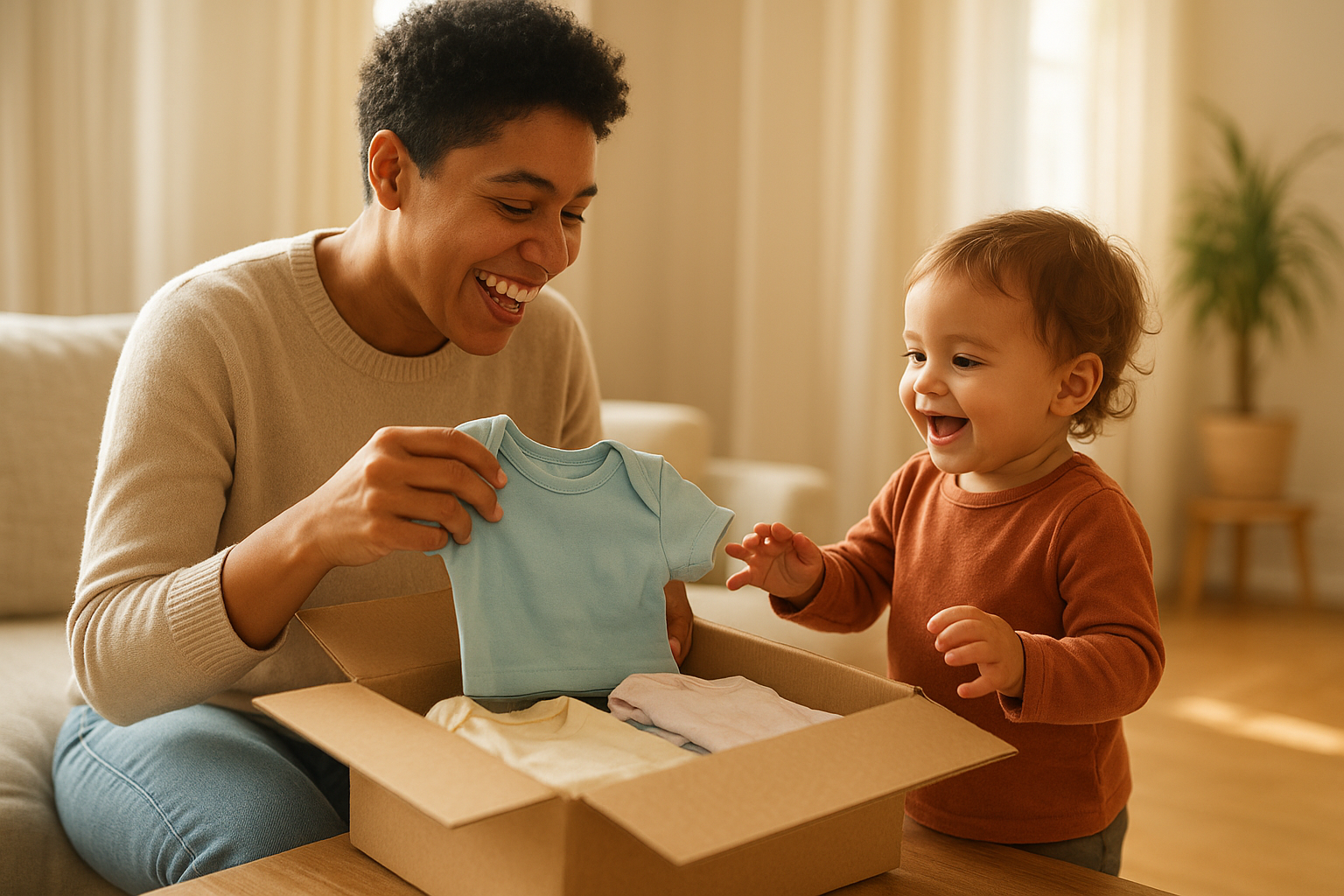
Unboxing a new rental bundle is a simple, low-waste alternative to a traditional shopping trip.
Environmental Impact You Can Actually Measure
The fashion industry accounts for roughly 10% of annual global carbon emissions, according to environmental researchers. Children's clothing, because of its short use cycle, contributes disproportionately to that figure. Rental directly addresses this by extending the usable life of each garment across multiple families.
For example, a single baby bodysuit that might be worn ten times by one child before being discarded could instead be worn forty or fifty times across four or five rental cycles. As a result, the resources used to produce that garment — water, cotton, dye, and labor — are spread over a much larger number of uses.
Additionally, services like Bundle to Bundle are built around circular economy principles, meaning garments are kept in active use as long as possible before being responsibly recycled or donated at end of life.
Hygiene and Safety: What Parents Need to Know
One of the most common concerns parents raise is cleanliness. However, reputable rental services have strict hygiene protocols that often exceed what families do at home. Each returned item is professionally laundered using baby-safe, hypoallergenic detergents and inspected for damage before being restocked.
Items showing significant wear, persistent staining, or structural damage are retired from the rental pool entirely rather than being passed on. In practice, this means the clothes arriving at your door are typically in excellent condition — often better than what you might find at a secondhand store.
Furthermore, most services use packaging materials that are recyclable or reusable, reinforcing the overall sustainability commitment of the rental model.
Rental vs. Secondhand: Which Makes More Sense?
Buying secondhand is a valid eco-friendly strategy, but it requires significant time investment. You need to source items, assess their condition, and often wash them before use. Additionally, finding specific sizes at the right moment can be unpredictable, especially during a sudden growth spurt.
Rental, by contrast, delivers curated, size-appropriate bundles on a predictable schedule. For families with limited time — which describes most parents of young children — this convenience is a meaningful advantage. Although secondhand shopping may cost slightly less, the time savings of rental often justify the modest price difference.
Both approaches are far preferable to buying new fast-fashion children's clothing, so the best choice ultimately depends on your household's priorities and schedule.
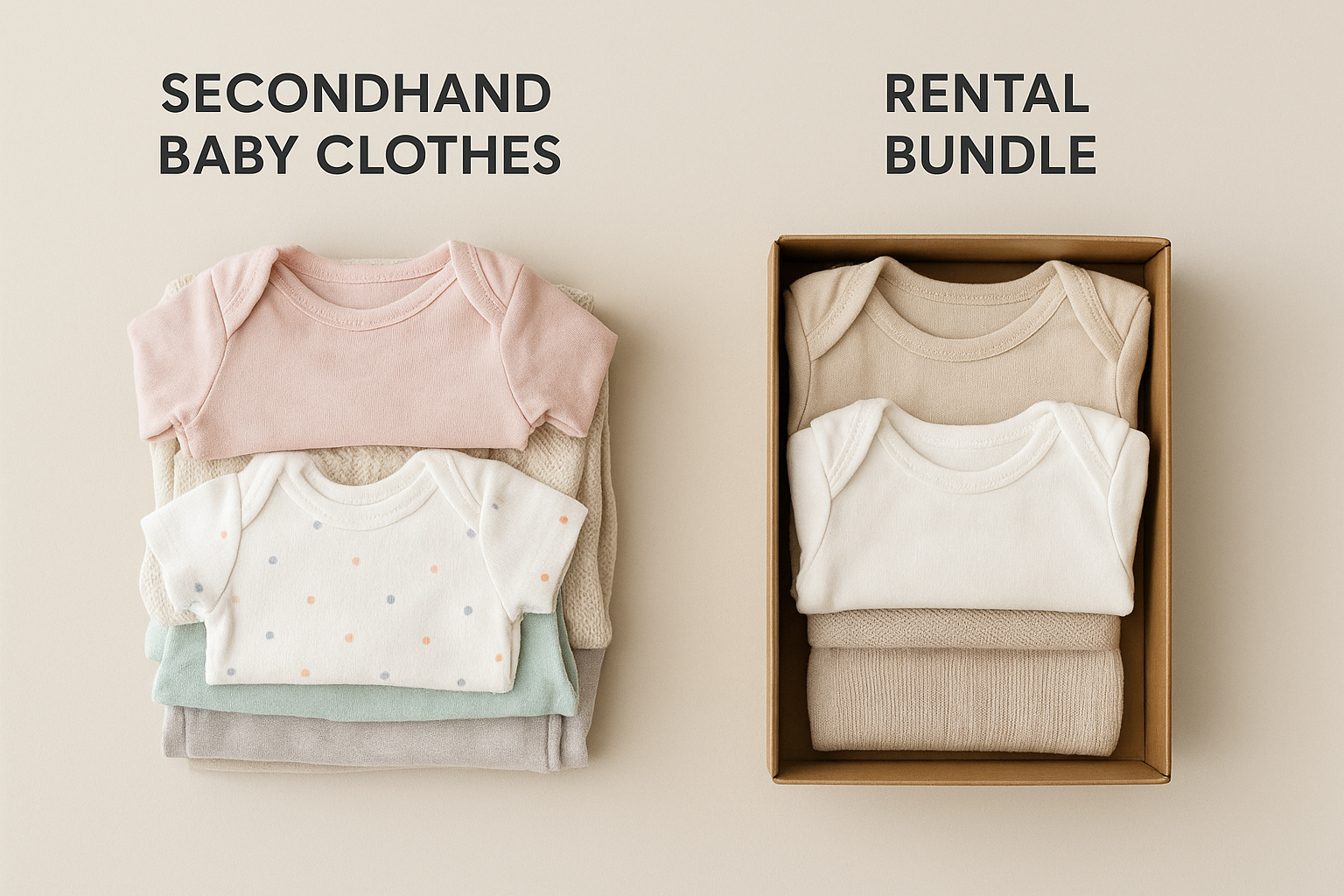
Comparing secondhand buying and rental helps parents choose the most practical sustainable option for their family.
Common Mistakes to Avoid When Renting Kids' Clothes
First, avoid signing up for a bundle size that is too large for your child's current rate of growth. While it may seem economical to order more items, you risk not using everything before the size changes. Instead, start with a smaller bundle and scale up once you understand the service's rhythm.
Second, do not overlook the return shipping process. Always use the prepaid label provided and return items promptly to avoid late fees. Additionally, check whether your provider requires items to be returned in a specific condition or packaging format.
Finally, read the damage policy carefully before subscribing. Most services are reasonable about normal wear and tear, but understanding the boundaries upfront prevents any surprise charges later.
Is Baby and Toddler Clothing Rental Right for Your Family?
Baby and toddler clothing rental is an excellent fit for families who value convenience, sustainability, and predictable spending. It works especially well for first-time parents who are still learning how quickly children grow and how much clothing they actually need at each stage.
However, it may be less appealing for families who enjoy personalizing their child's wardrobe with specific brands or who have access to a large network of hand-me-downs. In those cases, a hybrid approach — renting everyday basics while buying or borrowing special occasion pieces — can offer the best of both worlds.
Overall, as the circular economy continues to grow, baby and toddler clothing rental represents one of the most practical and impactful ways for families to reduce waste without sacrificing quality or convenience.
Frequently Asked Questions
What is baby and toddler clothing rental?
Baby and toddler clothing rental is a service that lets families borrow curated bundles of children's clothes for a set period, then return them when their child outgrows the size. It replaces the need to buy new clothes every few months and reduces household textile waste significantly.
How much does a baby clothing rental subscription typically cost?
Most services range from around $20 to $60 per month depending on bundle size and the number of items included. This is generally much less than purchasing new clothes each season, particularly for rapidly growing infants and toddlers.
Are rented baby clothes properly cleaned and sanitized?
Yes. Reputable providers professionally launder every returned item using baby-safe detergents and inspect each piece before it is sent to the next family. Items with significant damage or wear are removed from circulation entirely.
How does baby clothing rental help the environment?
Rental keeps garments in active use across multiple families rather than discarding them after one child outgrows them. This directly reduces the volume of textile waste sent to landfills and lowers the per-use environmental footprint of each garment produced.
What sizes are typically available through toddler clothing rental services?
Most services cover newborn through toddler sizes, typically from 0–3 months up to 4T or 5T. Some providers extend their range into early childhood sizes as well, depending on inventory.
Can I choose specific styles when renting baby clothes?
Many services let you set preferences for style, color palette, or occasion type during sign-up. However, exact brand selection is usually not guaranteed, as availability depends on current rental inventory.
What happens if my child damages a rented item?
Most providers include a fair-wear policy that accepts normal stains and minor wear without penalty. Damage beyond normal use may result in a small replacement fee, so reading the damage policy before subscribing is always a good idea.
How often do I receive new clothes through a rental subscription?
Swap frequency depends on the service and plan. Some providers allow swaps every four to six weeks, while others operate on a seasonal or size-based schedule. Many services let you initiate a swap whenever your child outgrows the current bundle.
Is baby clothing rental worth it compared to buying secondhand?
Rental offers the convenience of curated, professionally cleaned bundles without the time investment of sourcing secondhand items yourself. For busy parents, the predictability and quality consistency of rental often make it the more practical choice, even if secondhand shopping costs slightly less.
Can I buy items I love from the rental service?
Yes, many providers offer a buy option that lets you purchase a rented item at a reduced price. This hybrid model gives families the flexibility to keep pieces their child particularly loves while still benefiting from the rental system overall.
What should I look for when choosing a baby clothing rental service?
Look for transparent hygiene and cleaning policies, clear pricing with no hidden fees, flexible swap schedules, and a solid range of sizes and styles. Reading customer reviews and understanding the return shipping process are also important steps before committing.
Does baby clothing rental work for special occasions?
Yes, several services offer occasion-specific bundles for holidays, birthdays, or family photo sessions. This makes it easy to dress your child in something special without paying full retail price for an outfit they will wear only once or twice.


